Follow Us on Google

•2027: Why it’d be hard to defeat president, Gov Otu
From Aniekan Aniekan, Calabar
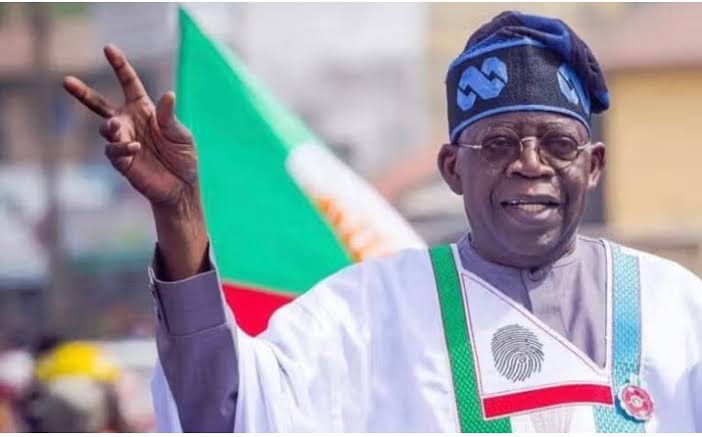
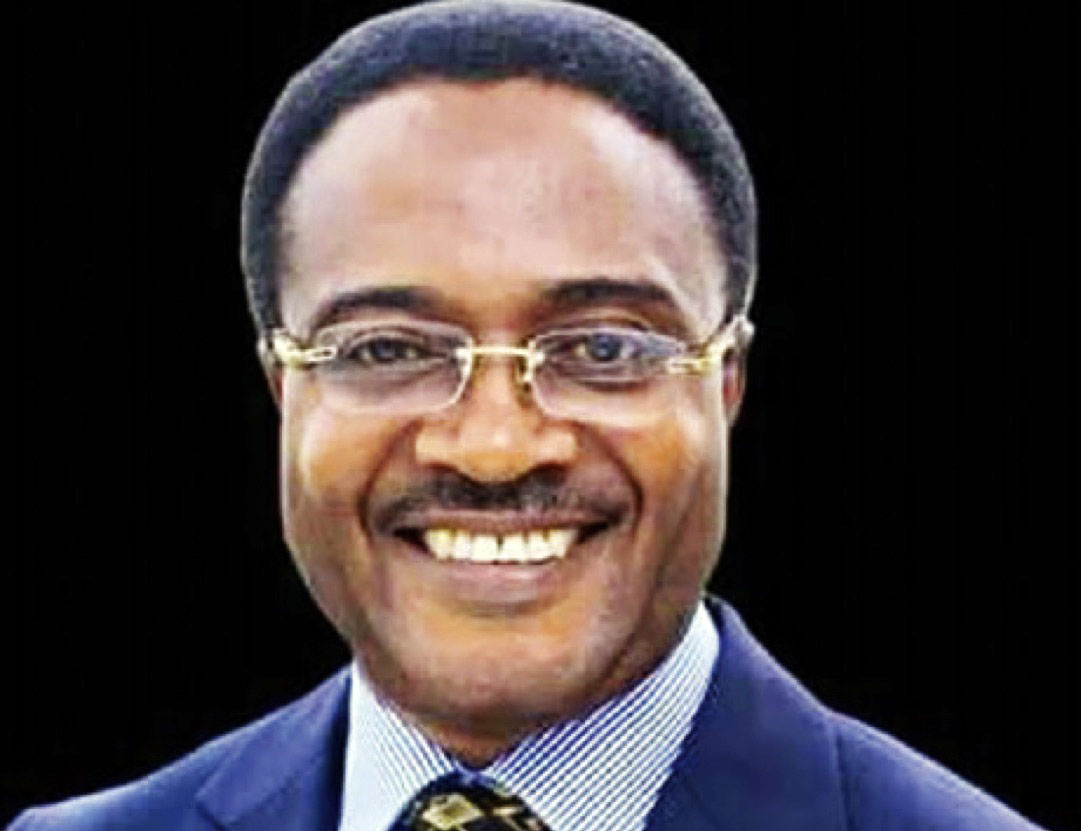
Former National Publicity Secretary of the People’s Democratic Party (PDP), Venatius Ikem, says President Bola Tinubu may regret removing fuel subsidy because of the hardship it caused, but history will vindicate him, as it will remain his greatest legacy.
In this interview with Sunday Sun, Ikem, who recently left the PDP, dismisses the chances of the PDP and the Obedient Movement in 2027, describing the 2023 Obidient upset as a fluke. He scores Governor Bassey Otu high on project implementation but faults poor communication.
You were PDP National Publicity Secretary during Obasanjo’s reforms. How do you assess President Tinubu’s reforms, particularly the removal of fuel subsidy?
I was by God’s grace the National Publicity Secretary of PDP when we were in government effectively during the Obasanjo years. Some significant reforms in the system. And I tell you something, all over the world, no reform-minded president or leader by whatever name called has ever been popular.
You can name Margaret Thatcher in England, who changed the totality of what the UK or England is today. You can go to Jerry Rawlings in Ghana. Everywhere you have a reform-minded leader, you’ll be resisted.
Naturally, people begin to feel comfortable where they find themselves. So they resist a change from the status quo. So for Tinubu to have embarked on something as serious as removing fuel subsidies, I suspect that even himself at some point regrets that he did, given the trouble that has come with it.
But I can assure you that many years to come after he leaves office, the only legacy, probably the major legacy he will be remembered for, is the removal of that fuel subsidy. Because that thing became a drag on national development. So however you look at it, it’s the most fundamental decision he has taken in the interest of Nigeria.
Yes, the hardships come with it, like all reforms come with hardship. How to manage the fallout is what I think they have not effectively done. Look at the economy today.
We have one of the highest foreign reserves in the history of Nigeria.
In terms of our growth potential, and they’re there, but like we always say, when you tackle the issue of macroeconomics, before the trickle-down effects can come. And for our four-year term, it’s hardly possible to achieve the two within a four-year gap. Obasanjo saw it, you saw it.
You compared Tinubu to Obasanjo. Are you saying Tinubu needs a second term for Nigerians to feel the benefits of these reforms?
When Obasanjo brought reforms and brought a very effective economic management team, in the first four years, he became so unpopular that he had almost no return for a second term. But somehow he managed to wriggle through it, and came for a second term. What happened? Nigeria was growing, the Nigerian economy was growing at double digits.
And I believe, as somebody who was part of it, I didn’t support his third term, but I believe that if he had done a third term, Nigeria would not be where we are today. Even these issues of oil subsidy would not be there because he had already sold the refineries and all that in the attempt to manage this monster, that fuel subsidy and all that comes with it had become. So for me, I think Tinubu taking on that monster is going to be his greatest legacy forever. And most importantly, I believe it’s in returning him to power for a second term of four years that the effects, the benefits of that monumental decision will begin to be felt in the microeconomic level.
For now, the macroeconomic level is robust and everybody appreciates that. I mean, those who watch the economy understand that. But it is also true that the impact has not been felt by the common man.
If Tinubu needs a second term, can your former party, the PDP stop him?
Well, I’ll be impressed if they can. But from the little I know, it’s almost too late to spring surprises where we find ourselves now. Because election is a process.
Yes, the events may have a date, but many things lead to the outcome of an election. So when you have failed to put those things in place up till the time of elections, you’ll just be hoping on providence, so to speak. And like the Americans say, God is on the side of the big battalions, so to speak.
So when you are not prepared and you’re going to a battle of this nature, where an incumbent is on the ballot, unlike the last time, where you don’t have the momentum that we had in the previous general elections, where you don’t have candidates that are motivated, who believe that they can win elections on the platform.
Where, I mean, like I said, almost all parameters for measuring success in an election are missing like in Cross River State, how do you win the elections? But like I said before, if they win, I will congratulate them. I will be proud of them.
In 2023, the Obedient Movement caused an upset in Cross River by winning the presidential election in the state. Do you see this repeating itself?
Well, I cannot pretend to be a prophet, but I believe, like our people say, that lightning does not strike in one place twice. We were all taken by surprise in Cross River State by the Obedient Movement. Yes, because I mean, it’s shocking how two major parties, including one incumbent party, could lose to a party whose structure we could not exactly identify.
And then to make it worse, they had no candidates, no strong candidates anywhere except around the presidency. So having struck once, I think it will be foolhardy for them to think that the same thing will happen.
You see, if I’m the one, I will even beg them to come and take the stadium and do their rallying so that you can see that strength that you think you have. So instead of going to try to attack them and give them a good enough hall, let us see the strength, the mobilisation that they have.
Look at the venue of their town hall, the biggest hall there sits about 600 people.
We’ve been using it for all our political activities. And so if you take a hall that can seat 600 people and you have about 300 people outside, it seems as if it’s such a mammoth crowd. You couldn’t even enter.
Drop them in the stadium and then we’ll see how the thing will look like, you understand me? So maybe it’s deliberate from their part that they are doing what they call town hall meetings. I think it’s everywhere they are going, they call it town hall meetings. So it gives the impression of, you take a small space and it gives the impression that you have such a crowd because there will be hustling and jostling.
Maybe that’s their strategy. For me, I don’t think the Obedient Movement will come again as a threat by way of surprise as it did the last time, because everybody’s watching everybody.
I don’t know where you draw that much strength to counter an incumbent government. I don’t see it.
I just don’t see it. Even psychologically, I don’t think our people are really, really prepared for that. So last time it was a fluke, it was an accident, and I’m sure that it will not happen again.
You were a founding member of the PDP in Cross River State. What broke the camel’s back and why did you leave the party?
What broke the camel’s back, so to speak, for me was realising after the primaries that we don’t have good enough candidates in enough constituencies to give us the momentum that we need to win elections. Two, we didn’t have the support. We don’t have the support, whether it’s external or internal, that could give us enough momentum to build towards the election, especially when you realise that we are contesting against an incumbent.
And three, psychologically, you know, in our state, people gravitate towards government in power, whether you like it or not. Cross River State is largely conservative in voting. Apart from the former governor taking the party away from PDP to another party, I can assure you that today, Cross River will still be voting PDP.
But having made that structural adjustment and moving the party or the state to a party that’s in power, there’s not much you can do because our people believe in following largely, they believe largely in institutional voting. They are going to vote with the party in government. That’s my belief.
So for those three reasons, I had to speak the truth to myself. You cannot, maybe you as a person, as a person I can survive in opposition, no doubt about that. But when you are, in the context of the Nigerian politics we play today, when you are in the opposition, your community is marginalised, your supporters are marginalised. Everything around you is treated as if you are an outcast. And so it takes a lot for you to maintain and sustain your support base when you are not in government.
It is worse when you risk being out of government for eight consecutive years. It will erode most of what we call a support base. But of course you can survive it if there’s enough strength in your party that gives you the confidence to at least contest.
I didn’t see that in our party. Because like I said before, the weak structures, the weak candidatures, whereas in some constituencies we don’t even have any, but we just invite people to come and fill the gap. That’s not how you go for an election that you hope to win against an incumbent government.
There is this belief that PDP leaders are not really contesting for 2027 but sustaining structure till 2031. Do you agree?
Absolutely, my impression is that some leaders in the party are just propping some people to maintain the structures till 2031, not that they believe that we can win the next elections. It’s like, if you don’t contest, most of your support base is going to go where it’s happening. But at least if you put a candidate there, some people will believe that there is hope. So they are going to remain in the party.
And then with the hope that by the time the next government is formed and they get some appointment from the national contraption, that means they can sustain that structure to run till 2031. Apart from that, I don’t see anything much to hope for the way the party is.
Other News
As an opposition party chairman, you used to say Gov. Otu did nothing. Having joined him, what have you discovered?
My assessment of the state so far is that the projects and programmes of the present administration have been highly underreported. Since engaging with the state, I have been amazed at the volume and numbers of projects they have been putting across the state.
Whatever is responsible for that, I do not know. Maybe to a larger extent, the government sounded as if there is a conspiracy. I don’t think so.
I don’t believe so, really. Because you don’t have to have national coverage, but you can at least have local coverage. From Obudu, where the ranch is under heavy renovation, including the cable car and everything in between.
The airstrip has already been renovated and the runway has been freshly rehabilitated. To the on-going work in the cargo airport and then to Yala, where the major road, which has been there for ages, is abandoned, so to speak. The road linking Yala to the mainland, to Okoma, to join with the junction, from Mfun Junction to Abakaliki.
That road has been lying there for probably more than 20 years. All those have been done and nobody talks about them. Apart from maybe other minor projects that are there.
The same goes for many projects in Central. I’m aware of lots of roads in Yakurr especially. I think that’s the major concentration of projects that I’m aware of in Central.
When we used to go out as opposition, everywhere you go, you ask them whether the governor has done any project. They say no. Again, I think the governor imagines that projects speak for themselves.
You said Otu has done a lot of work but people don’t know about it. Is it a communication challenge?
When you do projects, you speak to them. You engage communities. You do all of that so that they will be aware of what you are doing, what government is doing, so that at least they can appreciate. And then too, most importantly, they can have some ownership. The communities must take ownership of those projects.
Before maybe they can really feel that they are doing something. Maybe in executing these projects, they’ve not done enough of community engagement. And so largely, there’s the impression that they have not done anything.
Coupled with the fact also that I think most of the projects have not been formally commissioned, so to speak. And so those are areas where you usually get communities engaged, get the public aware.
They are not doing enough of that. Even the roads I hear they’ve done a lot in Adiabo, they’re highly unreported. So my impression is that their communication mechanism needs to be upgraded.
They need to streamline communication especially so that people become aware of what government is doing. It’s very, very important everywhere in the world that when government embarks on projects, you want the community and the beneficiaries, so to speak, to be part of it, to understand what you are doing for them. That’s the first impression I have.
Even I, before I joined here, I did not know they were doing that much work at the Obudu Ranch.
I did not know that they had renovated the landing strip and even test-run it with an aircraft. I did not know that the Okuku Road had been completed. So, why do we have establishments for information, for informing the public, the Ministry of Information, newspapers owned by governments and all? Is it not to inform the public? And that’s to say we realise, a running government, that you need deliberate decisions that can inform the people. Now, you need to use them effectively for you to communicate what they are doing.
Because people need to also develop hope that their government is doing something. To live in a state where you feel your government is not doing anything for you, despite the money coming, is depressing. So, it’s not just for the sake of propaganda for the government.
It also unleashes the spirit of the people for whom you do these things, to know that you are doing something for them. You cannot stay in your community and know what they are doing in the other community, unless you are told. Except by some accident, you’ll be seen there.
So, that is why it’s necessary that government’s communication mechanisms must be effective. Not necessarily for propaganda, but to inform the public that, look, your resources are being applied this way or that. Even if you have not gotten certain projects, some other community is getting, and that gives you hope that your turn might still be coming.
But it’s very, very important that the public be adequately informed about government programmes, government projects, so that they can relate to them. And in some cases, they can take ownership of those projects.
Politically for you, what’s next?
When you come from a community that is conservative and you find yourself in the situation that I found myself, you look for a way to integrate if not yourself but your community so that at least they can get some benefits of good governance. As I speak with you, for instance, some people ask, what did they promise you? Of course, they promised me some things. They may not be personal as you want to. If you promise me that you’re going to do a road that I like in my community, that’s a lot of promise for me. That’s a lot of reintegration of my community into the whole. And that is what is happening now. As I speak with you, recently they’re probably taking measurements already in some roads in my community, which is part of what I asked for.
Because that’s the only way you can assure your people that you still have some relevance and that you are looking out for their interests, not about your personal interests, so to speak. So those things matter. If your community begins to find that they are marginalised over and over the years, definitely they will float away from you.
They will not remain there waiting for you. Because when they ask for this, they tell them, oh, your son, who is a leader of the other party, is not supporting us. And that’s it. People begin to get tired of you because they feel frustrated.
What should your new party the APC, Tinubu and Otu do differently as they head into the next general elections?
The only effective way, the most effective way, let me put it that way, that you can market your party is by showcasing what you have done.
When you are running second term, you don’t run on promises. You run on your scorecard. So it goes back to the same thing we said before.
I think the government needs to raise the tempo of information to let people know what exactly they have been up to and what they have accomplished. And I think there’s a lot. From what I have seen, there’s a lot.
So once you do that, you don’t need to say much more. That’s when you talk about continuity. Going for a second term is not a right.
It is that I’m doing so much. Let me have another chance, renew my mandate so that I can do much more. Once you can achieve that, your message becomes very easy to pass.
And the electorate, when they are voting for you, they are voting on the basis of the conviction that you actually mean well for them. So for incumbents, I think that’s the only way. You don’t want to start talking about marketing some phantom thing.
No. You want to market on the basis of what you have done, your scorecard.
How does it feel now working with some of your former political adversaries who are now in the APC with you like the immediate past governor?
That we are in a party does not mean you have to work with everybody. Right? The focus is the structured part of the party.
The governor, the party structures, and all that. That’s, for me, that’s my focus. It’s not about individuals.
And two, I don’t consider them my adversaries, so to speak. Don’t forget that almost everybody here was once in PDP. I mean, when I was in the PDP the present governor was in the House of Reps, and we had a very close relationship. I can tell you for free that the only two members of the National Assembly who were supporting me when I contested against Liyel Imoke was Prince Otu and Obeten Okorn. They were the two National Assembly members that stood with me for a very long time.
So we are not coming as strangers or as adversaries over time. What separated us was the same politics. So the same politics is bringing us back together.
We have the younger ones watching us and also coming up, how we project our differences, how we project ourselves when we have reason to cooperate in the interest of the state is what they will learn, not what we say.
We had our fights, but when it became necessary, in the interest of the community, we always come together.
I supported the former governor in the general election the first time. When he didn’t behave well, I left. When he was running for the second time, he came for me again, and I came back and supported him.
Then he eventually left for APC. I didn’t go with him. So there has been no permanent enmity, so to speak, between us as politicians across the state. Most of the time, when the stakes are high, we come together and do the needful.