Follow Us on Google

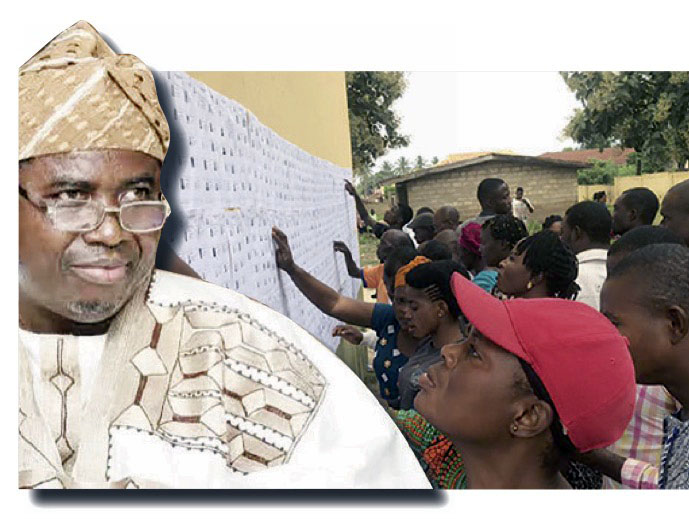
•Nigerians raise questions over 1.6m fake voters in electoral body’s list
By Omoniyi Salaudeen
The controversy surrounding the Independent National Electoral Commission’s (INEC) preliminary register of voters has become one of the most troubling developments ahead of Nigeria’s 2027 general elections.
What initially appeared to be a technical problem involving questionable voter records has developed into a serious institutional credibility crisis, raising questions about the integrity of the electoral process, the competence of registration officials and the preparedness of the electoral umpire for another nationwide election.
At the centre of the controversy are allegations of artificial intelligence (AI)-generated photographs, multiple voter registrations, suspicious identities, names of deceased persons and other irregularities discovered in the preliminary voters’ register published by INEC. The scandal is particularly disturbing because the voters’ register is the foundation upon which the credibility of an election rests. It determines who is qualified to vote, the number of registered voters in each polling unit and, ultimately, the legitimacy of the electoral mandate produced by the ballot. The discovery of questionable entries has therefore triggered a fundamental question: if INEC cannot guarantee the integrity of the list of people qualified to vote, how can Nigerians be confident in its capacity to conduct a credible election?
How the scandal unfolded
The controversy gathered momentum after INEC displayed its preliminary register of voters nationwide between October 9 and 15, 2026, for public scrutiny, claims and objections. Following the publication of the register online on October 26, Nigerians began drawing attention to suspicious entries. Some of the photographs appeared to have been generated artificially using AI, while other entries raised questions about duplicate registrations, unusual names and deceased persons allegedly remaining on the register. Some of the questionable records were reportedly traced to registration areas in Edo State, particularly Etsako West and Esan Central. The development generated public outrage and forced INEC to acknowledge that irregularities had occurred within its registration system. More disturbing was the admission by the commission’s Director of Information and Communication Technology, Lawrence Bayode, that some registration officers had allegedly abused their authorised access to introduce questionable records into the database.
INEC subsequently announced an investigation into the circumstances surrounding the irregularities, while its chairman, Professor Joash Amupitan, assured Nigerians that the preliminary register was undergoing a comprehensive verification exercise. The commission’s explanation that the register was still preliminary did little to extinguish public concerns. Rather, it raised questions about how such questionable entries passed through the registration and verification processes in the first place.
Unending questions about 1.6 million invalid registrations
The controversy assumed a more alarming dimension on November 9 when INEC announced that it had removed 1,608,660 confirmed invalid registrations from the preliminary register following its nationwide clean-up exercise. The commission also disclosed that 873 records belonging to verified deceased persons had been removed separately, bringing the combined number of deleted records to 1,609,553.
According to Amupitan, the commission harvested 11,088,238 records from the three phases of the 2025/2026 Continuous Voter Registration exercise. Its Automated Biometric Identification System (ABIS) initially flagged 1,545,052 records for further examination. Following further screening, public complaints and adjudication, the commission confirmed the invalidity of 1,608,660 registrations.
More significantly, INEC identified 54 persons across 10 states allegedly involved in the registration irregularities. The commission promised administrative disciplinary action and possible prosecution of those found culpable. This disclosure has shifted the debate from the existence of questionable voter records to the possibility of deliberate manipulation involving personnel entrusted with protecting the integrity of the electoral database.
While the clean-up is expected to instil public confidence, it has raised more questions than answers. The questions stakeholders are asking are: Who were the beneficiaries of the questionable registrations, and were there political interests behind the manipulation? Why were suspicious entries not detected and eliminated before the preliminary register was published? Does the removal of 1.6 million invalid records sufficiently address the problem, considering INEC’s admission that historical duplications dating back to 2011 remain? What guarantees exist that genuine voters will not be disenfranchised during the clean-up exercise?
That scepticism is captured by Prof Tayo Bello, who insisted that the issue was not technical but moral.
“We should realise one thing: There must be justice, fairness and equity. Planning for an election that involves the totality of the country requires INEC to follow due process in all its conduct. My take is that INEC should follow the agreed process disseminated to the public. And there must be transparency in that due process.
“We all know that we are in the era of technology and its attendant problems. The question we should ask ourselves is: How did INEC arrive at an AI-generated register? It means some people within and outside INEC are working toward a certain goal.
“They said they deleted 1.6 million voters in the clean-up of the register. What was the total number of registered voters before they deleted those names? How are we sure that 1.6 million is the only AI-generated figure? These are issues that are likely to cause problems for the election that has not even been conducted. At the end of the day, the people will contest that figure. They will come out to say it was part of the AI-generated register.
“The only way INEC can restore confidence in the electoral process is to show transparency in its conduct. On the day of election, once voting ends, they should upload the results on the IReV portal in real time. If they don’t do that, people may not likely agree with the result based on what they have seen in the pre-election matters. There is now a melody being played around: ‘Rig and die.’ INEC should just sit up.”
Danger of the scandal
The significance of the controversy goes beyond the number of questionable records discovered. It touches on the very foundation of electoral democracy and the confidence Nigerians repose in the institution responsible for conducting elections. The most troubling aspect is the possibility that some of the irregularities were deliberately introduced to compromise the electoral process. If registration officials could manipulate records, introduce questionable photographs or circumvent biometric verification procedures, it becomes necessary to investigate whether the objective was merely to inflate registration figures or create opportunities for electoral fraud.
Although the discovery of invalid registrations does not, by itself, establish that INEC or any political party planned to rig the 2027 elections, stakeholders say the circumstances demand a thorough investigation. They challenged the commission to establish who introduced the questionable records, who authorised the transactions, whether any political interests were involved and what safeguards failed.
These are genuine concerns because Nigeria’s electoral politics is significantly influenced by the distribution of registered voters across states, local government areas and senatorial districts. Voter registration figures are frequently deployed by political parties to assess their electoral strength, determine campaign strategies and make projections about possible outcomes. An improperly inflated register could therefore distort the political calculations of parties and candidates. It could also create opportunities for electoral manipulation, particularly if questionable records are allowed to influence the deployment of electoral materials and the assessment of polling-unit results.
What this means is that the 2027 elections will be conducted against the background of declining public confidence in Nigeria’s electoral institutions. In this circumstance, INEC needs to appreciate that the credibility of an election is not determined only by what happens on election day. It begins with voter registration, continues through party primaries and candidate nominations, and extends to accreditation, voting, collation and declaration of results. A compromised register could undermine confidence in the entire process, even where the actual voting exercise is properly conducted.
The commission cannot afford to enter the 2027 elections with unresolved questions about the authenticity of its voters’ database.
Public affairs commentator, Efiye Bribena, goes further. For him, the biggest threat to a credible election is INEC itself: “For me, the most critical issue is the mess INEC has made of the voters’ register. That is more threatening than any other thing. How can you have AI-generated information in the voters’ register? They said they know the people who did it. What are they doing about it? How many people have they interrogated or prosecuted for gross violation of electoral laws?
“This is the biggest threat to our democracy because it means that INEC itself is involved in the attempt to create a flawed voters’ register with AI-generated information. It means we are not prepared for this election in January. If we cannot trust the electoral umpire to give a credible election, then democracy is under threat.”
He links the rising incidence of election-induced violence with the compromised register. According to him, violence is to keep real voters away, and a compromised register is to fill the vacuum. “If people that are supposed to vote cannot come out, they will use the AI-generated voters’ register to fill the vacuum. You can imagine my two daughters who just came back to the country and wanted to register in this registration exercise but they could not register. Throughout the period, they made several efforts to register, but they couldn’t. Yet, we have an AI-generated register.”
Other News
Internal sabotage and the historical question
Perhaps the most embarrassing aspect of the scandal is that some of the suspected manipulations have been traced to personnel within the commission. This raises questions about internal supervision, access controls, institutional discipline and the effectiveness of INEC’s technological infrastructure.
Critics say it is not enough to announce that 54 officials have been identified for disciplinary action. Nigerians deserve to know their identities, the states where the infractions occurred, the specific offences committed and the outcome of investigations. Where criminal conduct is established, prosecution should follow. Administrative transfers or internal reprimands would not be sufficient to restore public confidence.
This presents INEC with a much bigger challenge: conducting a comprehensive audit of the national register rather than limiting its intervention to the latest registration exercise. People have charged the commission to explain how it intends to reconcile historical records, eliminate multiple registrations and ensure that every legitimate voter is accurately represented. It must also address the concerns of genuine voters who may have been affected by the clean-up exercise.
Gen Ishola Williams (retd) says INEC is putting itself in a position of distrust: “They said they know the people who hacked their data but nobody has been punished so that hacking does not continue. Everything needs to be done to protect the system from being hacked. This means that all political parties have to work closely with the agencies of government set up to protect the INEC website to ensure that people do not introduce fake names into their data. It is by so doing that people can trust INEC that they are not acting on behalf of the government. For now, many people believe that INEC is working for the Federal Government. Therefore, anything that has to be done to protect the data system from being hacked must be done in cooperation with the political parties. That is very important to maintain the trust.
“In the future, we may not have enough money to do an election. You go and do some research and check back. Every four years we have an increase in the amount of money being demanded by INEC to conduct an election. In other countries, it’s decreasing. But in Nigeria it’s increasing. For next year, INEC may demand about one trillion naira for the coming election. And a quarter of that will be stolen because nobody cares. Now this is being complicated with the introduction of new technology. Our young people who have a good knowledge of this system now can use it to manipulate the electronic data system. It will require a lot of money to be able to procure the system for maintenance.
“In Nigeria, there is always controversy about INEC before and during elections. At the end of the day, everything ends up in court. Everybody knows that it is the judiciary that determines who is elected or not elected.”
INEC’s credibility is on trial
The scandal presents a major test for the leadership of Professor Amupitan, who assumed responsibility at a critical period in Nigeria’s electoral history. His handling of the controversy could significantly influence public perception of INEC ahead of 2027. While the chairman deserves recognition for acknowledging the irregularities, ordering investigations and announcing the removal of invalid records, the commission must understand that transparency cannot end with press conferences and assurances.
It must demonstrate that the clean-up exercise is independent, comprehensive and verifiable. The identification of 54 officials is an important starting point; the consensus is that Nigerians need to see concrete consequences. Many public affairs commentators insist that the commission must publish an appropriately detailed account of the investigation, subject to due process, and make clear whether the officials acted individually or as part of a coordinated operation. To come out clean, INEC should make available sufficient information to enable independent experts to assess the integrity of its database without compromising voters’ personal information. The commission must also strengthen the security of its registration platform, restrict unauthorised access and introduce more effective audit trails to ensure that every alteration to the register can be traced to an identifiable officer.
Political implications ahead of 2027
The timing of the scandal makes it even more consequential. Nigeria is approaching another fiercely contested general election in which political parties are already positioning themselves for power. The opposition will understandably demand greater scrutiny of the register, while the ruling All Progressives Congress (APC) and other political stakeholders have a responsibility to ensure that the electoral process is not compromised. INEC must avoid giving the impression that it is responding to public pressure selectively or protecting particular political interests.
The controversy could also become another source of litigation, particularly if political parties or candidates believe that irregular voter figures in particular locations could influence electoral outcomes. The commission should therefore act before the final register is certified, rather than wait until the election results become subjects of legal disputes.
INEC has indicated that the final register is expected to be published in December 2026. That deadline makes the remaining period particularly important. The commission must use the opportunity to complete its verification, reconcile historical records and address complaints from genuine voters.
It is in this atmosphere of distrust that Tunji Shelle, former chairman of the Lagos State chapter of the Peoples Democratic Party (PDP), now a chieftain of the African Democratic Congress (ADC), identified a number of issues threatening the credibility of INEC and its capacity to conduct a free, fair and credible election:
“The job of INEC is to ensure that things are properly done, right from the registration exercise to the collection of PVCs. Yet, up till date, some people are still having problems collecting their PVCs. I met a lady recently. She told me she had been struggling for months to collect her PVC and she couldn’t. They are giving her another date to come this month. How sure is she that she will get it?
“It’s like everything is designed to favour the APC. It’s like they are working together. Even the law passed by the National Assembly reflects that some of the things INEC is doing are programmed to favour a particular party. INEC, APC and the National Assembly are working together to destabilise the system and to frustrate other opposition parties.
“Just about two months before the election, they have not displayed the clean copy of the voter register. They said they have removed 1.6 million voters. Is that a good number? A number of people are already embedded in the register through AI or through other means. So, I don’t believe in the 1.6 million they are claiming. It’s much more than that. So many people have died between 2023 and today. That number can never, even conservatively, represent the total number of names that have been added either through AI or through other means.
“I’m aware that APC members and their representatives in marketplaces are collecting PVCs from people. What they are doing with all these things, I can’t understand. I’ve seen it happen at Sura Market. Market women were gathered and their PVCs were being collected. Whatever they wanted to do with it, I don’t know. To achieve what? It means some people are working directly with INEC staff. In fact, most of the people that are doing registration are APC staff. I know that for sure in Lagos State. I’ve been the chairman; I know everything that used to go on during elections. Most of the people that are in INEC office as of today are APC members. Some of the Resident Electoral Commissioners are card-carrying members of APC. The INEC chairman is chosen by the President. He will dance to the dictates of the person who appointed him.
“INEC should come out clean. They should do their work the way it should be done. If a case of fraud is reported, they should take it up and investigate. Unfortunately, they will sit down and say it is the work of the police. Vote-buying will take place; nothing will happen because they are the ones who have money to buy votes.
We want a credible, free and fair election. But once the leadership of INEC is compromised, how can we have confidence that the election will be credible?
“The man in charge of AI data protection was sincere enough to say that there was internal sabotage within INEC. They said they were already looking into it and would sanitise the register. How many names would they be able to find? All along, they have had measures to check all these, but they didn’t want to do it. All I want is that all the people who are accredited to vote should be allowed to vote and their votes should count. The results at the polling units should be transmitted the way they should be transmitted, like it was done in Osun State.
“In the 2023 election, the transmission was delayed because of a glitch. We pray there will be no glitch this time around. If there is any glitch, it is the fault of INEC.
“Those who manipulated the register with AI-generated names and identities are working for somebody. INEC has already identified that there is internal sabotage. They are covering them up because somebody influential is using them. If not, they should publish the names of those individuals responsible for the action. If they are eventually cleared by the court, it is okay. They will not do it because somebody is behind it. They are paid to do it.
“The majority of the staff in INEC are members of the ruling party. As far as Lagos is concerned, I know that for sure.
“We hope that agents of opposition parties will work together on the day of the election to ensure that only those with PVCs are allowed to vote.
“There is another dimension. There are some hidden polling units that are not known to everybody. Votes will be registered in those places. While the opposition is taking up some of these things, somebody is sponsoring members of the opposition to go to court. The PDP governors who are to provide viable opposition have all left the party and joined APC so that their sins will be forgiven. If there is real democracy and everybody stands where he is, there will be sanity. We will be able to challenge the excesses of the ruling party. It has never been this bad.
“I don’t have any trust in the ability of INEC to conduct a free and credible election. There was a place in Lagos here. They realised that the faces of the people there were going to vote for the opposition. They allowed the voting to go normally. At the end of the day, before counting started, they carried the ballot away. So, the election in that place was nullified.
“I know that the opposition is ready to fight for its rights. But can the opposition fight the irregularity of vote buying? Who has the money to buy votes other than those in government? They are the only ones who have the financial muscle to buy votes. And the judiciary is not helping matters.”