Follow Us on Google
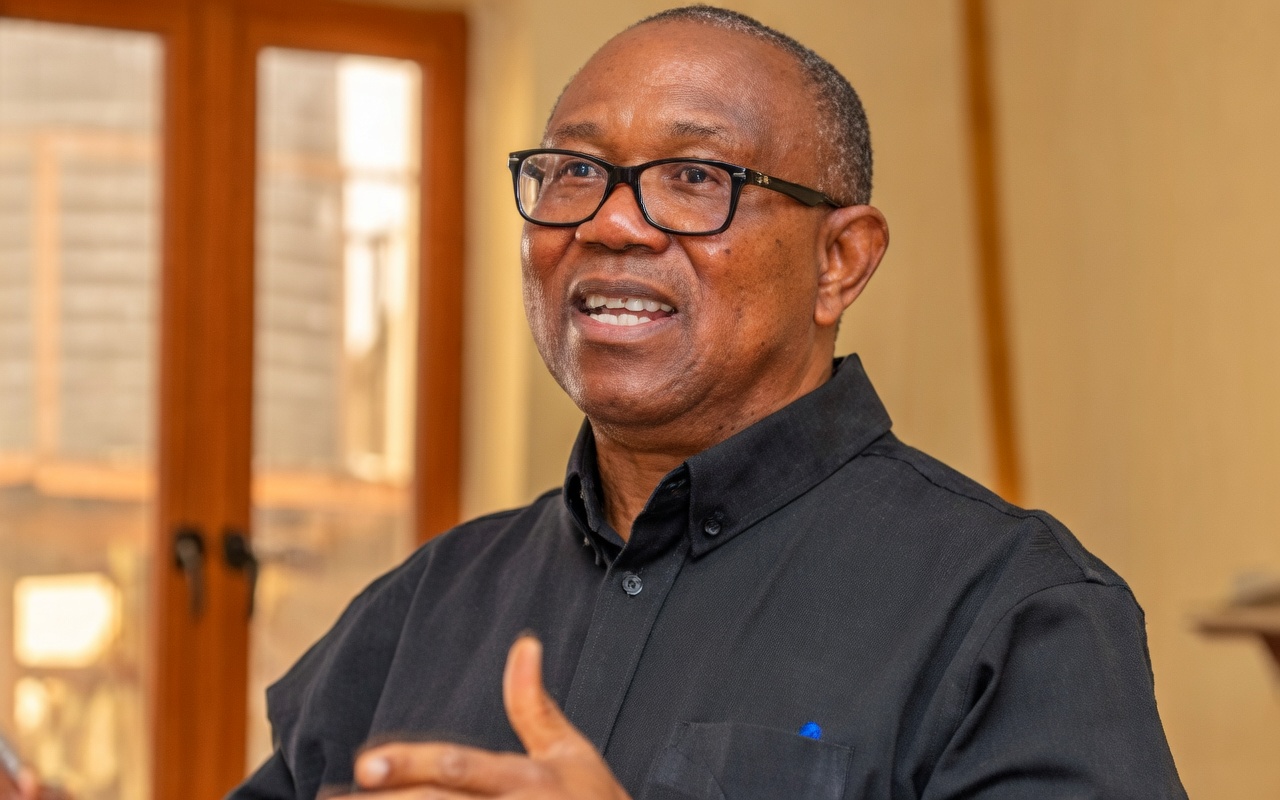
•Blames grid failure for economic woes
Presidential candidate of the Nigerian Democratic Congress (NDC), Peter Obi, has pledged to expand Nigeria’s electricity generation and distribution capacity by at least 10,000 megawatts within four years if elected president in 2027.
He described the move as central to reviving the country’s struggling economy.
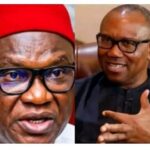
Obi made the commitment on Saturday, May 30, 2026, while accepting his nomination at the party’s national convention in Abuja, where he was officially unveiled as the NDC presidential candidate. He also announced former Kano State governor, Senator Rabiu Kwankwaso, as his running mate.
The former Anambra State governor said the target represents a 250 per cent increase from Nigeria’s current estimated output of about 4,000MW, which he described as grossly inadequate for a population of over 200 million people.
He argued that Nigeria’s persistent power deficit remains one of the biggest barriers to industrial growth, job creation and economic competitiveness, stressing that no meaningful development can occur without reliable electricity.
According to him, Nigeria currently has one of the highest numbers of citizens without access to electricity globally, a situation he said has left millions of households and businesses dependent on costly self-generation.
“We currently generate and distribute a mere 4,000 megawatts of electricity for a population exceeding 200 million,” Obi said, adding that countries like South Africa and Egypt generate far more power despite having significantly smaller populations.
He said his administration would prioritise a rapid expansion of both generation and distribution capacity, promising that Nigeria would achieve a minimum additional 10,000MW within four years through targeted investments, policy reforms and private sector participation.
Obi used the platform to outline a broader governance agenda covering healthcare, education, agriculture, security and economic management, which he said would define his administration if elected.
He expressed concern over Nigeria’s worsening development indicators, including rising hunger levels, high unemployment and declining access to basic services, warning that the country risks deeper instability if urgent reforms are not undertaken.
On healthcare, he noted that Nigeria’s health insurance coverage remains at about 10 per cent, far below countries such as Indonesia, where coverage exceeds 90 per cent. He pledged to more than double Nigeria’s coverage to over 20 per cent within four years and increase health sector spending to at least 10 per cent of GDP, compared to the current level of under 5 per cent.
Other News
He also promised that every one of Nigeria’s 8,809 wards would have a functional primary healthcare centre, while at least half of the country’s estimated 30,000 primary healthcare facilities would be fully operational by the end of his first term.
On education, Obi said investment in teachers, infrastructure, digital learning and vocational training would be central to his economic transformation agenda, arguing that human capital development remains the foundation of national productivity and competitiveness.
He also raised concerns over insecurity, noting that Nigeria’s global ranking on terrorism-affected countries has worsened significantly in recent years. He said his government would adopt an intelligence-driven, technology-enabled and community-based security strategy while addressing root causes such as poverty, unemployment and social exclusion.
In agriculture, Obi said Nigeria must transition from a consumption-driven to a production-oriented economy, adding that large-scale investment in farming and agro-processing would be critical to tackling food insecurity and reducing poverty.
He further pledged targeted tax incentives, affordable financing and regulatory support for micro, small and medium enterprises, noting that youth unemployment remains above 40 per cent and requires urgent intervention.
Obi also committed to reducing the cost of governance, strengthening transparency in public finance, and reinforcing democratic institutions to rebuild public trust.
Nigeria’s power sector has long struggled with inadequate generation capacity, weak transmission infrastructure, frequent grid collapses and funding constraints. In recent years, the national grid has suffered repeated system failures, underscoring the fragility of electricity supply across the country.
In January 2026 alone, the grid reportedly collapsed twice within five days, adding to a pattern of instability recorded in previous years.
Despite ongoing reforms, including recent leadership changes in the Ministry of Power, the sector continues to face structural challenges that have left millions of Nigerians without reliable electricity supply.
Obi maintained that resolving the power crisis would be the foundation of any meaningful economic recovery, insisting that Nigeria’s industrial future depends on stable and sufficient electricity generation.