Follow Us on Google
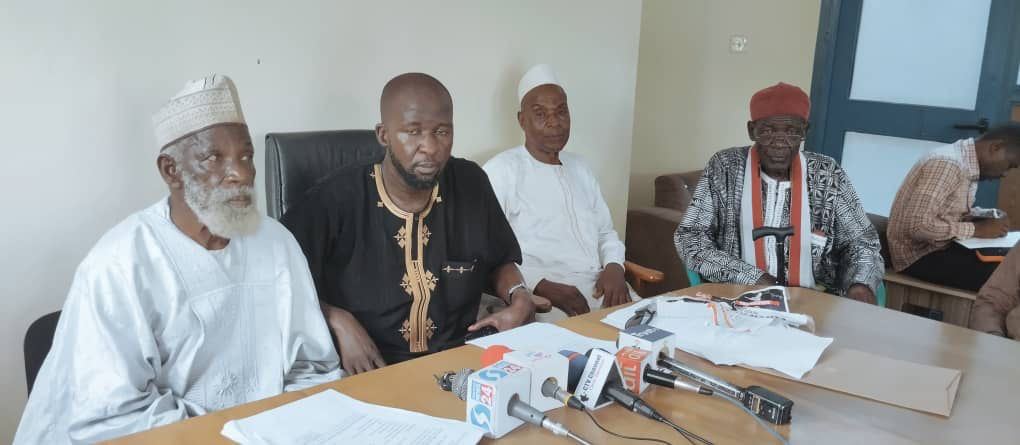
Emmanuel Yamai Bakam, a native of Fadia Tudun Wada community in Kajju Chiefdom of Zangon Kataf Local Government Area of Kaduna State, has raised alarm over what he describes as a coordinated plot by certain individuals, allegedly aided by the security agencies, to violate the age-old customs and traditions of the Bajju people.
Bakam made this call during a world press conference held in Kaduna on Friday, 2nd May, 2025.
Addressing the press, Bakam lamented the prolonged and painful controversy surrounding the burial of his late mother, who died in September 2023, and accused some of his siblings, notably his elder sister, Hajia Maryam Doka, Maureen Kabrik and 3 others are vehemently frustrating efforts to bury their mother in accordance with Bajju native law and customs—despite judicial pronouncements affirming the process.
Bakam stated that as the first son and next of kin to the deceased, he has been unjustly denied access to his mother’s remains, in defiance of multiple court rulings that directed the corpse be handed over to him for burial under native rites.
He described the development as a disgrace to the Christian values on which the family was raised and a direct affront to the authority of the Bajju elders and traditional system.
He recalled how a similar controversy ensued following the death of their father some years earlier, where his siblings allegedly coerced their mother to allow for the father’s burial in the sitting room of their village home—contrary to Bajju customs, which prohibit such a practice unless the deceased is a traditional title holder or at least 100 years of age.
That violation, he noted, was only tolerated by the community due to his intervention and plea for peace, but with the warning that it should never recur.
Emphasizing that every people and community are governed by their traditions, Bakam referenced the Constitution of Nigeria (particularly Chapter IV), the United Nations Charter on the Rights of Indigenous Peoples, and other global frameworks which protect cultural rights, stressing that the people of Fadia Tudun Wada have always been known for peaceful coexistence and lawful conduct.
He noted that while the family had sought judicial resolution, a court of competent jurisdiction ruled in his favour, directing that the body be handed over to him for burial.
Dissatisfied, his siblings appealed the ruling, but the Kaduna State Customary Court of Appeal upheld the earlier judgment. Despite these rulings, Bakam says the corpse remains hidden and inaccessible to him and other family members.
To make matters worse, he stated that the matter has been weaponized, as he has faced repeated invitations by the police; and have been arrested, harassed and intimidated by Department of State Services (DSS), allegedly at the behest of his influential sister.
He expressed deep concern that some high-ranking security officials, including the Kaduna State Police Commissioner (CP) and the Director of DSS in the state, appear to have taken sides with his siblings.
Bakam alleged that he was summoned to a meeting by the CP on 25th April, 2025, in which the Director of DSS was ably represented by the Deputy Director; where the CP threatened him that he was only waiting for marching orders to storm his village with 200 armed policemen, to effect the burial of his mum against the Bajju customs and traditions, and against the substantive judgment of a court of competent jurisdiction, an action he warns could ignite serious conflict.
Bakam further revealed that funeral posters had suddenly appeared around their family house in Shagari, Kaduna, announcing a burial that he, as next of kin, has no knowledge of and did not authorise. He expressed shock over what he termed a brazen disregard for judicial authority and cultural dignity.
Of particular concern to him is an alleged plan by his siblings to storm the family village on Saturday, 3rd May, 2025, with over 200 armed policemen to enforce the burial against court judgments and traditional laws.
He warned that such an action would amount to provoking the peaceful Bajju community and could lead to confrontation, injury, or destruction of property.
Bakam also expressed unease over rumours that his siblings have boasted of securing the backing of the National Security Adviser (NSA), Mallam Nuhu Ribadu, and that instructions have allegedly been issued from his office to compel the burial according to their wishes.
In response, Bakam cautioned that any support the NSA may have extended could have been based on misrepresentations, and he felt it necessary to publicly lay out the facts.
He appealed to the NSA, Kaduna State Government, the Nigeria Police Force, DSS, and other relevant authorities to exercise restraint and ensure that the rule of law is upheld.
He stressed that deploying such a large contingent of security personnel to enforce a burial not only undermines the judiciary but also wastes vital resources that should be directed to areas grappling with security crises across Kaduna State and the country at large.
“It is illogical, unfair and unjust to deploy such heavy security personnel to oppress and molest innocent citizens of a peaceful community merely for insisting that the court judgment and our customs be respected,” Bakam said.
“There are parts of Kaduna State plagued with banditry and terrorism that could use this level of attention.”
He concluded his remarks with a passionate appeal to the Kaduna State Government, civil society, traditional rulers, and all well-meaning Nigerians to intervene and ensure that peace, justice, and cultural dignity are preserved.
Specifically, Bakam called on the security agencies, particularly the police and DSS, to desist from further harassment and allow the family to give their mother a peaceful and honourable burial in line with Bajju traditions and valid court rulings.
He anchored his demands on the following legal and international instruments:
1. The United Nations Declaration on the Rights of Indigenous Peoples, particularly their rights to culture, language, and identity.
2. The Universal Declaration of Human Rights, Articles 6–11, on legality and human rights.
3. The African Charter on Human and Peoples’ Rights, which protects the freedoms and traditions of communities.
4. The Constitution of the Federal Republic of Nigeria, especially Chapter IV (fundamental human rights) and Chapter II (the duty of the state to promote and preserve Nigerian culture).
“This is not just about a burial,” he concluded. “It is about justice, identity, and the soul of a people. The law must be obeyed.”