Follow Us on Google
“Political parties all over the world insist that the party discipline be followed.”
—Jiddu Krishnamurti
By Omoniyi Salaudeen
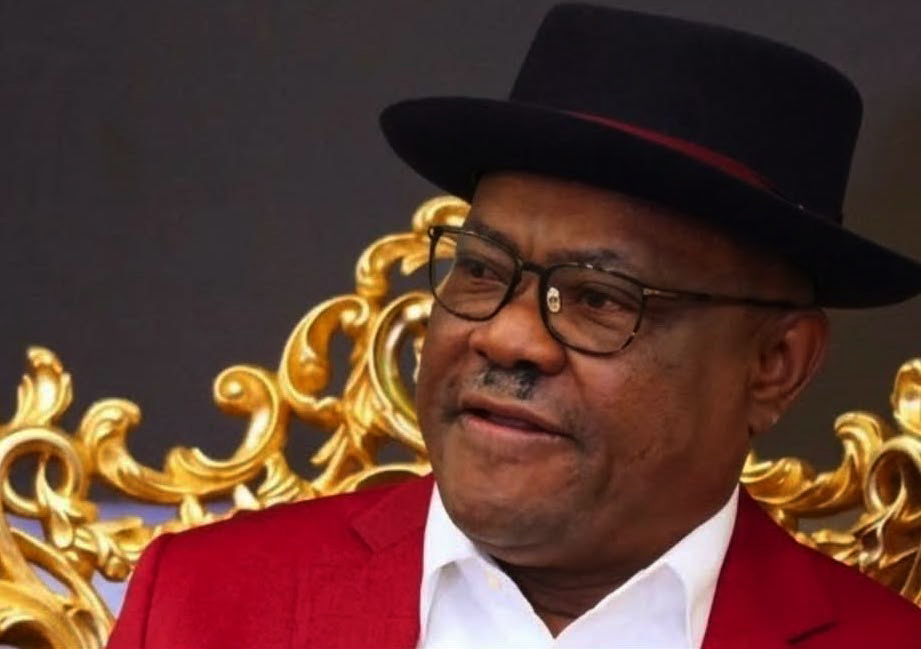
The uneasy alliance between the APC Governors’ Forum and the Minister of the Federal Capital Territory, Nyesom Wike, is unravelling as campaigns for the 2027 elections ramp up. Fixing this widening gulf without tampering with the party’s state-level structures will test President Bola Tinubu’s famed political sagacity, especially as he faces his toughest re-election battle yet from coalition forces. Unlike other presidential appointees, Wike will be harder to tame; obstinacy, radicalism and doggedness have defined his politics. Yet, the governors, too, are unlikely to take orders from outside the core party machinery.
Facing the stiffest challenge from an opposition coalition, though without a united front, both sides of the divide are critical to the success of the APC and Tinubu’s re-election bid. While Wike remains a key political ally of the President, his cross-party political movement, dubbed the rainbow coalition, and his campaign methods have continued to draw heavy resistance from state-level APC leaders. They argue that this platform undermines the party structure by aligning with opposition figures, particularly from the PDP, in gubernatorial, senatorial, and legislative races. The ensuing rift highlights the dilemma of striking a delicate balance between maintaining party discipline and nurturing tactical alliances.
Led by Governor Hope Uzodimma of Imo State, who chairs the APC Governors’ Forum, the governors have formally resolved that their campaign commitment belongs strictly to candidates produced by official APC organs. And understandably so because of the preservation of their political interests and future relevance. According to them, encouraging divided loyalty or cross-party endorsements threatens the party’s down-ballot success.
Wike counters that his primary obligation is securing Tinubu’s re-election, insisting that state-level races are localised battles. He maintains that it is natural for the PDP to field candidates in state races and that APC governors must earn their own victories at the polling units rather than relying on federal sentiment.
The dispute has escalated into sharp personal exchanges. Wike has accused key APC governors, including Uzodimma and Kwara State Governor AbdulRahman AbdulRazaq, of sponsoring misinformation against his coalition. In turn, the APC leadership views Wike’s structure as an unauthorised campaign vehicle operating outside the official party machinery.
The broader political implication of this tension exposes the delicate balance President Tinubu must maintain between institutional APC stakeholders and high-profile opposition allies who delivered crucial support in 2023. What makes this balance so intricate is the very nature of a cross-party coalition. Unlike a traditional party structure bound by a constitution, manifesto and disciplinary organs, a cross-party coalition is an alliance of convenience held together by personal loyalty and mutual interest, not party loyalty. Its members do not share a common political past and do not necessarily seek a common political future beyond the immediate election.
Other News
This creates three fundamental intricacies. First is the problem of dual loyalty. Wike’s operatives are still PDP card-carrying members in many states, contesting for tickets in one party while campaigning for the presidency in another. To the APC governors, this is anti-party activity by definition. To Wike’s camp, it is strategic pragmatism — you cannot dismantle the PDP structure you need to deliver presidential votes and still expect that structure to work for you.
Second is the issue of reward and succession. Wike, with his cross-party ally, does not want just appreciation; he wants protection for his people. When he negotiates for his loyalists to get PDP tickets while supporting Tinubu, he is securing their political survival. But when those same loyalists run against APC candidates backed by incumbent governors, the contradiction becomes irreconcilable.
The third intricacy is control and accountability. The APC Governors’ Forum can be summoned, cautioned, or sanctioned by the party’s National Working Committee. Wike’s rainbow coalition cannot. It answers only to Wike, and Wike, as a serving minister from another party, answers only to the President. This asymmetry of accountability is what makes the governors deeply uneasy.
For the President, this is not a simple conflict to adjudicate; it is a structural test of his 2027 architecture. He cannot afford to lose either flank. The governors control the party’s grassroots machinery, delegates, and state resources critical for mobilisation. Wike, on the other hand, offers a bridge into the South-South, a foothold in the opposition, and a political bulldozer willing to do the messy jobs others avoid. To navigate this, three broad options lie before him, each with its own merits and risks.
The first option is to formally absorb Wike’s rainbow coalition into the official APC campaign council, with clearly defined boundaries. Under this model, the President would create a National Presidential Campaign Council where Wike is given a prominent but strictly presidential portfolio, for instance as South-South Coordinator for Presidential Mobilisation, while an explicit directive bars his structure from intervening in gubernatorial and legislative elections in APC-controlled states. The merit of this approach is discipline through inclusion. It gives Wike legitimacy and a sense of belonging, while reassuring governors that their domains are protected by a presidential executive order.
The risk, however, is enforcement. Wike’s political style has never thrived under institutional containment, and governors may see any formal role for him as an endorsement of dual loyalty. If not carefully managed, it could legitimise the very parallel structure they oppose. The second, more pragmatic option is a tacit decoupling of the presidential and sub-national campaigns. President Tinubu would privately allow a two-track system: Wike continues to mobilise for the presidential vote nationwide, even if it means working with PDP figures in certain states, while the APC Governors’ Forum is given absolute, public presidential backing to control all state-level affairs. This is essentially the 2023 model that worked in Rivers State, scaled nationally. The President would be signalling to the governors that if they deliver their states for him, he will not interfere in their succession plans. To Wike, the signal is that he should deliver the presidential votes where he can, but not claim glory in APC states. This preserves cohesion by avoiding a direct confrontation. Its advantage is that it reflects political reality, since the presidential and governorship elections, though held together, are different contests. Its danger is that it institutionalises anti-party activities and could demoralise APC faithful in opposition states who have laboured for the party, only to see PDP candidates tacitly supported by a federal minister.
The third and most politically demanding option is a grand bargain brokered by the President himself. This would involve direct negotiation where Wike is asked to demobilise his structure in key APC battleground states like Imo, Kwara, and Ebonyi in exchange for significant concessions elsewhere, potentially influence over federal appointments, boards, and APC structure in Rivers State and a few other states where the APC is weak. Chairman of the Progressive Governors Forum, Uzodimma and other influential governors would be brought into the deal to co-sign the arrangement, making it a collective party decision rather than a presidential imposition on the forum. This option requires Tinubu’s greatest asset, his famed ability to share power and reward loyalty. This approach best sustains long-term party cohesion because it transforms a zero-sum fight into a win-win. Governors keep their states, Wike gets tangible political compensation and a clearer path into the APC, and the President retains both engines for his re-election.
In the final analysis, the President’s choice will define the character of the APC going into 2027. A purely disciplinary approach risks alienating a proven fighter. A laissez-faire approach risks hollowing out the party’s state structures. The delicate middle path, institutional containment coupled with a grand bargain, may be the ultimate test of the sagacity for which Tinubu is renowned. As campaigning ramps up, the APC Governors’ Forum is pushing to ensure that presidential re-election efforts do not come at the expense of the ruling party’s regional control across the states, and how Tinubu resolves this will determine whether his coalition remains a tactical alliance or evolves into a cohesive governing bloc.
The inherent danger, however, is that the APC may enter the 2027 contest with a divided front at a time it can least afford it. History has shown that ruling parties rarely survive when their governors and their most potent mobilisers are working at cross-purposes. A house fighting itself cannot effectively confront an opposition coalition hungry for power. Even if that opposition remains fragmented today, a common enemy has a way of forging unity at the eleventh hour. If Wike’s loyalists and APC foot soldiers clash in the same polling units, trading accusations of betrayal while the opposition presents a united ballot, the result will be voter apathy, suppressed turnout, and protest votes. The President would then be left battling not just the opposition coalition outside, but also the coalition of distrust inside his own camp, a two-front war that no incumbent, however politically sagacious, can easily win.