Follow Us on Google

By Henry Uche
Over the years, insurance fanciers and the federal government of Nigeria have designed transformational strategies and models to push forward aggressive insurance penetration and expansion, especially in the hinterlands.

But despite these moves, insurance uptake in Nigeria with an estimated population of over 220 million remains less than one per cent, defying all efforts. The World Bank and the National Insurance Commission (NAICOM) have currently put Nigeria’s penetration at about 0.5 per cent of GDP.

Analysts and commentators have attributed the challenge to various factors, including but not limited to poverty, ignorance and the hurting belief in the potency of charms and necromancy, popularly called ‘African magic’ as opposed to having an insurance cover to take care of expected or unexpected calamities.
Sunday Sun checks on many rural players in the Micro Small and Medium Enterprises (MSMEs) space across the country reveal a debilitating scenario. Many traders told this writer that they conscientiously rely on the strength and protection of their forefathers, sourced through traditionalists in their villages to shield their businesses and properties from any form of harm.

In certain cases, locally-prepared sorceries are buried in shallow burrows at the entrance of shop and business areas to ward off burglars, fire or any other unseen challenges that may befall them.
To such people, it is better for them to have such fetish deposits (tangible or intangible) in their premises than to procure an insurance cover -which they see as a designed and licensed extortion template to swell revenue with negligible or zero benefits to them.
In an interface with the Chief Executive Officer/Managing Director of Stream Snail Tech, Lagos, Mr. Tokunbo Ajile, he explained that his strong faith in God has been his source of security, and for that reason, subscribing to insurance coverage was unnecessary and a waste of money.
“To me, trusting in God’s protection is all I need. I don’t believe in insurance because I strongly rely on God to shield me from harm,” he said.
Ajile, an agripreneur, who is engaged in a mixed farming system that includes snails, dogs, vegetables, and poultry, and rabbits-keeping, admitted that he has limited knowledge about insurance and the potential benefits it offers to businesses like his. He also shared that hearing about the experiences of colleagues who had unpleasant encounters with insurance companies further discouraged him from considering any form of insurance, despite pressure from friends and family.
“Insurance agents come to me regularly. But in Christ, I have immunity. My life and business are firmly insured. I don’t believe in uncertainties or unfortunate incidents for me and my family. So, I don’t think I need insurance. I don’t want their ‘headache’. I believe that whatever you frantically speak into your life comes to pass if you believe and act accordingly.”
He stressed that those who wish to embrace insurance are free to do so, saying, “I can’t discourage anyone from picking up insurance cover. Every one of us has different belief systems. It is your faith that makes you whole. I cannot stop you from believing in insurance companies, if you do, it is at your risk, though they preach to us that they cover risk, I can only wish you well,” he declared.
Similarly, Emmanuel Umuroh, an Ibadan-based medium-scale herbal medicine specialist also finds no need for insurance. He said that while insurance might be useful for some people, it is a waste of time and money for him due to his spiritual affiliation and affinity. “I do not dispute insurance against anyone. But I possess some spiritual powers that enable me to foresee future events. With this, I can avert bad situations for myself and others. So, why would I need insurance?” Umuroh queried.
As a self-styled spiritualist, he shared his belief that no harm would come to him because of the charms and concoctions he anchors his faith on for protection. “I know about insurance and I am not against it. If people want to go ahead and buy protection from insurance companies, that is fine. But everyone has their own beliefs. For me, my spiritual powers work just fine.”
He elaborated further, “I know many people would not say it publicly, but they rely heavily on different things for protection. Some carry charms passed down from their forefathers. You see, life is spiritual and everyone has their own form of insurance, whether it is through faith, charms or traditional practices, they all work in different dimensions.”
Conversely, Abdullahi Ganiu, a fairly educated businessman operating a small kiosk in Jos, Plateau State, had a more practical view of insurance. He shared that although he had long known about the importance of insurance for businesses, financial constraints had impeded him from subscribing to any cover.
“I know about insurance, so I am not against insurance but for the dearth of financial resources, I have not been able to pick any insurance cover in the past decade. I want to get coverage for my business, but I can’t afford the premium. They said if I don’t pay, they won’t compensate me, and I am not sure if what I insured against would happen or not, so I rather stand aloof.
“But if something happens, like a fire or theft, by God’s grace, I will save up and get insurance going forward because I know anything can happen,” he said, noting that he had heard about Takaful insurance – a form of Islamic insurance, and was seriously considering getting coverage.
Takaful insurance was Introduced in Nigeria by African Alliance Insurance in 2005, and specifically designed to reach out to individuals and businesses in rural areas particularly – the Muslim community.
Despite campaigns by the College of Insurance and Financial Management (CIFM), Chartered Insurance Institute of Nigeria (CIIN) and operators in Nigeria, some individuals prefer to rely on traditional beliefs for protection rather than seeking insurance. They would rather invoke the spirits of their ancestors rather than pay for coverage.
This mindset was notably evident following one of the devastating fire incidents that occurred in Lagos, where businesses suffered losses as fire gutted some buildings in Mandilas, Lagos Island, and the Afriland Towers. Vox pop conducted revealed that most business owners had no form of insurance. In that incident, five people reportedly died in the fire at Afriland Towers, with one person rescued from the Mandilas incident, amidst other losses.
According to eyewitness accounts, the inferno at the multi-story Central Plaza began around 7:40 p.m. and destroyed many shops housing luxury goods. As the fire raged, traders were seen trying to salvage their goods because they had no insurance cover.
Another major unfortunate incident that left some families licking their wounds and others counting losses was the Bono Energy Terminal fire disaster that happened on July 3, 2026, in the Coconut area of Olodi Apapa, Lagos, involving a 5-million-litre automotive gas oil (AGO) storage tank. Luckily firefighters contained the blaze before it spread to adjoining petroleum-storage facilities. Billions in Naira was reported to have been lost.
Despite the magnitude of the incessant disasters that occur in Lagos, particularly, Sunday Sun investigation revealed that many of the affected traders and corporates did not have insurance.
Mr. Alani Abiodun, a shop owner at Number 26 Dosunmu Street, who deals in decorative lighting and tailoring materials, shared his reasons for not having insurance over three decades.
“I have been in this market for about 30 years. We have heard about insurance but I don’t really trust them. When incidents like this happen, they come up with excuses and reasons not to pay. But if we could find a reliable partner, why won’t we take insurance covers? The problem is that they don’t treat ordinary people well.” Abiodun lamented.
Another victim of the fire incident, Mr. David Enyi, a textile trader, told a similar story of horrendous loss. His two shops were destroyed in the fire and despite his business being worth over ₦100 million, he had no insurance.
“I can recall that an insurance company refused to cover us because of the market’s layout. I regret not approaching another company for coverage, but life goes on,” Enyi said, with evident frustration. He expressed fragile hope that the government would provide any meaningful assistance, citing corruption as a major concern.
These sad stories illustrate the deep-seated distrust and financial challenges that hinder insurance penetration in rural and small-scale business communities in Nigeria.
Further research revealed that many individuals either do not have the wherewithal to afford insurance or are skeptical of its effectiveness, opting instead for traditional methods or faith-based protections mechanisms.
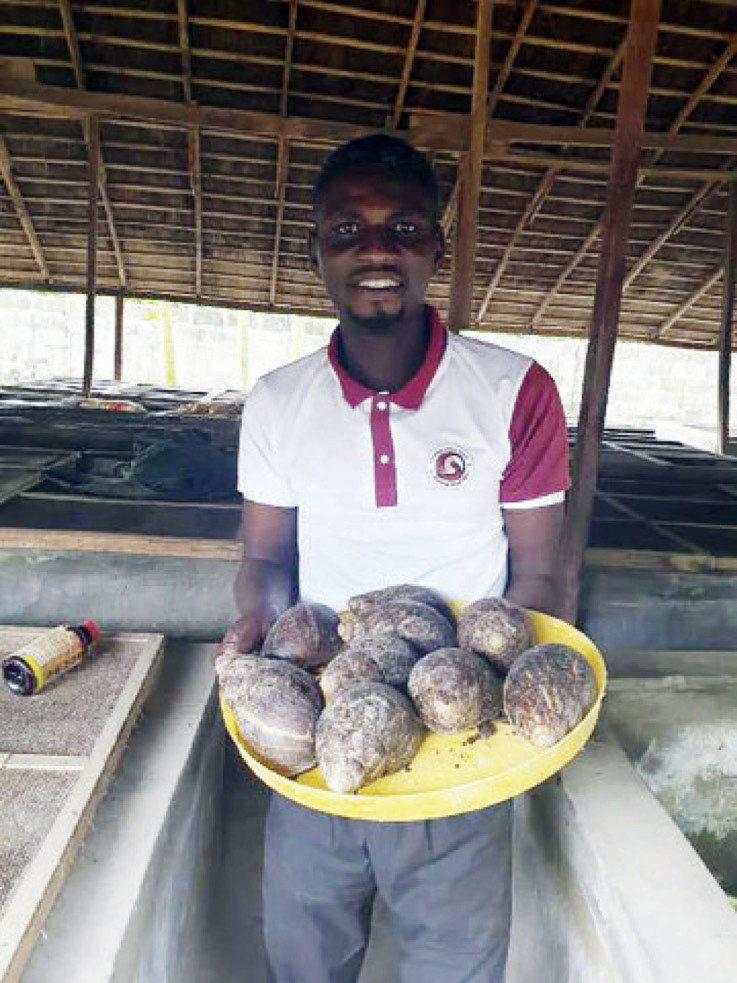
Mr. Charles Opitoke, chief executive of RIOAS Integrated Limited, a mushroom farmer, in Ikotun, Alimosho area of Lagos metropolis, who admitted to being aware of insurance said he was eager to learn more about it.
“Yes, I can say categorically that I know there are risks associated with any business, even the life we live, the environment, the country is full of risks. But I have not seen any insurance agent in my area. If the insurance agents convince and assure me that there are no secret or hidden clauses, of course I would get the coverage.
“I heard some market women saying recently that some insurance companies don’t disclose everything people need to know to the letter, they don’t explain everything such as the terms and conditions in plain language. Some of their conditions are ambiguous. It is in very tiny font size that would hide something, so that you will fall victim, by making one mistake or the other, because they are looking for a way to make you forfeit your claim.
“Sometimes when the thing you insured against happens, they begin to give you a different interpretation and meanings to some words or phrases. Sometimes, when we remember all these things, we are discouraged. As for insurance, I know about them, but till I see a genuine company, please leave me with my convictions,” he said with a tone of finality.
Just like Opitoke, Amara Ifeanyi, an agricultural entrepreneur and poultry farmer at Ijegun area of Lagos Mainland, has known about insurance services for a long time and equally familiar with the relevance of insurance coverage. As an educated poultry breeder, she acknowledged that keeping different species of birds (broilers, ducks, turkey, cockerels, layers, quails and guinea fowl is laced with high risks.
Ifeanyi has been in the business for over a decade and operated without insurance cover, largely due to high cost of operation.
“I can’t afford to purchase feeds/foods, medicals and other expenses for my birds at very exorbitant prices and still have funds left for insurance cover,” she decried.
She accused some underwriters of not being honest, alleging that they always find ways not to pay compensation. “We need to investigate insurance companies before you engage them. There are many of them in Nigeria, some are faithful, but some are not; so, it is left to us to know which one to take a cover from. In the midst of unfaithful ones, there are faithful ones,” she said.
Another major challenge to poor insurance penetration, especially in many rural areas, is that most people who need insurance have poor access to communication infrastructure like smartphones, the internet, television and newspapers, thereby limiting exposure to information about insurance products and services.
Strongly connected to this is the high rate of illiteracy in rural communities, which makes it challenging for residents to understand complex insurance concepts and the benefits of coverage.
Again, strong cultural and religious beliefs may discourage the purchase of insurance as people may rely more on traditional coping mechanisms or see insurance as a mere unnecessary want.
Economic constraints
Currently in Nigeria, economic constraints have led to high levels of deprivation, resulting in many rural dwellers prioritising immediate needs over perceived future risks. The searing economic climate is deterring intending subscribers from procuring insurance or servicing existing contracts.
More so, the cost of insurance can be prohibitive for those with limited financial resources. Additionally, a history of negative experiences, such as non-payment of claims or unprofessional service can lead to mistrust of insurance companies, deterring potential customers.
Remarkably, this has forced the National Insurance Commission (NAICOM) to be stricter in its regulatory policing. With the coming of Nigerian Insurance Industry Reform Act (NIIRA 2025), and the Insurance Policyholders’ Protection Fund (IPPF), the insuring public can be cocksure that they are adequately protected.
The Commissioner for Insurance and Chief Executive Officer, National Insurance Commission, Olusegun Ayo Omosehin, in May 2026, inaugurated Insurance Policyholders’ Protection Fund (IPPF) Committee, to ensure that the Fund is credible, well governed, and effective when policyholders need it most.
Other News
The Commissioner clearly stated that the fund would be used to resolve distress and insolvency of licensed insurers and reinsurers or as a result of cancellation of license.
The primary objectives of the six-man committee are: to ensure protection of policyholders and beneficiaries covered under an insurance policy in Nigeria; to ensure timely and accurate collection of contributions to the Fund, to establish sound management and investment practices for the Fund.
Other objectives include: to provide procedures for disbursement and recovery of loans from the Fund, and to promote transparency, accountability, and governance in the administration of the Fund.
On several occasions, the regulator had threatened to name and shame unrepentant insurance companies who default in claims settlement. The warning came on the heels of the recent recapitalization of 48 insurers and two reinsurers as Nigerians brace up for a new deal of insurance businesses.
Limited presence of insurance providers
Research has shown that insurance companies often focus their operations on urban centres, leaving rural areas underserved. This lack of presence contributes to a lack of awareness and availability of insurance products.
Industry analysts and commentators have also observed that Insurance companies may not effectively target rural populations in their marketing efforts, resulting in a lack of awareness and understanding of insurance offerings.
Additionally, the complexity and variety of insurance products can be overwhelming, particularly for individuals who are unfamiliar with the industry. Simplifying the products and tailoring them to the needs of rural residents could significantly help increase awareness and uptake.
Be that as it may, Omosehin continues to reaffirm his administration’s commitment to boost insurance penetration saying, “The long term goal of the insurance regulator is to see how we can move this to about five per cent in 10 years and a whole lot of reforms and activities have been put together to make this happen.”
Omosehin, while discussing Nigeria’s current insurance penetration of one per cent, during a media discourse also said NAICOM was undertaking mass education, public awareness and enlightenment campaigns to improve insurance uptake.
“In nations across the globe where insurance is thriving, agents act as catalysts, driving the growth. Similar steps need to be taken to grow insurance in Nigeria,” Omosehin said, stating that NAICOM plans to expand the number of active insurance agents with a long-term target of having three million agents.
One of the mandates of the Commission is to deepen the culture of insurance by ensuring nationwide compliance with the compulsory insurance provided by the laws. To achieve this NAICOM is actively courting the state governors to support stronger state-level enforcement of compulsory insurance compliance provisions in the law.
In August 2026, Omosehin reiterated NAICOM’s commitment to unlocking the immense potential of Takaful as a strategic vehicle for “expanding insurance penetration, promoting financial inclusion, and supporting sustainable economic development across Nigeria. He said he is leaving no stone unturned to achieve it.
In September 2026, the Commission officially launched the Insurance Sector Strengthening Programme (ISSP), describing it as an initiative designed to “advance insurance penetration, financial inclusion, innovation, and stakeholder collaboration” in Nigeria.
It set a measurable target: to raise insurance penetration from about 0.5% to 1.5% of GDP by 2028. The programme focuses on advocacy/policy, awareness and education, capacity building, gender inclusion, youth engagement, and MSME/value-chain development.
Way forward
Addressing the issue of low insurance penetration in rural areas of Nigeria requires a multidimensional approach. Top leaders in the sector are aggressively pushing for broader education and ‘radical but intentional’ awareness campaigns across all nooks and crannies of the most populous Black nation in the world.
For the immediate past Head, Corporate Communications & Investor Relations of Sovereign Trust Insurance Plc, Mr. Segun Bankole, there is urgent need for community outreach programmes.
Bankole, just like other insurance spokesmen, harps on the critical need to organise regular community meetings, workshops, and seminars to educate rural populations about the benefits of insurance and how it can protect them from financial risks. Such information should be communicated in the language they understand to facilitate reception of the message by people.
He also advocated the need for coordinated collaboration with traditional and religious leaders who are trusted figures in the communities, to endorse and promote insurance products to their followers and wards.
Microinsurance
In addition to existing micro-insurance products of existing underwriters, stakeholders referencing telecommunication network providers in Nigeria, say there is a great need to develop and offer more microinsurance products that are affordable and tailored to the specific needs of rural residents, such as agricultural insurance for farmers.
Dr. Obinna Chilekezi, a renowned insurance researcher and lecturer of risk management maintained that there is a need to create straightforward and easy-to-understand insurance policies with minimal jargon, making it easier for potential customers to comprehend the terms, conditions and benefits.
Mobile technology
Tech developers on their part have opined that with mobile phones and other electronic infrastructure becoming the rule, there is a need to utilise mobile technology for the sale and distribution of insurance products and services.
“Mobile platforms can facilitate premium payments and claims processing, making insurance more accessible. There is also a need to increase the presence of insurance agents and brokers in rural areas to provide face-to-face interactions and personalized services” the Head, Brand & Corporate Communications of Guinea Insurance Plc, Hanson Ufot, advised.
Partnerships with microfinance institutions
With the recent transformation of this very sector, a good number of insurance watchers and observers have pushed for a deep collaboration with microfinance institutions and cooperatives that already serve rural communities to distribute insurance products.
More so, they want the federal and state governments to provide incentives for insurance companies to offer products in rural areas, making it financially viable for them to serve such communities. They said that the Nigerian Agricultural Insurance Corporation (NAIC) should revert to its core mandate, especially as it failed to meet up with the recapitalisation exercise.
Another area of partnership lies with telecom companies to send educational messages and promote insurance products through SMS and other mobile platforms to Nigerians all over the country, in the same way they send short message service (SMS) unhindered.
Mandatory insurance policies
This is already being championed by the regulator and stakeholders want more aggression to drive it. The synergy between NAICOM and the Nigerian Police, Federal Road Safety Corps, and other federal agencies are the right steps in this direction.
“There is a need to implement mandatory insurance policies for certain high-risk areas, such as crop insurance for farmers, to ensure broader coverage” Blessing Amanze, an agriculturalist, said.
Transparent claims process
Insurance subscribers have for years maintained that ensuring a transparent and efficient claims process is the key to building trust in insurance companies. Quick and fair settlement of genuine claims will encourage more people to purchase insurance. This is why under NIIRA 2025, claims are meant to be resolved within 30 days.
Equally, human right advocates have lent their voices by calling for the strengthening of consumer protection laws and regulatory oversight to safeguard the interests of policyholders and prevent fraudulent practices. This, they believe, will strengthen the image of the sector.
Weather-index insurance
Risk analysts believe that introducing weather-index insurance products that provide payouts based on predefined weather conditions will reduce the need for individual loss assessments.
While other stakeholders believe that offering affordable health insurance packages (like the Lagos State Ilera Eko model) tailored to specific health risks and the needs of rural populations will help deepen penetration.
Financial literacy
Market and investment strategists have asserted that integrating financial literacy programmes into community development initiatives will help people understand the importance of financial planning and risk management. They also moved for the incorporation of basic insurance and risk management concepts in both private and public schools curriculum to build and foster a culture of awareness from a young age of every Nigerian.
With the glaring insurance gap and weak risk management culture, a political and international affairs analyst, Arinze Chibueze, believes that the meagre 0.5 per cent insurance contribution to GDP is very precarious for the giant of Africa. It is very troubling that over 200 million people in Nigeria do not have one form of insurance or the other in a volatile, uncertain, complex and ambiguous environment.
However, experts have insisted that confronting these entrenched challenges head-on is not only crucial but non-negotiable, to break the barriers to insurance penetration in rural Nigeria, strengthen household resilience and unlock the vast untapped economic potential of communities across the country.