Follow Us on Google
From Fred Ezeh, Abuja
The National Universities Commission (NUC) announced on Wednesday that it has earmarked 3 million euros as the first tranche of the $40 million loan secured from the French Development Agency to support Information, Communication, and Technology (ICT) projects in 10 selected universities across the country.
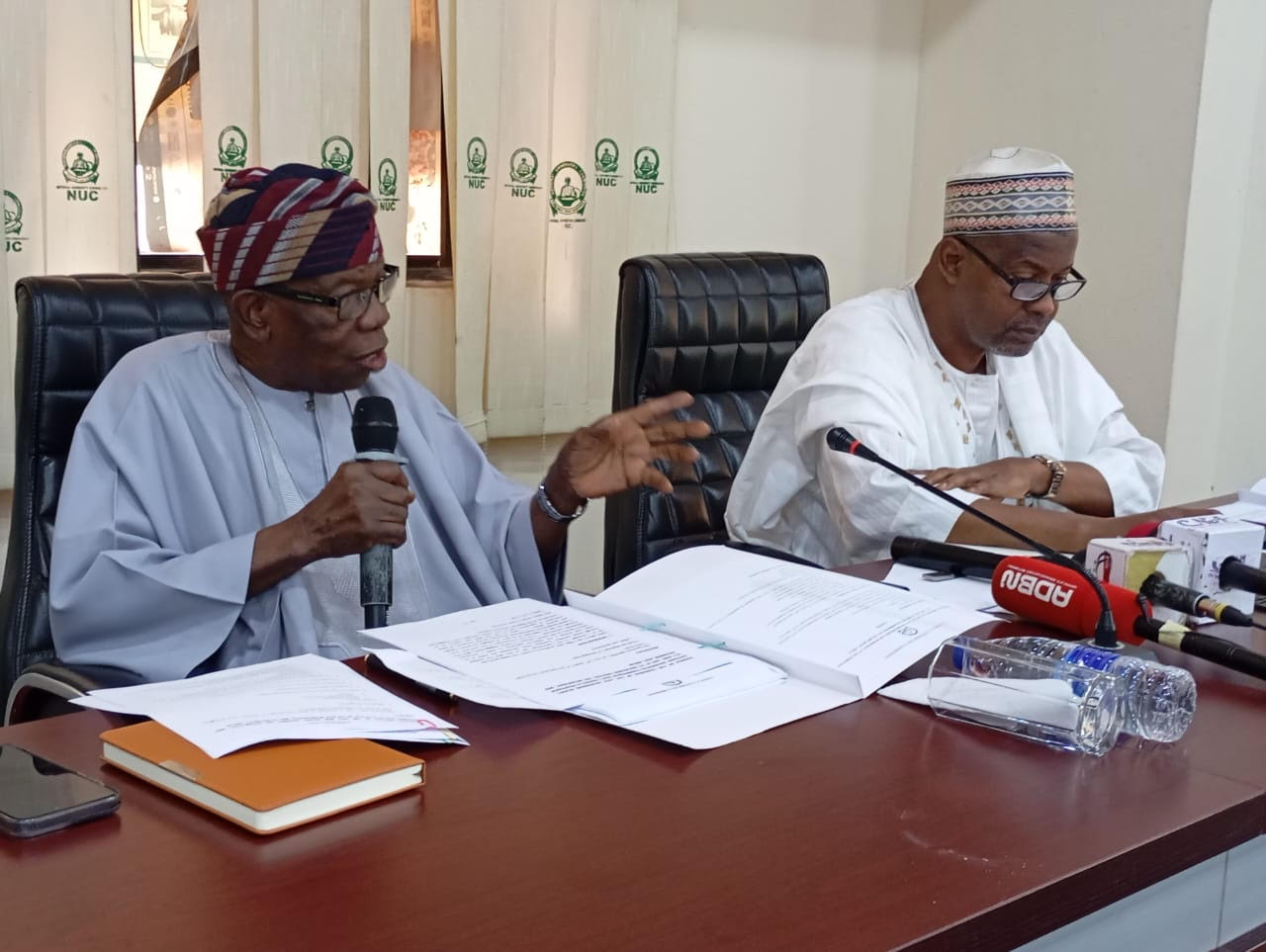
Executive Secretary of the Commission, Prof Abdullahi Yusufu Ribadu, made the disclosure at the inaugural meeting of the 13th NUC Board held at the Commission’s headquarters in Abuja.
Prof Ribadu noted that since assuming office about a year ago, the Commission has driven numerous initiatives centred on research, entrepreneurship, digital transformation, and skills development in Nigerian universities.
He said: “The Director responsible for the assignment confirmed to me that the first tranche of 3 million euros has been deposited in our CBN account to kick-start the process.
“We have strengthened internal financial management, expanded access to university education through the licensing of new private universities, and approved new programmes and units.
“We have also supported the take-off of publicly funded universities, expanded open and distance learning centres, and continued system-wide quality assurance exercises. Currently, the 2025 Accreditation Exercise is ongoing.
“These priorities continue to form the foundation of the Commission’s direction, and I am seeking your support in advancing them.”
Ribadu assured the Board of the Commission’s full cooperation, saying the management stands ready to draw on the members’ expertise.
“We will rely on your wisdom to guide us as we carry out our duties. I am confident that your collective experience will strengthen the Commission’s capacity to guide the Nigerian university system at a time when higher education continues to evolve. We also look forward to using your networks to help advance projects and partnerships that will benefit the Commission and the entire university system,” he added.
On his part, Chairman of the Board, Emeritus Professor Oluremi Raphael Aina, expressed appreciation to President Bola Tinubu for his sustained support for the university sector.
He said the Board is assuming its mandate at a time of transition for higher education, with global standards rising and expectations increasing.
Other News
Aina outlined five central pillars to guide the Board’s work: performance evaluation, improved university rankings, digital literacy, research, and institutional reforms.
“On evaluation of NUC performance, we must examine in detail the Act that buffered and made the foundation for the NUC. We need to also be conversant with the various amendments to the Act, its vision and mission, guiding principles and ethics.
“Then we must study the Commission’s operational challenges and landmark achievements. Going forward, we should compare ourselves against global standards, not sentiments, not history, and where we fall short, how we fall short, and why we must adjust boldly.
“Also, the president has made education a pillar of national rebirth with the establishment of the fund and other initiatives. The signal sent to the world is that Nigeria is ready to reset and rebuild. Through our assignment, we must lead other key stakeholders in the higher education sector in pragmatically resolving the longstanding agitation of the academic staff union and other university unions.
“Advancements must also be made to enhance digital literacy and especially the use of Artificial Intelligence (AI) as tools to strategically reposition the universities nationally and internationally. Overall, it will also be a priority for the 13th board to work with the management for radical improvements in both the global and webometric ranking of our universities.
“We would identify and dismantle obstacles to university quality. Governance deficiencies, fund constraints, and research stagnation must no longer be accepted as normal. Our duty is to reform and make progress, not to manage decline.
“Additionally, we would review existing funding and explore new channels for sustainable funding. Nigerian universities cannot thrive on ingenuity alone. The board must intensify the search for alternative funding sources. Strengthen utilisation and explore emerging and local opportunities.
“We would also invest in the welfare and capacity of NUC staff and regulatory infrastructure. The system cannot overperform its operators. Credible accreditation and monitoring require strengthened conditions of service and protected regulatory independence.”
Aina added that the Board will fully leverage technology in its operations. “We will seek to leverage technology to ease our burden through the adoption of digital platforms for the advancement of our collective objectives.
And I have a charge for the board. This board, in whom I am well-pleased, carries with it the weight of expectations and aspirations of the Nigerian people,” he said.