Follow Us on Google
•Says buffers above IMF benchmark •Assures $1bn diaspora inflows target still stands
From Uche Usim, Washington DC
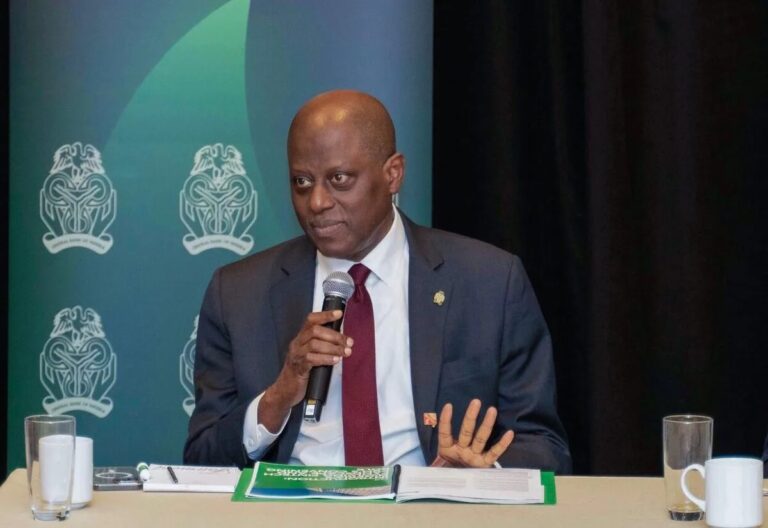
Central Bank of Nigeria (CBN) Governor, Dr Olayemi Cardoso, has calmed concerns over recent movements in Nigeria’s external reserves, insisting there is “no cause for alarm” despite short-term dips that have triggered public anxiety.
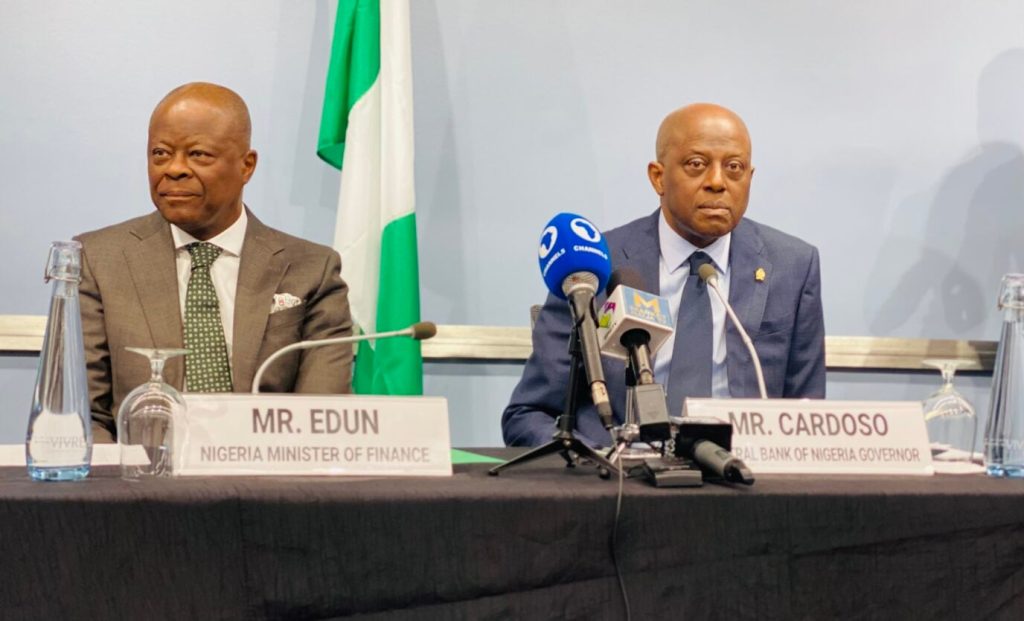
Speaking on the development on Friday at a media briefing to mark the end of the IMF-World Bank Spring Meetings in Washington DC, Cardoso said Nigeria’s reserve position remains comfortably above the International Monetary Fund’s minimum adequacy threshold, stressing that the fundamentals of the economy remain intact.
He noted that fluctuations in reserves are part of normal market dynamics, especially in a period where global financial conditions remain volatile and commodity-dependent economies face external pressures.
“What worries me is the anxiety in Nigeria, not the fundamentals,” he said, adding that the current framework is increasingly market-driven and less dependent on central bank interventions.
Cardoso explained that the CBN has deliberately reduced heavy-handed interventions in the foreign exchange market, allowing price discovery and investor participation to guide operations more efficiently.
He said this shift has helped improve transparency and rebuild confidence, even as it introduces short-term adjustments in external buffers.
The CBN governor also pointed to rising inflows from remittances as a stabilising factor, noting that Nigeria currently receives about $600 million monthly, with a target of $1 billion by year-end.
According to him, reforms in diaspora engagement, improved payment infrastructure and the inclusion of International Money Transfer Operators have strengthened formal inflow channels.
He added that ongoing efforts to remove bottlenecks such as BVN enrolment challenges are helping to sustain inflows through official banking systems.
Cardoso also linked Nigeria’s wider financial stability to the successful recapitalisation of banks, which he said has reinforced confidence from both domestic and foreign investors.
With 75 per cent of recapitalisation funds coming from local investors and 25 per cent from offshore sources, he said the outcome reflects “strong and balanced confidence” in the economy.
Other News
Despite global financial turbulence, he maintained that Nigeria is on a more resilient footing, supported by disciplined macroeconomic policies and reforms designed to absorb external shocks while preserving long-term stability.
Also speaking, the Minister of Finance and Coordinating Minister of the Economy, Wale Edun, who led the Nigerian delegation, said Nigeria is entering a stronger phase of economic recovery, moving from stabilisation to growth acceleration amid global uncertainty.
He noted that this year’s Spring Meetings took place against a backdrop of global shocks, including conflict and tightening financial conditions that have heavily affected developing economies.
Despite the turbulence, he said Nigeria’s disciplined and credible fiscal framework under President Bola Tinubu has strengthened resilience and investor confidence.
“We came with a message of resilience and reforms, and Nigeria is positioned to withstand external shocks like what we have now,” he said.
Edun noted that Nigeria has received commendation for reforms that helped manage external pressures, including reduced reserve depletion and improved fiscal discipline. He added that bilateral partners have also acknowledged the progress.
He said government response now focuses on scaling social safety nets to cushion households from rising living costs while maintaining reform discipline.
According to him, economic growth is strengthening, foreign exchange reserves are improving, and public debt remains sustainable with debt-to-GDP below 40 percent.
Edun added that small and medium enterprises are being supported to boost productivity, while policy discussions are increasingly centred on agriculture, ICT, and business expansion.
He said Nigeria is also advocating lower global cost of capital for developing countries, stressing that credible reform outcomes should attract financial rewards.
Overall, he said confidence is returning as Nigeria builds a stronger economy aimed at job creation, stability, and long-term expansion.