Follow Us on Google
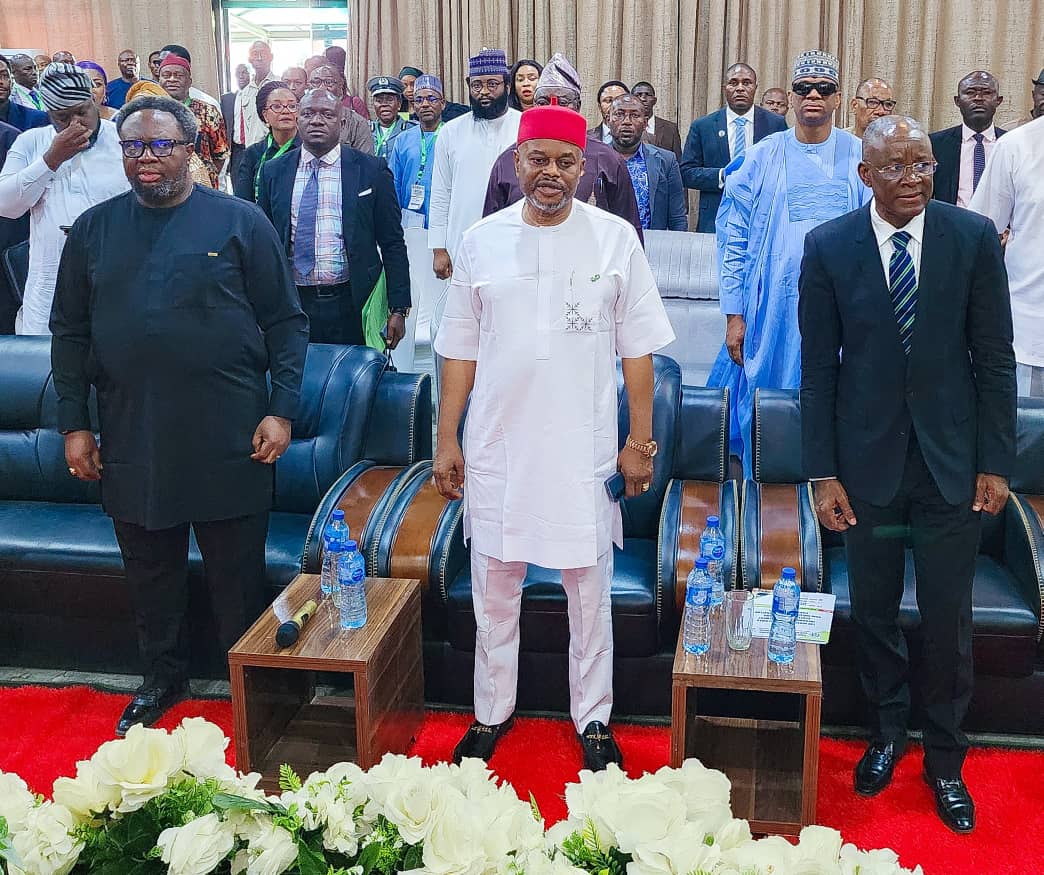
Minister of Innovation, Science and Technology, Chief Uche Nnaji, has declared that data gaps and poor integration hinder optimal utilisation of natural resources.
The minister made the statement at the launch of the Nigeria Raw Materials Management Information System (RMMIS) in Abuja.
He stated: “Lack of accurate, accessible data on raw material reserves, quality, and locations, has led to inefficiencies, high import dependence and reduced investor confidence.
“This gap directly affects job creation, a key driver of President Tinubu’s economic agenda. A robust raw materials management system will empower industries, reduce unemployment and create opportunities across various value chains.
“It is with great pride and optimism that I unveil the Nigeria Raw Materials Management Information System (RMMIS), a groundbreaking initiative by the Raw Materials Research and Development Council (RMRDC). This marks a key milestone in harnessing Nigeria’s raw materials for industrial growth, economic diversification and sustainable development, all central to President Bola Tinubu’s Renewed Hope Agenda.
“The RMMIS is a national digital repository of real-time, accurate and accessible data on Nigeria’s raw materials. This platform will empower manufacturers with reliable data for local sourcing, reducing import reliance and boosting domestic production. It will also attract investors, potentially bringing in $30 billion in investments over the next decade through efficient resource management. Finally, it will strengthen research and development, helping scientists and industrialists explore new product innovations and optimise material use.
“Furthermore, policymakers will gain access to empirical data for targeted policies that promote resource efficiency and sustainable extraction. If properly aligned with national industrial policies, this initiative could increase semi-processed mineral exports to $9 billion by 2030.
“With accurate data, the agriculture, mining and manufacturing sectors can maximise raw material use, fostering job creation and boosting investments by $20 billion in the next decade. This will conserve foreign exchange reserves, potentially saving $10 billion annually, while strengthening the Naira.”
Nnaji added: “The successful implementation of RMMIS requires collective effort. I urge government agencies, researchers, private sector players and development partners to actively engage, contribute data and utilise insights to maximise the system’s impact.”
In his welcome address, the DG/CEO of RMRDC, Prof. Nnanyelugo Ike-Muonso, stated: “The RMMIS is innovation developed by the RMRDC with support by our critical stakeholders. It is a user-friendly portal for managing raw materials data.
Other News
This innovation aims to serve as a key resource for investors, manufacturers, researchers and policymakers by providing advanced tools that support research and development. This groundbreaking initiative marks a pivotal moment in the history of the RMRDC.
“Since its inception in 1987, the Council has tirelessly championed research, policy advocacy and development initiatives to foster industrial growth through sustainable raw material utilisation. However, despite our efforts, the absence of a centralised, data-driven management system for raw materials has remained a challenge until now.
“The RMMIS covers all critical and strategic raw materials, including agricultural, solid minerals, etc. It also contains both technical and investment information and covers more than 17,000 data points based on raw materials occurring across every part of the country. This extensive coverage ensures that stakeholders have access to reliable, up-to-date and comprehensive data to make informed decisions.
“Interestingly, the importance of this system cannot be overstated, especially in light of the proposed bill that mandates that no raw materials should be exported from Nigeria in their virgin forms without a minimum of 30 percent value addition. The RMMIS will ensure compliance, track value-added processes, and provide necessary insights to guide policy implementation. This would certainly turn around the economic fortunes of our nation.”
In his Keynote address, Minister of State for Industry, Trade and Investment, Senator John Owan Enoh stated: “Today, we are not just launching a digital platform, we are unleashing the potentials of our raw materials sector and laying the foundation for an industrial revolution in Nigeria.
“The timing of this couldn’t have come at any better time because we’re navigating through the complexities of global challenges. The COVID-19 pandemic and the extent to which it disrupted a lot of supply chains and dislocated several of them became a stark reminder of the vulnerabilities that are associated with our over-dependency on imported raw materials.
“Nigeria is sitting on almost every raw material that is imaginable, but the tragedy is that we import almost every raw material we need in our industries. We spend about $10 billion annually due to heavy reliance on imported raw materials.
“Our manufacturing sector operates at a median average of about five percent capacity, and this is primarily due to the challenges in accessing raw materials. This underutilisation costs our economy an estimated $25 billion annually. So, there’s nothing like what we are gathered here to achieve and to launch. But, I think that for this to work and have effect, Nigerians and the country must use it.
“By transitioning from raw material exports to fostering local value addition, this platform will unlock opportunities for industrial expansion, job creation and technological advancement.
“The Ministry of Industry, Trade and Investment, which I have mandate over, is more than willing and available to cooperate in enforcing the proposed law on mandatory 30 percent value addition for all export raw materials. It’s going to increase job opportunities and more money to the country. So, I think that law is needed like yesterday. The law, unquestionably, will mark the beginning of a new chapter in good technology and innovation, empower stakeholders to maximise the nation’s potential, and build a sustainable industrial future.”