Follow Us on Google
By Adewale Sanyaolu
Nigeria LNG Limited (NLNG) has challenged gas producers to stop treating methane reduction as an environmental cost, saying methane released into the atmosphere represents lost gas, lost revenue and lost energy that could otherwise be recovered and sold.
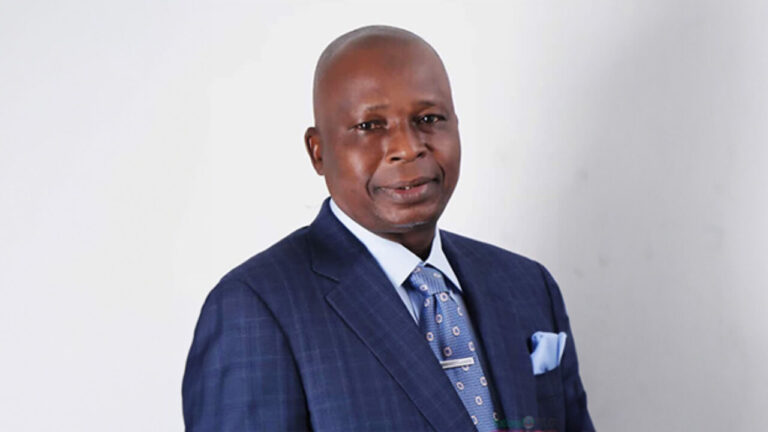
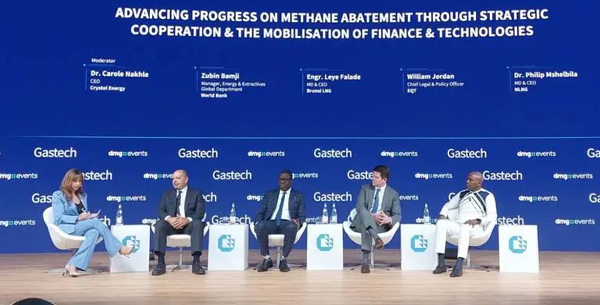
The Managing Director and Chief Executive Officer of NLNG, Adeleye Falade, stated this during a panel titled “Capturing the Lost Opportunity: Driving Global Alignment on Methane Abatement Across Natural Gas Supply Chains.” at the Gastech 2026 Exhibition and Conference in Bangkok, Thailand.
He said the company’s experience showed that investments in methane abatement could pay for themselves while improving plant efficiency and asset reliability.
The NLNG CEO said the commercial value of recovering lost gas should become a central part of the global industry’s approach to methane management.
“Every tonne emitted is lost product, lost revenue and lost energy; gas we could have sold. Every molecule of methane avoided is both an emissions reduction and a recovered energy resource.”
According to him, NLNG’s new boil-off gas compressor and start-up gas recovery project demonstrate the business case for methane reduction, with each project expected to deliver methane reductions of about 10–15 per cent while also recording positive projected net present values. “The most compelling business case is the simplest one: the projects that cut our methane also pay for themselves.
The same discipline that reduces methane also improves asset reliability and plant efficiency. The returns show up in more places than the emissions ledger,” Falade said.
He said the starting point for methane abatement was credible measurement of gas losses, which enables companies to identify where methane is being lost, channel investment towards the right interventions and independently verify the results.
Falade said NLNG had demonstrated that producers in developing economies could meet globally recognised standards for emissions measurement and reporting, despite infrastructure and other constraints.
He disclosed that NLNG had achieved Gold Standard recognition under the Oil and Gas Methane Partnership (OGMP) 2.0 and became the first company in Africa to attain Level 5 methane emissions reporting.
Its measurement, reporting and verification system is independently assured by DNV in line with ISO 14064.
Other News
NLNG’s methane-management programme includes site-wide optical gas imaging, a structured Leak Detection and Repair programme, as well as phased deployment of continuous monitoring and real-time emissions dashboards across its plant and vessels.
Falade said methane reduction was also being incorporated into the design of Train 7, which is expected to raise NLNG’s LNG production capacity from 22 million tonnes per annum to 30 million tonnes.
He said the commercial case for emissions abatement was not new to Nigeria, pointing to NLNG’s longstanding role in converting gas that would otherwise have been flared into a marketable product.
According to him, the company’s activities have contributed to reducing Nigeria’s gas-flaring rate from above 65 per cent to below 20 per cent.
Beyond its own operations, Falade said NLNG was extending methane-management requirements across its supply chain through its Scope 3 Advocacy Plan.
The company engages feed-gas suppliers and contractors to measure, disclose and reduce emissions, while verified upstream emissions data and emissions-related criteria are incorporated into supplier selection and evaluation.
Falade also called for greater consistency in methane measurement and reporting requirements across jurisdictions, arguing that divergent standards make enforcement uneven and complicate meaningful comparisons between producers.
“The industry does not need weaker standards; it needs stronger, shared ones backed by real measurement,” he said.
On the tension between emissions reduction, energy access and affordability, Falade said developing economies should not be forced to choose between economic development and climate action.
“Developing economies cannot be asked to choose between economic development and emissions reduction. Both must progress together,” he said.
Other panellists were Zubin Bamji of the World Bank, Niels Dijksman of Brunei LNG and Hiroyuki Mori of JOGMEC. The session was moderated by energy economist Dr Carole Nakhle of Crystol Energy.