Follow Us on Google

Nigeria’s current population has been estimated at 206 million. Revealing this at a press briefing on the commencement of the 11th phase of Enumeration Area Demarcation, the Chairman of the National Population Commission (NPC), Nasir Kwarra, also announced that the next population and housing census would hold by middle of 2022.
Also, it is projected that the country’s population will hit 411 million by 2050. According to the Minister of State for Budget and National Planning, Clem Ikanade Agba, 65 per cent of this population will be under the age of 35. Looking at the rate of our infrastructural development and unemployment, this projection presents us with a looming danger that needs to be tackled urgently.
At approximately 206 million currently, Nigeria’s population is the largest in Africa. It is growing at about 3.2 per cent per annum. Also, the country’s urban population has reportedly grown at an average annual rate of over 6.5 per cent in the past 50 years. This is with- out the corresponding increase in social amenities. In 30 years time, we are projected to be the third most populous country in the world.
There is nothing wrong with large population per se. It is an asset in China and India. China does not only have the largest population in the world, its economic growth is the second fastest in the world and is projected to overtake the United States (US) as the world’s largest economy by 2024. The International Monetary Fund, using the Purchasing Power Parity (PPP), has recently indicated that at $24.2 trillion, China’s economy has overtaken that of the US, which stands at $20.8 trillion.
Contrarily, large population without adequate planning spells doom for any nation. It is worse when the youthful population is more in number. Nigeria’s unemployment rate is currently 27.1 percent. This is an increase from 23.1 per cent recorded in the third quarter of 2018 and 18.8 per cent in the third quarter of 2017. According to the National
Bureau of Statistics, the economically active or working age population (15 – 64 years) increased from 111.1 million in Q3 2017 to 115.5 million in Q3 2018 and to 116.8million currently. Unemployment rate among young people (15 – 34 years) rose to 34.9 per cent from 29.7 per cent in Q3 2018. The problem now is that Nigeria’s population is growing higher than the available resources and developmental rate. It is a high recipe for poverty and crime.
Other News
The population explosion is caused by cultural and religious practices that encourage early marriage and high birth rate. The average family size in Nigeria is 5.5 people. In northern part of the country, it is higher. There, it is normal for men to marry up to four wives. Each wife gives birth to an average of eight children. In some cases, there is no child spacing. These children grow without adequate care and attention. Rather than be assets, they grow to become a burden to the society.
Even down South where polygamy is rare, some people still breed children, believing that it is God who gives them. Some parents see these children as a retirement plan. Besides, there is ignorance about family planning in most parts of Nigeria. Some couples, due to their religious beliefs, frown upon any artificial method of family planning. In most parts of northern Nigeria, family planning is not given consideration.
The rising unemployment among youths has caused so much social and economic tensions. The recent EndSARS protest in different parts of the country is a typical ex- ample. Some of these youths become willing tools in the hands of politicians who use them as thugs during political campaigns.
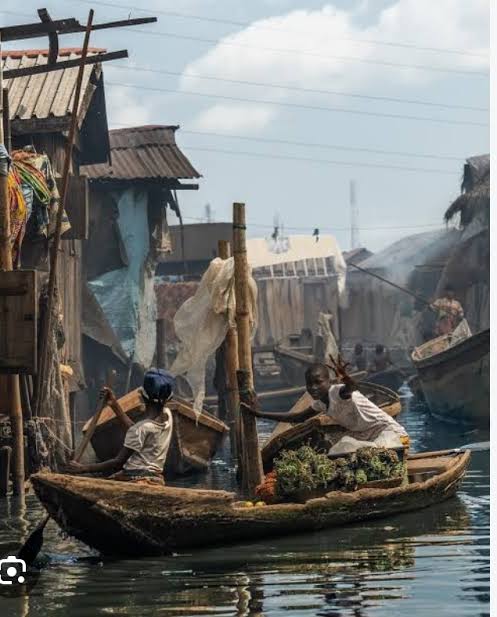
Some end up as armed robbers, kidnappers and terrorists. In most parts of the country, especially in the North, insecurity is steadily on the rise. In the 2020 global terrorism index, Nigeria came third behind Afghanistan and Iraq. Currently, Nigeria is the poverty capital of the world. The greater percentage of this poverty is in the North.
Now is the time to prepare for the doom’s day. The available social infrastructure, especially housing, is inadequate. It calls for long-term planning. We need to plan for new cities, new settlements and estates. It is time to enunciate some policy measures that will address the gaps in infrastructure and socio-economic needs.
On the part of policy makers, there is a need to take diversification and stimulation of the economy very seriously. We need to create more jobs. It is sad that Nigeria depends largely on its oil revenue not minding that oil is a depleting resource. It may soon lose relevance with the advent of electric cars. Therefore, the country needs to invest more in agriculture and processing of natural resources, research and technology and entrepreneurship.
Moreover, couples are enjoined to have the number of children they can adequately take care of. We say this because available resources and infrastructure will not be ad- equate for the projected population.