Follow Us on Google
•Industry players seek new deal as capacity expands
Nigeria may finally be getting the refineries it has sought for decades, but a more fundamental question stares in the industry in the face–where will the needed crude come from?
That question took centre stage at the Nigeria Oil Refining Summit (NORS 2026), organised by the Crude Oil Refinery-Owners Association of Nigeria (CORAN), in Lagos last week, where regulators, refiners, producers and petroleum experts agreed that the success of Nigeria’s refining revolution will ultimately depend on the ability of the upstream sector to deliver crude reliably, competitively and sustainably.
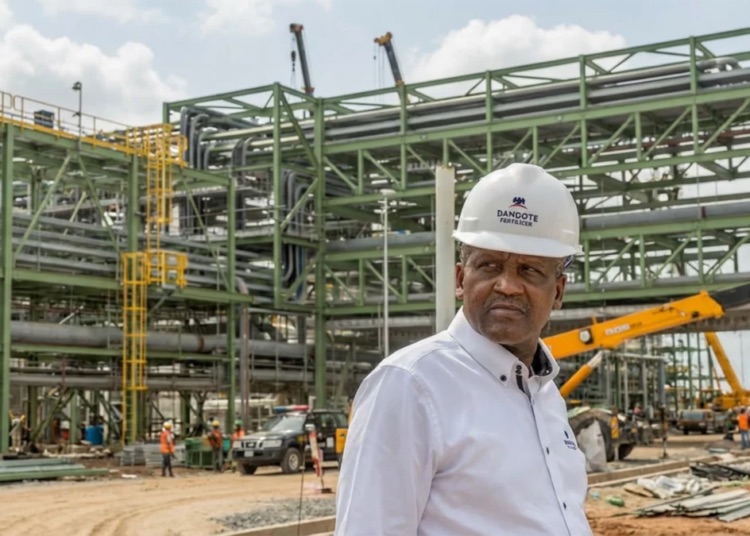
The issue is now more urgent than ever as Nigeria’s refining capacity expands, led by the 700,000 barrels-per-day Dangote refinery and a growing network of modular and other private refineries.
CORAN’s summit themed, “Refining for Value: Linking Upstream Supply to Downstream Demand,” was, therefore, not merely a policy slogan. Rather, it captured the central challenge facing the industry.
The country has substantial crude reserves, yet production remains constrained by underinvestment, ageing assets, security issues, infrastructure challenges and other upstream difficulties.
For the participants, therefore, the question is no longer simply whether Nigeria has enough oil in the ground. It is whether the country can convert those reserves into actual production, secure that production under bankable commercial contracts and move the crude efficiently to refineries at prices that make refining competitive.
Regulator’s challenge
For Mr. Bashar Alka Indabawa, Executive Commissioner, Exploration and Acreage Management, Nigerian Upstream Petroleum Regulatory Commission (NUPRC), the answer begins with increasing production.
Indabawa emphasised the responsibility of the regulator to create an enabling environment capable of attracting investment and encouraging operators to bring more barrels to the market.
His intervention reflected a fundamental reality confronting the industry: the regulatory framework must support domestic refining without destroying the investment incentives required to keep the upstream sector producing.
The regulator, therefore, faces a delicate balancing act.
On one side are domestic refiners demanding predictable access to crude. On the other are producers investing billions of dollars in exploration and development who must be able to sell their crude under commercially viable conditions.
The solution, Indabawa’s intervention suggested, cannot be regulation alone. It must involve a framework capable of aligning the interests of producers and refiners while ensuring that the country’s overall production base grows.
That distinction is important because simply compelling existing producers to redirect their barrels to domestic refineries because the country needs more barrels would not solve Nigeria’s underlying supply problem.
Refiners want certainty not probability
For Muhammed Musa, Chief Executive Officer of Waltersmith Refining and Petrochemicals, one of the major obstacles is the commercial difficulty of securing crude under conditions that make refining viable.
Musa pointed to the challenges around pricing, payment security, infrastructure and the risks associated with transporting crude from producing areas to refineries.
For producers, he argued, domestic supply must make commercial sense.
A producer that commits crude to a refinery is effectively foregoing alternative markets, including export opportunities. If the commercial terms offered by the domestic refinery are unattractive or uncertain, securing long-term supply commitments becomes difficult.
That is why, according to Musa’s argument, the domestic crude market must provide sufficient incentives for producers to participate.
Payment security vital
He said a refinery may have the capacity to process crude, but if a producer is uncertain about when it will receive payment, the producer is unlikely to commit significant volumes under long-term arrangements.
Musa also highlighted infrastructure as a major constraint, noting that government and industry must invest in infrastructure that makes it easier and cheaper to evacuate crude to domestic refineries.
“For smaller producers, the challenge is even greater. Where a marginal-field operator is located close to a refinery but lacks an efficient evacuation route, the economics of supplying that refinery can become complicated.
This explains the growing interest in crude swaps and proximity-based supply arrangements that could allow refineries to access suitable crude without unnecessary transportation costs,”.
Dangote: Refining economics go beyond crude price
Chief Economist, Dangote Refinery and Petrochemicals, Mr. Hassan Mahmoud, brought another dimension to the discussion: the economics of refining.
Mahmoud argued that crude supply cannot be examined in isolation from the other factors that determine refinery margins.
The price of crude is obviously critical, but so too are foreign exchange costs, operating expenses, logistics and the scale at which a refinery operates.
For a refinery, buying crude at an international benchmark does not automatically mean the resulting petroleum products will be competitive.
There are additional costs associated with bringing crude to the plant, processing it and moving refined products to the market.
This is particularly important for domestic refiners competing against imported petroleum products.
Mahmoud’s argument effectively challenged the notion that the debate can be reduced to whether domestic refiners should simply buy crude at a particular price.
Rather, the industry needs a commercial structure that recognises the entire value chain.
That includes crude acquisition, transportation, processing, foreign exchange and the final market price of petroleum products.
He also pointed to the importance of scale and competition in determining refining economics, particularly as Nigeria develops a more diverse refining industry.
Seplat: Producers need flexibility
Commercial Operations Manager, Seplat Energy, Mr. Wasiu Olayiwola, brought the upstream producer’s perspective into sharper focus.
According to Olayiwola, producers must consider the economics of supplying domestic refineries against the alternatives available in international markets.
The problem, he suggested, is not necessarily unwillingness by producers to supply domestic refineries. Rather, it is the need to create commercial arrangements that adequately address the risks involved.
Pricing, payment security, infrastructure and evacuation are central to that calculation.
Olayiwola stressed that crude supply arrangements must be sufficiently flexible to accommodate the realities of Nigeria’s production system.
“A refinery may require a particular crude grade in a particular volume at a particular time, while a producer’s available crude may fluctuate because of operational circumstances.
This means the domestic market needs mechanisms for swaps, substitutions and alternative sources of supply.
The objective should be to ensure that a temporary shortfall from one producer does not translate into a refinery shutdown,”.
Nigeria must produce more crude
If there was one point on which the different perspectives converged, it was that Nigeria cannot sustain a rapidly expanding refining industry by merely redistributing the crude it currently produces.
President of the Nigerian Association of Petroleum Explorationists (NAPE) and Managing Director of West Africa Oil and Gas Limited, Mrs. Olajumoke Ajayi, put the upstream challenge in stark terms.
Nigeria, she noted, has sufficient crude reserves to support both large and modular refineries.
But reserves in the ground do not automatically translate into barrels available to refineries.
The country must accelerate the development of undeveloped and marginal fields and bring additional production on stream.
Ajayi pointed to the large number of undeveloped assets that could potentially contribute new volumes if investment and technical capacity are mobilised.
She also stressed the importance of technically competent operators capable of moving fields from discovery and development into production more quickly.
Her warning was particularly significant for a country experiencing a refining expansion.
Every barrel produced depletes reserve
Ajayi noted that unless Nigeria simultaneously replaces depleted reserves through exploration and new field development, today’s production gains could eventually translate into tomorrow’s feedstock shortage.
His intervention made clear that Nigeria cannot build its way out of a crude-supply problem simply by building more refineries, saying the upstream must grow alongside the downstream.
According to her, exploration is the insurance policy.
Ajayi also emphasised the need to intensify exploration and improve access to geological and technical data, stressing that investment decisions depend heavily on the quality of available data.
“If investors cannot adequately assess the potential of an asset, they are less likely to commit the large amounts of capital required for exploration and development.
“That makes data availability, licensing certainty and a predictable regulatory framework critical to Nigeria’s ability to replace declining production,”.
Her argument essentially shifts the refining debate back to where it begins: the oil field, arguing that the refinery is the final stage of a much longer chain.
“If exploration does not produce new reserves, if fields are not developed quickly and if evacuation infrastructure is inadequate, the refinery will eventually face the consequences,”.
Domestic crude obligation not enough
The panel’s arguments also exposed the limits of relying solely on regulatory intervention to solve the feedstock problem.
Nigeria’s Domestic Crude Supply Obligation (DCSO) is intended to strengthen the linkage between upstream production and domestic refining. The federal government has described the obligation as a key component of its energy-security strategy and said the framework is being developed with NUPRC, NNPC, producers and domestic refining interests.
But the discussion at NORS showed why regulation alone may not be enough. A domestic crude obligation can determine who should supply whom.
It cannot, by itself, create new barrels, build pipelines, guarantee payment or eliminate the additional cost of moving crude across the country.
That is why the participants repeatedly returned to the need for a commercial framework.
A new crude market is needed
The emerging refining landscape may therefore require Nigeria to develop a more sophisticated domestic crude market.
Such a market would allow different producers to supply different refineries, facilitate swaps and substitutions, accommodate crude-quality differences and provide flexibility when production from a particular field falls short.
The panel also stressed the importance of contractual certainty. Long-term investments in both upstream production and refining require predictable rules.
Regulators, participants argued, must avoid changing the commercial rules midway through investment cycles.
For producers, uncertainty can discourage investment. For refiners, uncertainty can make it difficult to secure financing and plan operations. For both sides, the result is the same: higher costs and greater risk.
Large and modular refineries can coexist
The discussion also addressed whether the emergence of mega-refineries could eventually make modular refineries irrelevant. The answer from the session was effectively no.
The argument was that Nigeria needs an inclusive refining ecosystem in which large-scale refineries, modular plants and specialised facilities serve different parts of the market.
Large refineries offer economies of scale and sophisticated processing capabilities.
Modular refineries, however, can provide an important role in producing areas where smaller volumes of crude can be processed closer to source.
For Musa and other participants, the important issue is not the size of the refinery but whether the entire system can operate commercially.
The real test
The debate at NORS 2026 ultimately exposed a paradox.
Nigeria has spent decades struggling with inadequate domestic refining capacity. Now that private investment is finally producing substantial refining capacity, the challenge is shifting upstream.
The country must now ensure that there are enough commercially viable barrels to feed the plants.
Recent industry debate has reinforced the scale of the challenge. Chairman, Independent Petroleum Producers Group (IPPG), Mr. Adegbite Falade warned at the summit that domestic refineries could require more than 1.5 million barrels per day in the medium term, while Nigeria’s liquid production was about 1.68 million barrels per day in August 2026. He therefore argued that Nigeria must increase production rather than simply redistribute existing barrels.
That makes the message from the panel particularly important.
Indabawa’s regulatory perspective points to the need for an investment-friendly framework while Musa’s refining perspective highlights pricing, payment security and infrastructure.
On the other hand, Mahmoud’s economic perspective underlines the full cost of refining and the need for competitive economics.
Olayiwola’s producer perspective stresses commercial flexibility and alternative supply arrangements while Ajayi’s exploration perspective brings the debate back to the source, which is, the need to develop new fields, replace depleted reserves and increase production.
Together, the arguments point to one conclusion: Nigeria’s refining revolution will not be secured by refinery construction alone.
It will depend on whether the country can build the upstream capacity, infrastructure and commercial architecture required to keep those refineries supplied.
Nigeria may have the crude. But the next phase of the petroleum industry’s transformation will be determined by its ability to produce it, move it, price it and deliver it reliably to the refinery gate.