Follow Us on Google
By Bayo Lawal
Nigeria is a country where property is treated like a moral certificate. Own land and you are “serious.” Own a house and you have “made it.” But for millions, the housing ladder is not a ladder at all, it’s just a wall where rent rises faster than income, mortgages priced like luxury goods, and land documentation can turn a simple purchase into a long, expensive argument.
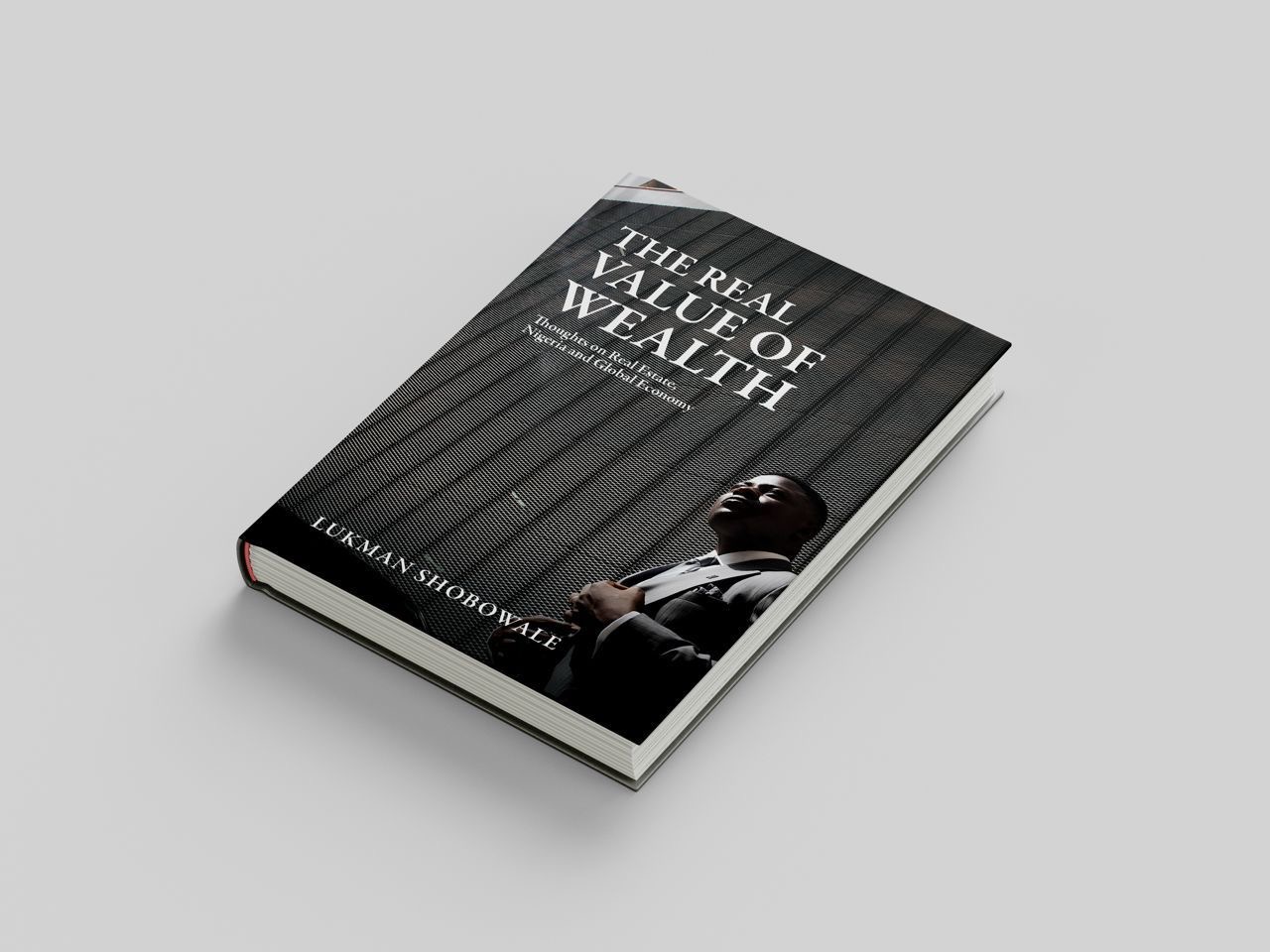
That contradiction is the tension The Real Value of Wealth leans into. Lukman Shobowale did not write a dreamy manifesto about “building generational wealth” (the internet has already punished us with enough of that). He is making a larger claim that real estate, if properly organised, is a national development tool, and that Nigeria’s broken housing and land systems are draining prosperity from citizens and the economy alike.
The Book’s Promise
At its core, The Real Value of Wealth argues that real estate should be understood as more than a private pathway to comfort or status. Shobowale’s central proposition is that property is a wealth-building engine, but its true value shows up when it is treated as a system. In that framing, housing is not merely a consumer good. It is infrastructure for stability, productivity, job creation, and long-term economic resilience.
The book’s promise, then, is not simply to tell readers why property matters. It is to connect the everyday realities of shelter and ownership to the broader economic picture: why Nigeria’s housing deficit persists, how land administration and titling constraints raise costs, why mortgage access remains limited, and what policy and market reforms could unlock a real estate sector that serves both investors and citizens.
What the Book Covers
Shobowale structures his argument around the idea that Nigeria’s real estate story is being held back by a handful of stubborn, interconnected constraints and that fixing them would unlock both private wealth and public value.
First, the housing deficit is a national development emergency. The book treats Nigeria’s housing shortage as a compounding crisis driven by weak purchasing power, rising construction costs, inflation, and limited access to long-term finance. In this view, the deficit is not only about “not enough houses.” It is about the economy’s inability to turn demand into decent supply at scale.
Second, land access and the machinery of ownership. A major portion of the book focuses on the friction built into land administration, titling, and documentation. He argues that, when land ownership is slow, uncertain, and expensive to formalise, housing becomes more costly, investment becomes riskier, and development becomes selective, skewing toward the affluent end of the market where margins can absorb inefficiency.
Third, mortgage finance and the missing bridge to home ownership. The book highlights how thin mortgage penetration is, why housing finance remains structurally constrained, and why access to affordable credit is the difference between housing as a mass-market good and housing as a privilege. Shobowale positions mortgage reform and consumer credit protections as critical to expanding ownership and deepening the market.
Fourth, the role of government and policy reform. Shobowale insists that the real estate sector cannot be “motivated” into solving the housing problem by optimism or private capital alone. The government must provide regulatory clarity, land reforms, infrastructure, interest rate conditions, and the institutional seriousness to treat housing as part of national economic planning rather than periodic political theatre.
Finally, real estate in a changing world. The book also nods to global forces shaping the sector, from economic shocks and capital movements to technology and evolving lifestyle demands, suggesting that Nigeria’s housing and property system has to modernise, or it will keep failing both investors and citizens for new reasons.
What the Book Gets Right
1) It treats housing as an economic system, not a lifestyle aspiration.
One of the book’s strongest contributions is its refusal to romanticise property ownership. Shobowale keeps returning to the idea that housing is tied to productivity and stability, not just prestige. When people can live decently and predictably, they plan, work, invest, and raise families differently. That framing matters in a country where housing debates often swing between “buy land” platitudes and policy rhetoric that never touches implementation.
2) It identifies land administration as a silent tax on housing.
The book is at its most persuasive when it explains how bureaucracy, titling delays, and weak tenure security inflate costs across the entire value chain. In plain terms, the more uncertain and cumbersome the path to owning land, the more developers price risk into projects, the more the market drifts toward high-margin housing, and the further ordinary citizens are pushed out. It is not a moral argument; it is a mechanical one and that is why it lands.
3) It places finance at the centre of the affordability conversation.
Shobowale does not pretend that “demand” automatically becomes “ownership.” He emphasises the missing bridge: long-term, accessible housing finance. Without a functioning mortgage ecosystem and credible consumer protections, homeownership remains a narrow privilege, and supply remains distorted toward those who can pay upfront. Even readers who disagree with some of the prescriptions will struggle to dispute the diagnosis: affordability is not only about building more houses, it is about making payment realistic over time.
Biggest Gaps and Where the Argument Needs More Muscle
1) The “what” is strong. The “how” is sometimes left at the roadside.
The book is persuasive in diagnosing structural constraints, especially around land administration and the Land Use Act’s bottlenecks (Governor’s consent, the slow and costly C of O process, and the bureaucracy that discourages investment).
But once we move from diagnosis to execution, the reader is occasionally left wanting a clearer implementation pathway: which reforms first, in what order, with what institutional owner, and what timeline? For a sector where “reform” often dies inside a committee, practical sequencing is the difference between a book and a blueprint.
2) The affordability discussion could engage more honestly with how Nigerians actually build and live.
The book captures the scale of the deficit and the drivers behind it (poverty, inflation, construction costs, weak mortgage systems, declining incomes).
Still, the most dominant housing reality in Nigeria is incremental, informal, self-built housing. That world runs on family land, savings cycles, cooperatives, and phased construction. A deeper treatment of incremental housing finance, rental supply, and slum upgrading would have strengthened the “real value” argument, because that’s where most Nigerians are not hypothetically headed, but currently stuck.
3) Mortgage reform is treated seriously, but the political economy of credit is underplayed.
The book does important work explaining how transparency and accountability mechanisms helped expand mortgage access in the US (HMDA, CRA), and it rightly points out that Nigeria’s mortgage market is tiny, expensive, and skewed toward high-net-worth financing.
What needs more airtime is the uncomfortable part: high interest rates are not simply a policy preference; they are often a symptom of deeper macro risk. A national daily reader will want the author to wrestle more explicitly with the inflation and currency pressures that make long-tenor lending difficult, and the hard question of who bears that risk when you try to democratise mortgages.
4) Governance risks are acknowledged, but not fully confronted.
The book notes how discretionary power around land can be abused and how disputes and litigation deter investment.
That is accurate, but a sharper review lens would ask for more direct engagement with the problem of political capture: land allocation as patronage, PPPs as procurement theatre, and planning approvals as revenue streams. If the aim is “prosperity that scales,” then the book benefits from naming the governance failures that routinely sabotage well-intentioned housing policy.
Why It Matters Now
This book lands in a Nigeria where the word “affordability” has started to feel like satire. Rent is rising, incomes are not, inflation and FX pressures keep pushing construction costs upward, and the dream of mortgage-backed home ownership remains, for most people, a story from countries with functional long-term credit markets. Shobowale is essentially saying: this is not a temporary squeeze. It is what happens when a society treats housing as a private hustle instead of a national system worth fixing.
That matters because real estate is one of the few sectors that touches everything at once: jobs, materials, transportation, infrastructure, household stability, and local government revenue. When the housing market is structurally broken, the consequences are not limited to “people can’t buy houses.” You get overcrowding, longer commutes, informal settlements expanding without services, families burning savings on rent instead of education or enterprise, and developers building for the narrow slice of the market that can pay upfront, because the system makes mass-market housing commercially punishing.
The book also speaks to a wider economic pivot Nigeria keeps postponing. As oil becomes less dependable as a national anchor, real estate is often mentioned as part of the diversification story. Shobowale’s argument is that the sector cannot play that role through vibes. It needs reforms that reduce friction in land administration, make investment less risky, and create finance pathways that do not reserve home ownership for the wealthy. In other words, if Nigeria wants real estate to be a development pillar, it has to stop running housing on improvisation and start running it on policy, institutions, and accountability.
Verdict and Who Should Read It
The Real Value of Wealth is at its best when it treats Nigerian real estate as what it really is: a high-stakes system where land policy, finance, and governance decide whether housing becomes a broad-based engine of prosperity or a gated asset class for the few. Shobowale writes with conviction and clarity, and the book succeeds in reframing property beyond status and speculation into a serious conversation about national development.
Its limitations are not fatal, but they are real: the reform agenda would benefit from sharper sequencing and deeper engagement with how the majority actually build and rent in Nigeria, as well as a tougher confrontation with the macro and governance realities that routinely sabotage housing policy. Still, the book earns its place in the public conversation because it refuses to treat the housing crisis as normal.
Who should read it:
● Policy makers and regulators who need a grounded reminder that housing is economic infrastructure, not a political talking point.
● Developers and real estate professionals who want a wider lens on why the market behaves the way it does and what reforms would unlock scale.
● Investors and finance professionals interested in the structural conditions that make property investment thrive or stall.
● Students and informed citizens who want to understand why “just buy land” is not a national housing strategy.
If Nigeria is serious about turning property from a personal trophy into a public good that still rewards investment, Shobowale’s book is a useful, timely provocation. It does not solve the housing crisis on its own, but it reminds readers of the first step: stop treating dysfunction as destiny.