Follow Us on Google
Concerned father urges husbands’ support
As the Benue State Government and its partners marked World Breastfeeding Week (WBW), a mother of three, Iember Ati, recounted the benefits of exclusive breastfeeding, saying it has greatly improved the health of her four-month-old baby while reducing the family’s expenses.
Mrs Ati stated this during a market sensitisation rally organised by the Benue State Government and the Benue State Primary Health Care Board (BSPHCB) in collaboration with the United Nations Children’s Fund (UNICEF). The theme of this year’s event is: “Breastfeeding for a Sustainable Start in Life: Strengthening What Works.”
The event also promoted early initiation of breastfeeding, exclusive breastfeeding for the first six months and optimal nutrition during the first 1,000 days of life.
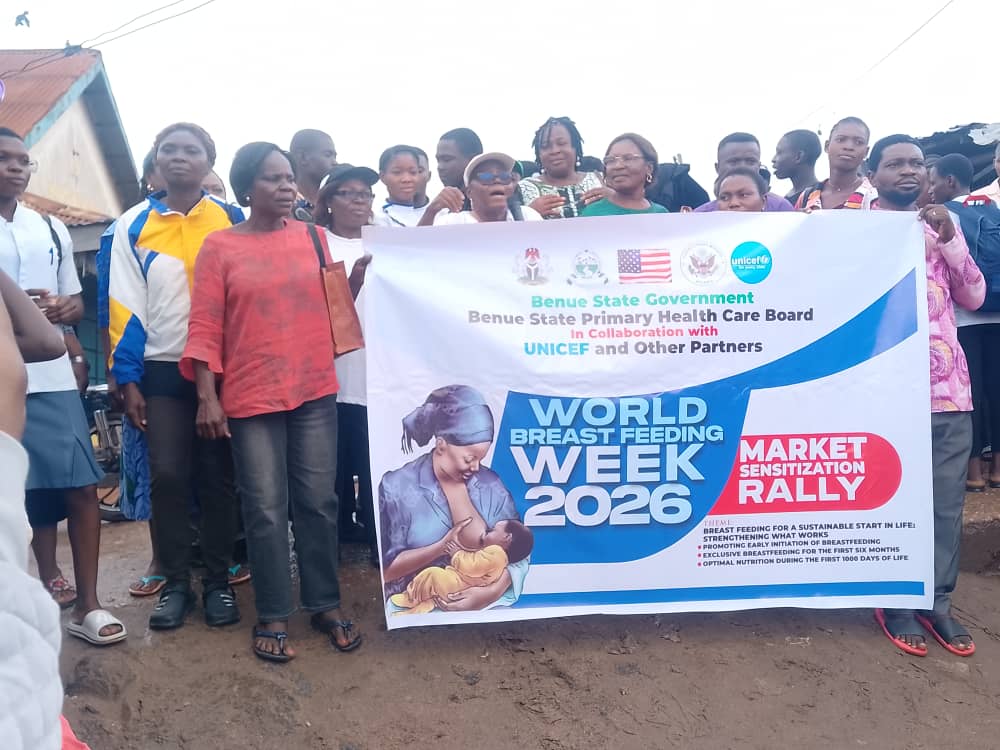
During the rally at Gboko Market, the nursing mother, who was seen breastfeeding her baby, said she learned about exclusive breastfeeding during antenatal care at the hospital and has practised it consistently since giving birth.
She said: “It has benefited me immensely. My baby is doing super fine, he has not been falling sick and my husband and I have not been spending money on buying artificial baby food.”
She explained that she brings her baby to the market every day, where her mother-in-law helps care for the child whenever she is busy attending to customers.
Encouraging other mothers to embrace the practice, Ati said: “I would advise other women to give only breast milk to their babies. It costs nothing, it’s clean and safe for both mother and child.”
She added that she plans to continue exclusive breastfeeding for the recommended six months before continuing breastfeeding alongside complementary feeding.
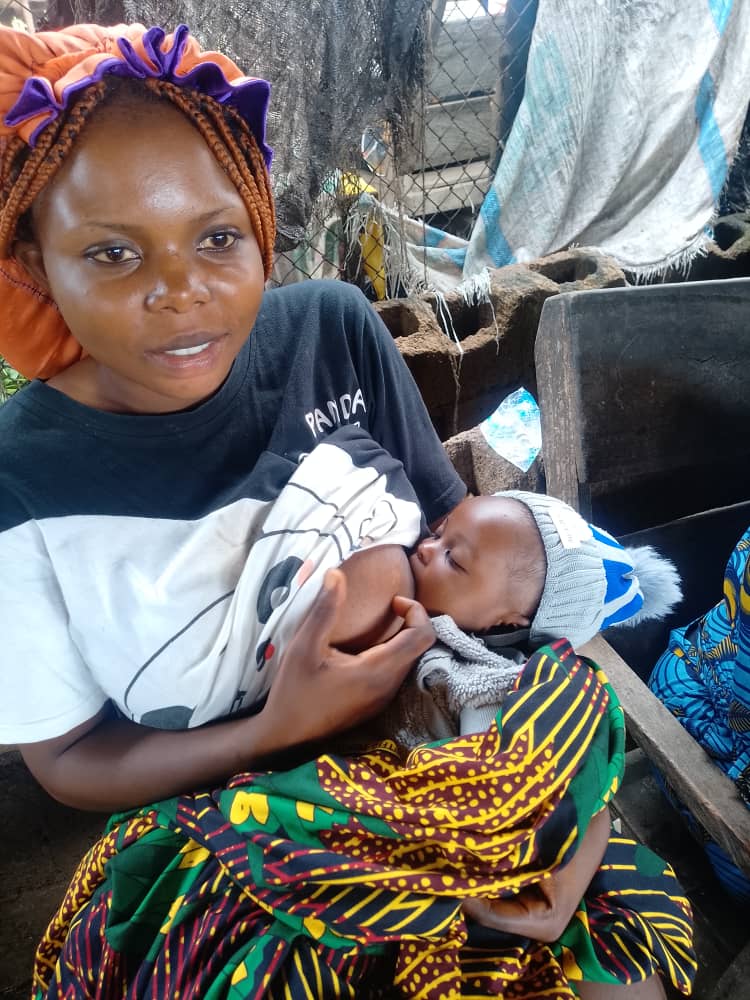
Another nursing mother, Mrs Sandra Osei, said the frequent crying of her baby led her to believe that her breast milk was insufficient, prompting her to introduce supplementary food at about four months instead of continuing with exclusive breastfeeding.
Sandra, who also spoke to this reporter at Gboko Market, said her baby remained healthy throughout the first four months she breastfed exclusively. She acknowledged that feeding a baby only breast milk reduces diseases that commonly kill infants, helps babies develop properly and saves families the cost of buying infant formula and other baby foods.
Her husband, Mr Raphael Osei, urged his fellow men to support exclusive breastfeeding by playing their part in providing adequately for their nursing wives.
He called on mothers to practise exclusive breastfeeding, describing it as beneficial to both the baby and the family. He said exclusive breastfeeding helps families save money, strengthens babies, supports healthy brain development and creates an opportunity for mothers to bond closely with their children.
He said: “My reasons is that she will save the money and secondly, it will make the baby grow stronger and helps in building the baby’s brain.”
Osei urged husbands to actively support their wives by providing nutritious food and meeting their needs throughout the breastfeeding period. He said: “I’m buying everything my wife needs. Buy good food for the woman to eat. All the needs you provide is so that the baby will be comfortable as well as the mother.”
He stressed that the involvement of fathers is essential to the success of exclusive breastfeeding and the overall well-being of both mother and child.
Other News
Earlier, speaking, the Nutrition Focal Person for Gboko Local Government Area, Mrs Miriam Adekaa, urged mothers to embrace exclusive breastfeeding for the first six months of life, insisting that it remains the best option for infants.
Adekaa said the programme was aimed at educating women on the importance of exclusive breastfeeding and its recommended duration.
She disclosed that about 80 per cent of mothers attending antenatal clinics comply with counselling on exclusive breastfeeding, attributing cases of malnutrition and underweight babies largely to mothers who fail to attend antenatal care or introduce other foods too early.
Adekaa noted that UNICEF has continued to support maternal and child health services by providing Multiple Micronutrient Supplements (MMS), Vitamin A and Albendazole to improve the health of mothers and children. She also expressed concern that some women introduce complementary foods before six months because of their busy schedules.
She stressed that mothers should complete six months of exclusive breastfeeding before introducing other foods, advising those experiencing low breast milk production to eat balanced meals, including grains and rice, breastfeed frequently and ensure proper positioning of the baby during feeding.
She added that early initiation of breastfeeding within the first hour after delivery and continuous suckling help stimulate adequate breast milk production.
“In Benue, our advice to mothers is simple; it’s exclusive breastfeeding or nothing,” she said, emphasising that the practice gives babies the best chance of healthy growth and development.
Our correspondent reports that in Makurdi, the state capital, the BSPHCB, in collaboration with the State Ministry of Health and Human Services, UNICEF and other development partners, officially flagged off the 2026 World Breastfeeding Week (WBW) celebration and launched the First 1,000 Days Campaign posters.
The event, which was held at the Benue State University Teaching Hospital (BSUTH), Makurdi, brought together government officials, development partners, healthcare professionals, traditional and religious leaders, civil society organisations, community volunteers, mothers, caregivers and other stakeholders committed to improving maternal, newborn and child nutrition across the state.
The Commissioner for Health and Human Services, Dr Ogwuche Paul, who spoke at the event, expressed appreciation to UNICEF, the World Health Organization (WHO), Helen Keller International and other development partners for their continued collaboration in strengthening nutrition programmes and improving maternal and child health outcomes in Benue State.
Ogwuche described breastfeeding as one of the most effective, affordable and evidence-based interventions for reducing infant mortality, preventing malnutrition and laying a strong foundation for healthy growth and lifelong development.
He noted that the launch of the First 1,000 Days Campaign represents another significant milestone in the state’s efforts to improve maternal, infant and young child nutrition. He said the period from conception to a child’s second birthday provides a unique opportunity to influence a child’s physical growth, brain development, learning capacity and future productivity through proper maternal nutrition, early initiation of breastfeeding, exclusive breastfeeding for the first six months and appropriate complementary feeding thereafter.
Calling on families and communities to support breastfeeding mothers, the commissioner urged mothers to initiate breastfeeding within one hour after delivery, practise exclusive breastfeeding for the first six months of life and continue breastfeeding alongside appropriate complementary feeding for up to two years and beyond.
Speaking on the significance of the newly launched campaign materials, Ogwuche said the First 1,000 Days Campaign posters will serve as vital advocacy and behaviour change communication tools to promote healthy nutrition practices and strengthen public awareness of the importance of maternal and child nutrition.