Follow Us on Google
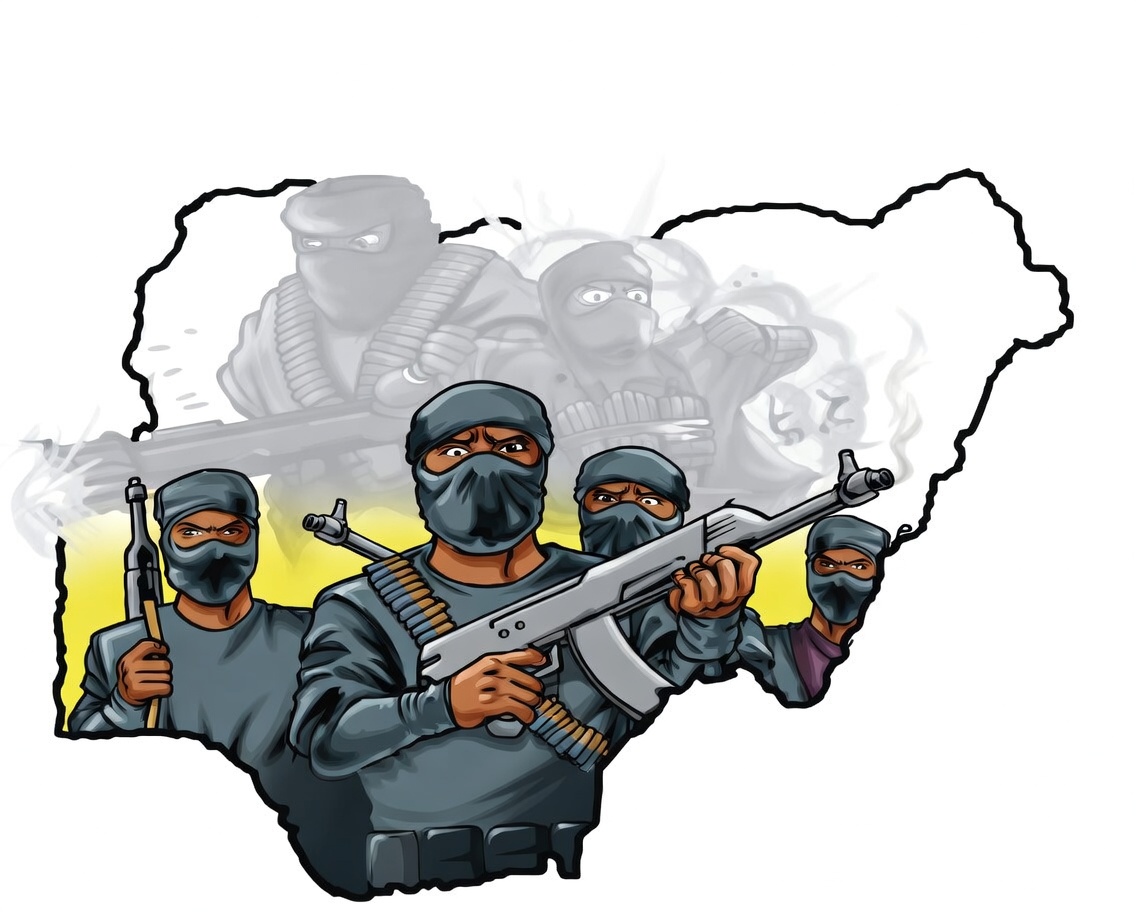
It is upsetting that the Global Terrorism Index (GTI) ranked Nigeria as one of the most terrorism-affected countries in the world in its 2026 report released on March 19, 2026. The report released by the Institute for Economics and Peace ranked Nigeria as the 4th most terrorism-affected country in the world. Based on analysed data from 2025, the report ranked Pakistan as the most terrorism-affected country in the world. Burkina Faso and Niger were ranked 2nd and 3rd, respectively.
Available statistics show that about 70 per cent of deaths from terrorism occurred in only five countries: Pakistan, Burkina Faso, Nigeria, Niger and the Democratic Republic of the Congo (DRC). In the same vein, six of the 10 countries most impacted by terrorism are in sub-Saharan Africa, now regarded as the epicenter of terrorism.
According to the report, Nigeria recorded the largest increase in 2025, with fatalities rising by 46 per cent from 513 in 2024 to 750 in 2025. This represents the highest death toll since 2020. The Islamist State of West Africa Province (ISWAP) and Boko Haram were reportedly responsible for 80 per cent of all terrorism deaths in the country. The terrorist attacks have been more intense in the North-East, North-Central and the North-West regions.
Terrorism, the report observed, remains a significant global threat. In 2025, about 5,582 people were killed in terrorist attacks across 2,944 incidents. While sub-Saharan Africa remains the central point of terrorist activities, the report noted that there was some improvement. For instance, deaths fell in 10 countries while just rising in just four.
The rise in terrorism attacks in Nigeria is largely driven by internal instability, weak governance, economic hardship, poverty as well as the ongoing insurgency by ISWAP and Boko Haram. At the same time, weak border control and authority gaps in some remote areas in Nigeria may have exacerbated the terrorist attacks. The report said that terrorism activity was heavily concentrated in the North-Eastern state of Borno, which experienced 67 per cent of attacks and 72 per cent of deaths in 2025.
It also noted that civilians continued to be the most targeted group in 2025, accounting for 67 per cent of fatalities, while military forces represented 19 per cent. Also, the percentage has been steadily increasing over the last five years, highlighting a clear shift in terrorist targeting patterns in the country. In 2020, civilians accounted for 38 per cent of terrorism-related deaths, almost equaling military fatalities.
Other News
The report also affirmed that ISWAP reclaimed its position as Nigeria’s deadliest terrorist group. In 2025, the group was responsible for over half of all attacks and deaths in the country. ISWAP claimed responsibility for 20 attacks in 2024 and carried out 92 attacks in 2025, resulting in 384 deaths. In the same vein, Boko Haram also carried out 43 attacks that resulted in 213 fatalities compared to 26 attacks and 166 deaths in 2024.
Nigeria’s ranking in the 2026 GTI report is worrisome and unacceptable. Apart from reflecting the level of insecurity in the country, it underscores the glaring gaps in the ongoing prosecution of the war against terrorism, insurgency and banditry. What is clear is that Nigeria should not have been among the most terrorism-affected countries in the world, sharing podium with Pakistan, Burkina Faso and Niger, if serious measures were taken in the past and as being taken at present.
The report is, indeed, a wake-up call on the federal government and security agencies to come up with new strategies in the war against terror groups. While acknowledging the recent killing of 80 ISWAP fighters and senior commanders by Nigerian troops in Borno State, we urge the military to do more to rein in the Islamist insurgents. The recent multiple suicide bombings in Maiduguri that killed 23 and left over 100 wounded demonstrate that the terrorists are not relenting. There should be intensified counter-measures.
Considering the rise in terrorism attacks in some parts of the country in recent times, the governments should speedy up the creation of state police. It is heart-warming that the federal government has notified the National Assembly about the need to tinker with the constitution to make state police possible. It is also encouraging that the Inspector General of Police, Tunji Disu, has set up a committee on state police implementation. It is given that the terrorists are exploiting the security gaps and weak governance in some remote areas of the country. Due to absence of security in some ungoverned spaces, the terrorists assume control of those areas and levy taxes on the hapless citizens without being challenged. With state police, it is expected that every space will be covered.
Apart from establishing state police and other layers of policing, the government should begin to address some of the factors that readily fuel terrorism, such as weak governance, internal instability, economic hardship, poverty and unemployment. It has also become imperative that the federal government should dialogue with aggrieved groups as a way of curbing rising instability in the country.
The war against terrorism is not insurmountable. Let government combine both kinetic and non-kinetic measures in prosecuting it. Since every crime is local, decentralising the police force will ensure faster response to crime spots and adequate policing of the nation’s 774 local government areas. Our new policing mantra should be on crime prevention rather than reacting to crimes. However, intelligence gathering and sharing and use of precision weapons and drones are essential in winning the war against terrorism and securing the country.