Follow Us on Google
From Juliana Taiwo-Obalonye, Abuja
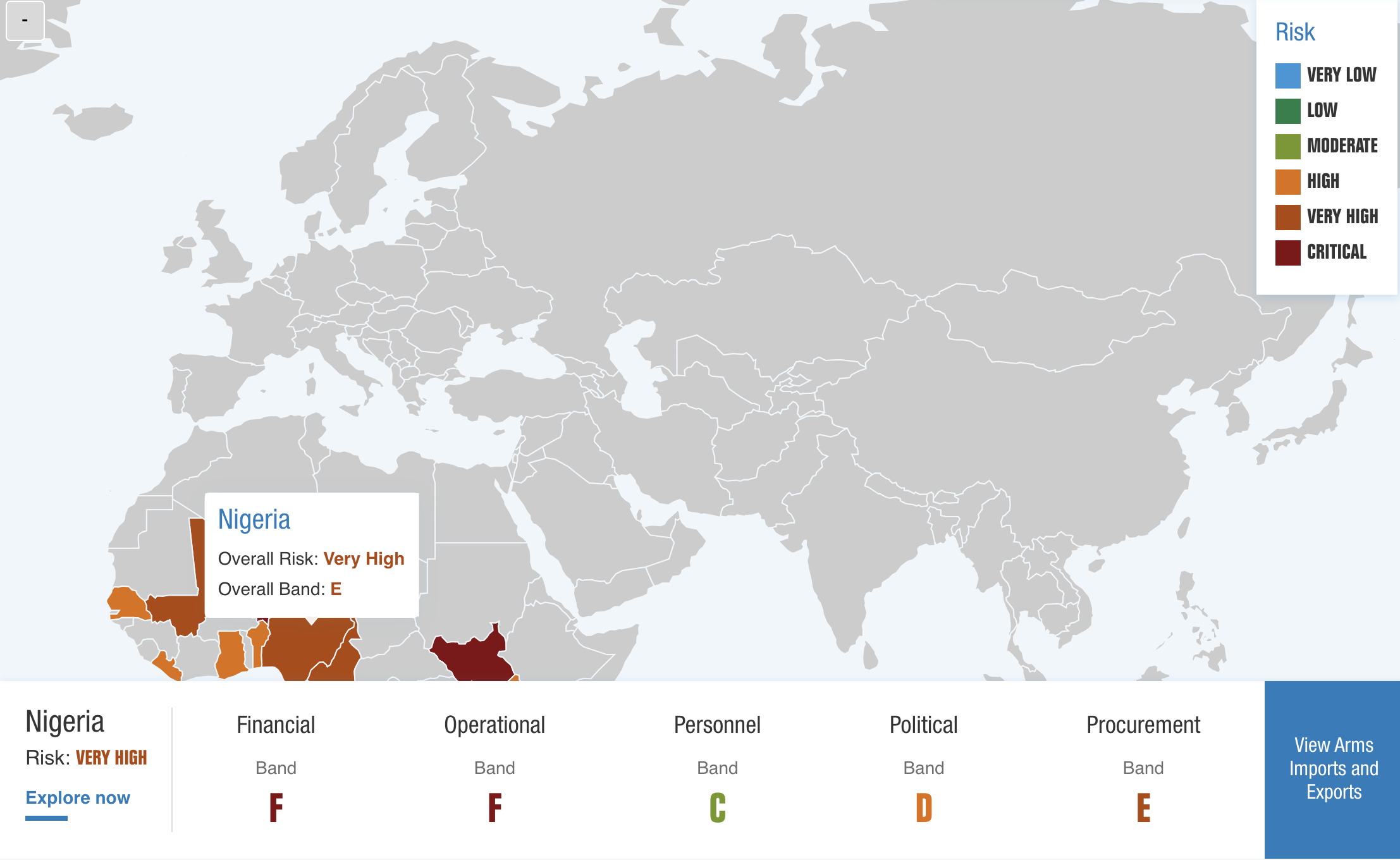
Nigeria faces high-to-critical corruption risks across its defence and security sectors amid ongoing insecurity, according to the 2025 Government Defence Integrity Index (GDI) released on March 19 by Transparency International Defence and Security in collaboration with CISLAC/Transparency International in Nigeria.
Executive Director of CISLAC/TI-Nigeria, Auwal Ibrahim Musa Rafsanjani, signed the release, calling for urgent transparency and accountability reforms.
The assessment, covering 17 Sub-Saharan African countries, scores Nigeria “Very High” overall, with critical ratings in financial (16/100, Band F) and operational (12/100, Band F) areas; very high in procurement (23/100, Band E); high in political (37/100, Band D); and moderate in personnel (50/100, Band C).
Other News
Persistent threats such as North-East insurgency, North-West banditry, and Middle Belt farmer–herder clashes compound uneven governance reforms, marked by weak civilian oversight, outdated laws, procurement secrecy, and human rights concerns.
Director of Transparency International Defence and Security, Francesca Grandi, warned: “Of the 17 countries we assessed, not one has a military doctrine that treats corruption as an operational risk. That is a critical gap. When troops deploy without anti-corruption safeguards, the consequences are paid by the civilians they are supposed to protect, through extortion, abuse, and the erosion of local trust that insurgencies exploit. Governments and their partners cannot continue treating this as a second-order problem. It is a protection failure, and rising defence budgets will compound it.”
Financial transparency lags, with classified spending and security votes evading scrutiny, while operations lack anti-corruption frameworks despite acknowledged impacts on effectiveness. Procurement exemptions undermine legal safeguards, personnel processes suffer from poor asset declarations and whistleblower fears, and political oversight is hindered by legislative inexperience and audit delays.
The GDI highlights restricted civic space—76 per cent of assessed nations offer little room for civil society scrutiny—exacerbating oversight gaps and diverting resources from security priorities.