Follow Us on Google
• Reforms have worsened poverty, instead of reducing it
• INEC yet to repair its damaged credibility after 2023 elections
By Vincent Kalu
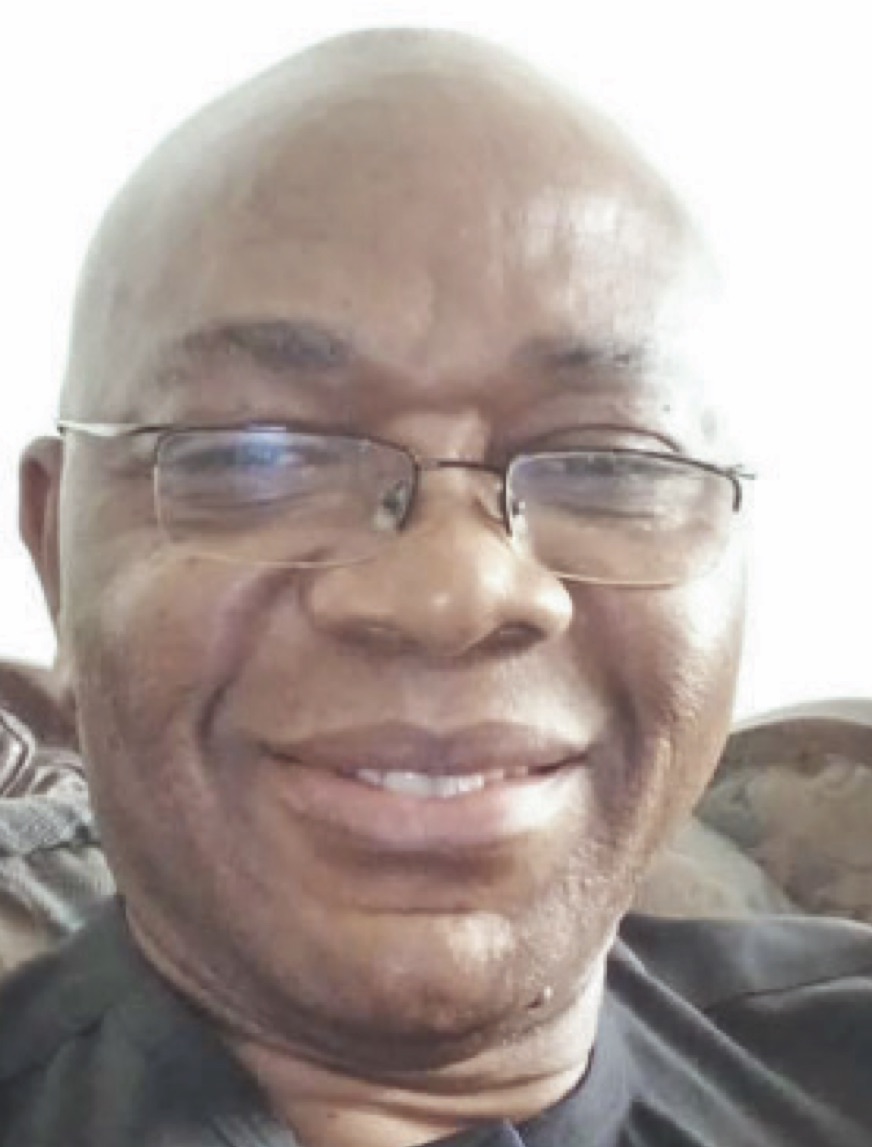
Governorship candidate of the New Nigeria People’s Party (NNPP) in Abia State in the 2023 election, Dr Ukpai Iro Ukpai, has said that the very bad security situation in the country is impacting negatively on the reforms President Bola Tinubu has put in place.
The policy thinker and a chieftain of the Labour Party, in this interview with shared his perspective on the state of the nation and the road to 2027. Commenting on President Bola Tinubu’s reforms, he noted that economic reform without compassion is like surgery without anaesthesia, stressing that Nigerians will pay their tax when they trust the government and their political leaders.
How can you describe the state of the nation today?
Let’s highlight the state of the nation, Nigeria, today by checking just a few indices – our democracy and governance. Our political actors have squandered our opportunity to grow our democracy. At each turn, you notice that the Executive is not in tune with the Nigerian people. The legislators who call themselves the ‘representatives of the people’ are more often than not, singing a different tune from the people. Even the Judiciary is now seen as the lost hope of the common man in Nigeria. There’s so much ethnic, religious and social friction in the country because there’s suspicion everywhere. The Nigerian people are suspicious of their various governments, except a few sub-national governments.
Our democracy is not growing, it is receding. The democratic institutions are not growing. Nigeria struggles to conduct free and fair elections with all the billions of Naira spent each election cycle. The National Assembly has refused to side with the Nigerian people but prefers to side with their political parties. Otherwise why do they find it difficult to remove all the roadblocks, ambiguities in the Electoral Act against transparency of the electoral process? Why does the National Assembly retain in our laws that a sitting President appoints the umpire in an election he is a candidate? The National Assembly controlled by the ruling party has left the people frustrated on the issue of engendering transparency in the election through real time transmission of election results. The ruling party is allegedly instigating defections, muzzling out serious opposition, and gradually pushing the country to a one-party state. The general view is that Nigerians are gradually losing confidence in our democracy and in government. Democracy survives not because someone wins the election, but because everyone trusts the process.
Our Institutions are failing; our people don’t trust our Institutions any more, especially the Independent National Electoral Commission (INEC) and Judiciary. There is no serious fight against corruption. EFCC and ICPC are these days used to fight political opponents. If you join APC, your sins are forgiven and you can enjoy your loot or worst case you are given a very soft landing. These institutions don’t give hope to Nigerians anymore.
On security, Nigerians have never had it so bad in terms of the security of lives and property. Terrorist groups, bandits, and kidnappers have overstretched our military and police. Many lives have been lost and communities sacked especially in the North. This worsening security situation has got the attention of the global community so much so that the USA re-designated Nigeria a ‘Country of Particular Concern’ in late 2025, followed by a bombing of terrorist camp in Sokoto by the USA. The internal security pressure got so bad that our government has recently yielded to the intervention of foreign powers, USA to be specific.
Our economy is unstable. Fuel subsidy removal, floating the Naira, tax reform act and so forth are good policies badly managed. Nigeria inflation crossed 28 per cent to 30 per cent in 2024 (food inflation is even higher, often more than 35 per cent). Naira was floated in 2023; it moved from ₦460/$ to over ₦1,500/$ before partial stabilisation. Fuel subsidy was removed on May 29, 2023. Trillions of Naira saved annually are redistributed to favour those in power, neglecting fiscal discipline and accountability, mostly allowing politicians in government live in luxury at the expense of the poor who they should have catered for.
Debt servicing consumes over 90 per cent of federal revenue (Budget Office figures 2023). Our GDP growth is modest two to three per cent, but below population growth of 2.6 per cent.
So, this government, instead of giving Nigerians the promised ‘renewed hope’ (pulling millions out of poverty), they are being served ‘renewed hopelessness’. With all these missteps, inflation has increased with fuel price, food price, and transportation costs rising sharply. The government’s Tinubunomics is completely disconnected from kitchen table economics. The economic reforms have no inbuilt social cushion and so feel like punishment to Nigerians. Usually, these reforms should have pulled more Nigerians out of multidimensional poverty, revived the agriculture, health, and education sectors and revamped infrastructure and cushioning hardship. The reverse is painfully the case. One policy analyst rightly dubbed what Nigerians are suffering ‘Renewed hardship’.
The general view out there is that Nigerians are suffering, that reforms have worsened poverty, instead of reducing it. But, as usual, with their famed shock absorbers, Nigerians are managing to survive. How we do it, I really don’t know.
The build up to 2027 has started; INEC has released the timetable. What are your expectations?
Nigerians do not trust INEC. There’s serious trust deficit, legitimacy crisis because of the way they performed in the 2023 elections, even with all the technologies at their disposal (BVAS and IReV). The courts made their credibility worse. INEC has credibility problem as far as Nigerians are concerned. Unfortunately, since after the last general election, INEC has done nothing to repair its severely damaged credibility, even as the elections it conducts get worse by the day in terms of transparency, free and fair elections. So, I do not have much expectation except something drastic happens between now and year end. The voter registration notwithstanding, if care is not taken the voter turnout in 2027 will further decline from the approximately 27 per cent turnout in 2023, which was the lowest in Nigeria’s democratic history. When citizens withdraw, democracy weakens.
INEC’s job is made more difficult, we must concede, because the National Assembly that should have given them a more robust electoral act, which should have policed them or forced them to conduct free and fair, credible elections fails each time they are asked to review the electoral act to make it close to what it should be.
Nigerians are crying of hardship allegedly from President Bola Tinubu’s economic reforms, but the APC government says the president’s economic policies are yielding fruits. What’s your position on this?
When fuel subsidy was removed by President Tinubu in May 2023, petrol price increased by 200 percent to 300 percent; pump prices spiked from ₦189 per litre to over ₦500 per litre almost overnight. As expected, transportation costs rose sharply. Food prices followed. These put immediate inflationary pressure on the system, reduced living standards, creating hardship for, especially low-income households, ultimately sending more millions of Nigerians into poverty. With 63 percent of Nigerians multi-dimensionally poor (National Bureau of Statistics 2022), 40 per cent living below the $2.15 per day international poverty line (World Bank est.) with Inflation rising 2023–2025, 25 per cent to 34 per cent, food inflation, often about 35 per cent; with fuel/transport costs directly affecting about 70 per cent of household consumption for poor households, more Nigerians have been thrown into poverty. Make no mistake about it, the price spikes I mentioned are not small shocks for ordinary families. Those numbers are hard data showing what hardship looks like. Those numbers don’t paint the picture of a people enjoying juicy fruits. They paint an increase in the number joining the poverty bracket. Macroeconomic stability must not come at the cost of microeconomic survival.
The removal of fuel subsidy and the floating of the naira were economically inevitable decisions, but the social cushioning has not matched the speed of reform. Fuel subsidy removal should have reduced the chronic budget drain by fuel subsidy, saving Nigeria billions of dollars historically spent on subsidy (about ₦10 trillion per annum savings). The problem is that the huge savings were and are still misdirected (mis-reallocated) and the federal government failed to provide social cushions needed in place before rolling out such a policy and has not intentionally ploughed back part of the huge savings into sectors that reduce inflation and increase production.
When reforms increase revenue but decrease household stability, citizens feel squeezed, not saved. Success of the reform cannot be measured only by macroeconomic indicators, but also by how many Nigerians can eat, work and live with dignity. The people know where to point fingers at.
One had thought that, with 29 out of 36 state governors in its fold, and also controlling more than two thirds of members of the National Assembly, the ruling party would have championed real time electronic transmission of results. What is your take on this?
Unfortunately, the APC as a ruling party at the federal level and now most of the states is presenting itself as anti-Nigerian people. The general view is that APC is blocking electoral transparency by heightening ambiguity in the electoral act instead of reducing it. By leaving critical decisions in the hands of INEC especially the transmitting of election results, the National Assembly is blocking transparency and increasing the probability of election litigations. This is made worse with INEC having a trust deficit as far as Nigerians are concerned; with our law still allowing the electoral umpire’s chairman to be selected by the sitting president who is a candidate in the election.
Giving INEC the option to do manual reporting of results where real time transmission of election results fails by INEC’ s own interpretation, our lawmakers are leaving loopholes that make it easier for manipulation and rigging of the elections instead of plugging them. APC members in the House and the Senate and even the APC as a political party took positions that are viewed by most Nigerians as starkly in opposition to the Nigerian people on this issue.
The crux of the real time transmission issue is really about transparency, credibility of elections, drastic reduction of the intervention of the courts, upholding the will of the voters, and getting a majority of the electorate to accept or start building trust in the electoral process. Ramming their decisions down the throat of the Nigerian people, the way the APC-led National Assembly has done, will definitely attract repercussions at the polls because the Nigerian people feel abandoned by the National Assembly and especially by the ruling APC.
The ruling party should have shown Nigerians that they were ready to conduct a free and fair election and marketed their party as champion of transparency of the electoral process.
What do you think the ruling party is afraid of?
Uncertainty! They are afraid of the forming coalition of the opposition. The ruling APC, the party with the advantage of incumbency, knows that opposition coalition politics can trump incumbency politics. They booted out a ruling/incumbent party in 2015 by playing opposition coalition politics well. History shows, at least in Nigeria, that coalitions matter (though data points are few) more than incumbency. We know that the coalition that created APC before 2015 defeated the ruling party – PDP – in 2015.
Some political pundits say, with 29 state governors, and far majority in the NASS, as well as States Assembly, the Tinubu has won his re-election before the election proper. What is your view on this?
Those with the numbers in their favour are not as confident as the pundits attribute to them. If they are that confident, why are they afraid of transparency via real time transmission of the results? With the so-called INEC glitches, they can win, but not with a transparent, free and fair election.
Listen, a party having 29 out of 36 governors is just number/math. They still have to contend with the mood of the electorate. Every election is math + emotion. The ruling part, is evidently afraid that it cannot win fair and square, even with its incumbency at the federal level and 29 states. If they are confident of winning, why do they not champion transparency of the electoral process?
What is your position on the Tinubu tax reforms?
Our heavy reliance on oil revenue historically needs to be shifted via a reform. We need to find more sustainable source of revenue. Effective and efficient taxation is usually a reliable source.
President Tinubu’s Tax Reform Act 2025 seeks to overhaul Nigeria’s low tax-to-GDP ratio, which is about six to eight per cent (very low globally) and increase revenue through VAT, corporate tax changes, collection efficiency, etc. The objectives are laudable. The Tax Act 2025 seeks to improve administration and fairness. But sustainable revenue growth depends less on tax rates and more on economic expansion and formalisation of the informal sector. You cannot tax what is not productively created.
Put in another way, Tax reform is necessary. But it is just one of the pillars for revenue growth. Without a robust industrial policy, productivity growth, energy stability, and security reform, revenue gains will plateau. If you tax a struggling economy like ours harder without expanding productivity, you risk shrinking the base you’re trying to tax.
Crucially, we need to first fix leakages; fight corruption effectively, and then grow local production, start to formalise the informal economy; then broaden compliance. Tax reform without economic expansion can become extraction, not reform.
My view is that tax reform should not disproportionately target the already vulnerable class who are facing the brunt of the economic hardship. Economic reform without compassion is like surgery without anesthesia.
Trust is also important. Nigerians will pay their tax when they trust the government and their political leaders.
Over the mass killings going on in the north, opposition parties argue that the president has given up, as he doesn’t know what to do. Do you share in their sentiments? And why?
Mr President hasn’t given up. He is acting but in the wrong direction and treating security with kid gloves. He has a lot of intelligence and information about the sponsors of terrorism, banditry, and so forth. Let him exercise his famed boldness, this time with a reform on insecurity, with clear decisive actions starting with prosecuting terror sponsors thereby cutting off their sources of ammunition and funds.
Our government’s security responses these days are mostly reactionary. As things stand, it is the Nigerian people who have given up. They don’t trust this federal government to secure their lives and property or to secure their villages and communities. We have serious security crises with banditry, terror groups, continued attacks in Zamfara, Kaduna, Plateau, Niger, Kwara, Katsina and Benue; large swaths of space ungoverned due to occupation by terror groups. Yet, our military spending is significant but insecurity persists. The general view of Nigerians is that government has failed since it cannot secure the lives and property of her citizenry.
I must applaud Mr President for welcoming the intervention by the USA, though forced on him. But we must remind him that inviting foreign help does offer short-term relief but doesn’t guarantee long-term stability without deep socio-political reforms and community-based approaches. President Tinubu’s security work is cut out for him. So, it is not about giving up. It is about upgrading his security strategy and instituting what will pass as bold security reform.
Unfortunately, the very bad security situation is impacting negatively on the other reforms he put in place – no doubt about that.
Where do you stand on this issue of Christian genocide in the north?
Some groups call it genocide; government says it’s terrorism/criminality and doesn’t know any religion. From what is before all of us Nigerians, there is Christian genocide in the North, carried out by Islamic jihadists, and the jihadists are not hiding it. Yes we have banditry and terrorism that affect people of all faith and regions in this country. Lives are being lost in some Christian communities in parts of the North. That must concern every Nigerian. Foreign countries who have the intelligence recently designated Nigeria as one of the most unsafe places to practise Christianity.
US President, Donald Trump, redesignated Nigeria as a Country of Particular Concern mainly because of the Christian genocide going on in the North, and bombed terrorist camps in December 2025 as a follow-up. Whether one uses the word genocide or not, the constitutional duty of government is equal protection for all Nigerians. Security must not have a religious lens. Every Nigerian life carries equal weight. Let the federal government take up responsibility by decisively going after the Islamic jihadists and protecting the Christian communities and all Nigerians of all faiths.
You ran for the Abia governorship in 2023. What are your plans for 2027?
My focus has always been on ideas, governance reform, and building structures that outlive personalities. But, I am also collaborating with some Abia patriots to provide support for the Alex Otti government to continue to do well in Abia State and also to seek the continuity of performance in Abia State, and with other Nigerian patriots to plan for a better political future for our dear country. I assume that when you mentioned 2027, you were referring to elections in 2027. But, please note that elections are moments. Institution-building is a lifetime. Following your context, if 2027 becomes relevant in our journey, we will engage it responsibly.