Follow Us on Google
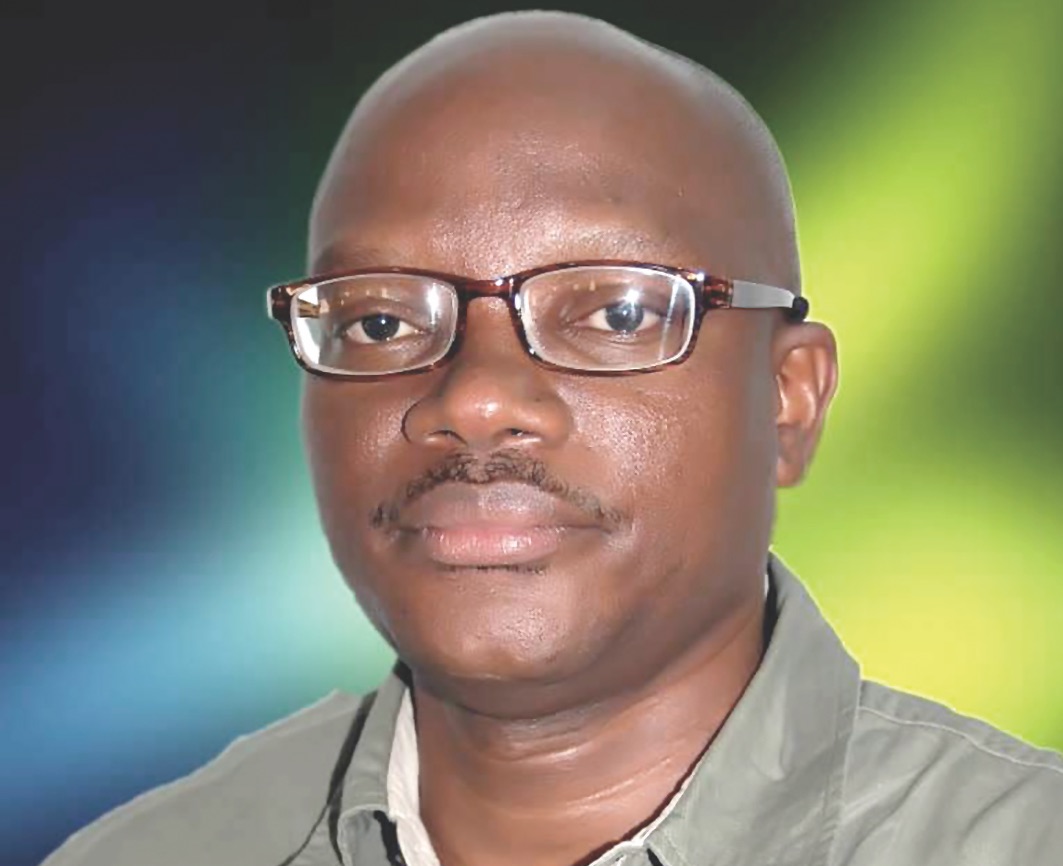
By Gabriel Dike
Prof. Christopher Piwuna of the University of Jos (UNIJOS) is President, Academic Staff Union of Universities (ASUU). He spoke with Daily Sun about ASUU struggle with government, state of public universities and access of TETFund grants by private institutions, among other issues.
How did you become ASUU president?
The journey of becoming a leader in the union is a journey of the entire union itself. It’s never been a personal journey for anyone. It’s a journey that all of us, who end up in positions like this, share with others. And so it’s not a personal journey, per say, it’s a journey of solidarity, a journey of teamwork and one in which we all are co-travellers.
But since I was elected ASUU president, I kind of see the challenges slightly differently because now you tend to appreciate the challenges within more and the challenges outside. The challenges within include discipline among our members, adhering to the principles of our union, the ideals, the codes of practice of our union. How do members keep to those things? And you can just see that there’s a lot of work to be done in that area. That’s one.
Then you also have new universities that are emerging that do not have the history of activism. Now they are coming in and you can see them falter as they take these steps to entrenching themselves and imbibing the principles of the union. You also have the government converting colleges of education and polytechnics to universities. So leaders coming from that setting, come with their own background and we need to make sure that everything fits in properly. So, those are the challenges that are within.
The challenges from outside are challenges that we’ve always talked about. But now you realise that you must clean yourself up too as you try to change those from the outside. So it’s a big challenge. One of the things that I’ve seen since I started to serve as president is the way Vice Chancellors have moved far away from what VCs used to be. And I think the positions of Vice Chancellors have been so over politicised that we no longer have the kind of VC’s that we saw as students.
When I was a student, they would say, “My Vice-Chancellor Prof. OC Onaeze, was stopping by or passing by.” And you just feel like a VC. To me, at that time, Prof Onaeze was just like Jibril Aminu, who was Minister for Education back then. Or you hear that Prof. Wande Abimbola, he was like some god, you know. You want to see him. When you read about him, his name conjures so many images in your mind.
So, also Prof Ibidapo Obe or Prof. Grace Alele Williams. See, it’s so far now from all those things that we need to see. I was a student when Prof. Alele-Williams was UNIBEN Vice Chancellor. She was the very first female Vice Chancellor and students were like, really is this real? Where is she? Can you see her? Over time, our VCs have become less than directors in the Federal Ministry of Education and it’s very painful. So, these are my experiences.
How healthy are Nigerian universities?
Very unhealthy. I can describe Nigerian universities as institutions where the walls have broken. I mean, as institutions where the walls have broken, we still have the foundation but the walls have broken, the windows are falling off, the roofs, you have those that are leaking. When I say broken walls and falling windows, I’m referring to the idea of the university itself. I’m not even referring to literal walls. I’m referring to the idea of a university. The wall is breaking. The idea of the university is no longer a moral force as it were in the society. So that’s how unhealthy our universities are.
Some stakeholders are of the view that without TETFund, many state universities would have collapsed, do you agree?
In fact, for both federal and state universities, without TETFund, they would be like glorified primary schools. I mean public primary schools not even private primary schools that are what our universities will be. I know of a university that was established with only a chapel and a hall and today, 80 percent of its facilities in are from TETFund grants.
When Nigerians take on ASUU and are so bitter at ASUU, are so critical of the union, say all sorts of things against ASUU. I wonder whether they reflect what they see in the university. Perhaps, what we should do is to invite the Parent Teacher Association or some other group to visit the universities. Randomly let them choose not us, the universities they want us to visit then they can see what ASUU has done to this country. They can see what the union has done to their children; they can see what ASUU has done to this nation by bringing the idea of TETFund and insisting on Needs Assessment.
Honestly, we must thank the former President Goodluck Jonathan too, because he released the first N220billion for the needs assessment. That went a very long way in ensuring that our universities are brought up to standards that are even Nigerian originally.
Many have called for a moratorium on the establishment of private universities, has ASUU’s position on that changed?
No, it hasn’t. During Professor Julius Okojie as the Executive Secretary of National Universities Commission (NUC) that was when we had this upsurge in private universities in the country. They have guidelines, resources have to be verified, certificates given and all of that.
But we still believe that the current number of universities, public and private, is far too much for us to manage. We think if we could stop at where we are with the moratorium for both public and private universities, we would be able to re-invigorate the system, to get the system refreshed, to get everything in place for sustainable growth of the system. If we are able to do that, I think that would go a long way.
But we’ve been advocating for this for many years and we think that moratorium is important. And we also believe that government and security agencies should look at the sources of funds for those who establish these private universities. I mean, to establish a university is not a child’s play.
Where are they getting the money? What is their source of livelihood? Where is the source of money that they got to establish universities? Some of these universities are just means of laundering money. And I would think EFCC, ICPC, the DSS and financial crime officers should be interested in who is establishing a university and where he’s getting his money.
With constant directives of the Minister of Education and JAMB, are university senates still in charge of admissions?
They are not. They are not in charge. And that’s the point I was making about Vice Chancellors. We have VCs as chairman of Senate who shamelessly go to JAMB and sit down and decide in JAMB the cut-off marks, who would be coming to the university, what they should do and what they cannot do in admission and JAMB keeps issuing directives to them. I believe that JAMB is still relevant in the scheme of things, but the role that they are playing would have to be redefined.
Other News
The first strike under your watch didn’t last long, is this sign of a good thing to come?
It’s a sign of a good thing for both our members and the Nigerian public, particularly Nigerian students. Because I think if we continue to have government response improved whenever we raise issues, it would not lead us to a full-blown strike and the purpose for this strike, as it was named, warning strike, it was like a warning bell.
When we were in school and before break time, when the break is about to be over, there will be a first bell that tells you that it’s about time to go back to class. Then the second bell comes, which we think that the first bell has drawn attention to all relevant offices and agencies that the longer sounding bell is on its way and we have seen people come back to class, and so we decided that it’s time to suspend it.
How did ASUU resolve the Minister’s comment that the union didn’t have agreement with FG?
I think he retraced his steps on those comments and he wrote to clarify their position. And I think that’s one of the problems that we have with government officials. They don’t look at their records and they don’t pay attention to what has happened before them. But it’s largely the fault of the public servants, the technocrats, and the bureaucrats.
Why?
Well, they are the ones that keep the records. The Education Minister was not there five years, 10 years and 15 years ago. But most of them who were there when that agreement was signed are still in that ministry and for them not to properly guide him shows clearly that they are the problem, not the minister himself.
There have been clamours for private universities to benefit from TETFund, why is ASUU opposed to this?
I think if that happens, it will be what will draw the sharpest reactions from ASUU. The government will see the most ugly part of ASUU if that is done. Prof. Ibrahim Gambari recently said that private universities should benefit because they have interest in private universities, they are now making that comment and making that proposal.
TETFund as it is today has become a marketplace; it is a place that has totally lost where it’s supposed to go. The original mandate of TETFund is no longer what is being carried out. Do you know that the Ministry of Education now has a desk officer in TETFund? We just want to put this fight (renegotiation with FG) behind us. We are going to face these institutions as a union. But TETFund has become a marketplace.
Of recent, we have had issues surrounding the appointment of VCs, why is it so?
It’s the government that is responsible. They dissolve governing councils before their tenure and they brought politicians that have little or no interest or have no work to do to be pro-chancellors and that has created this problem that we are facing. So you now have a Pro-Chancellor that knows fully well that his work is part-time and takes an office in the university and comes into the university on a daily basis. It’s all a job for the boys. It is the handiwork of the Federal Government.
If they had chosen the right people to manage universities as Pro- Chancellors, this issue wouldn’t have happened. But that is not to say we do not have confidence in some pro-chancellors. A lot of pro-chancellors are doing very well.
Look at Oba Dapo Tejuosho of Oke-Ona, Abeokuta, Ogun State. He is the Pro-chancellor of UNIABUJA. He stood up against FCT Minister Wike’s attempt to take the land of the university. We want pro-chancellors who can defend our universities that will propagate and know the ideals of our institutions not those that will come in as parasites or try to sell the positions of vice chancellor to the highest bidder.
Aside from strike, does ASUU have any option to get the Federal Government to meet their demands?
We always have options and we always explore them before we embark on strike. We have options and we always explore them and I’ll give you an example. Before we got to this strike, we wrote letters and called for meetings. They have never called us for a meeting. We have to remind them or tell them that we need to meet to resolve things.
There are so many things we do. And honestly, going on a strike is not as easy as Nigerians think for us. Before you go for a strike in ASUU, even in local branches, the procedures are very tedious and you may be denied, I believe we may get there very soon.
Some are of the view that the Federal Government’s “no work, no pay” stance prompted ASUU to suspend the warning strike.
Those who know ASUU will know better. We’ve stayed for eight months without salaries. So, is it one week or a few days of threats that will make us back down? Those are just mischief-makers and we can’t be afraid. Even the government itself knows that’s not the reason.
In fact, we even want them to stop the salary so that they will see the other side of us. We have so many things that we can do when they stop the salaries. So we want them to even stop it. It couldn’t have been. It is not.
Take home pay of a lecturer or a professor, can it really take them home?
The recent offer by the Federal Government to us was a 35 per cent increase. And let me tell you something, when we had our meeting to suspend the warning strike, 89 branches, none of the branches accepted the 35%. All the 89 branches of ASUU in Nigeria rejected in the strongest terms the 35% increase. So it’s a non-starter for us.