Follow Us on Google
• CBN introduces measures to check trend
From Uche Usim, Abuja
In the early 2021, about 95 per cent of the world’s central banks raised the Monetary Policy Rates (MPR) (lending rates), far higher than they did during the inflationary oil price shocks of the 1970s.
According to the Bank for International Settlements (BIS), a Switzerland-based global organization of central banks, the move is a strategic effort to tame the rampaging inflation, accentuated by ongoing geo-political tensions in Russia and Ukraine and threats to globalization and multilateralism.
However, the Central Bank of Nigeria (CBN) joined the global rate-hike expedition in May 2022, though there are concerns in several quarters as to how effective it has been in arresting inflation, currently pegged at 22.79 per cent by National Bureau of Statistics (NBS).
Last Tuesday, the CBN’s Monetary Policy Committee (MPC) increased lending rate by 25 basis points from 18.5 per cent to 18.75 per cent.
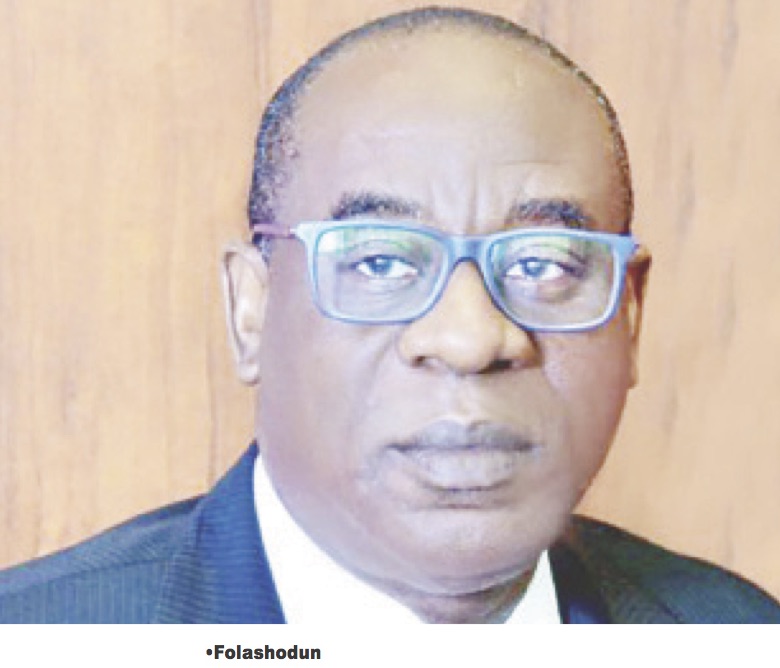
When asked why the consistent hike in lending rate for over a year running has failed to cage the beast, the acting Central Bank of Nigeria (CBN) Governor, Mr Folashodun Shonubi, said that the move has somewhat tamed it as the inflation figure would have been more frightening if no action was taken within the MPR space.
He explained that the apex bank would deploy every tool in the box, aside the conventional lending rate hike, to wrestle inflation.
He said: “I believe in previous MPC meetings, we have shown that every time we have had a rate increase, it has actually moderated the rate of inflation.
“But that’s not all we have been doing. We agreed that one of the key challenges now was the liquidity overhang. We need to look at the various tools we have. In addition to interest rate hikes, we’ve also come up with various ways to tighten the liquidity because we believe that the liquidity surface actually runs across not just inflation, but also has some impact on the exchange rate and other parts of the economy.”
Inflation has remained the centre of discourse on the global stage with the International Monetary Fund (IMF) calling on all countries, especially those in the low-income category like Nigeria, to closely align their fiscal and monetary policies to combat inflation and build buffers to absorb unforeseen shocks.
Last month, leading global central bankers at a panel discussion with United States’ Federal Reserve Chair, Jerome Powell; European Central Bank President, Christine Lagarde; Bank of England Governor, Andrew Bailey and Bank of Japan Governors, Kazuo Ueda in Frankfurt, Germany, asserted that global borrowing costs would stay high until the inflation monster is subdued.
According to analysts, Central banks set benchmark interest rates to guide borrowing costs and the pace of economic growth.
Lower rates spur growth while higher ones restrain spending, investment, and stock market valuations. If rates rise too quickly, demand may decline, with various scathing consequences on the economy.
The main casualties in rate hikes, experts noted, are borrowers like manufacturers and service providers. Consumers are also terribly affected as they usually hold the shorter end of the stick and bear the brunt of passed-on costs.
However, a bigger trouble is that when companies make less money, their production level shrinks, forcing them to lay people off and this can lead to a recession.
In rate hikes, one sector that tends to benefit the most is the financial industry. Banks, brokerages, mortgage companies, and insurance companies’ earnings often increase as interest rates move higher because they can charge more for lending.
The banks take advantage of the greater spread between the interest they pay to their customers and the profits they earn by investing.
In Nigeria, inflation hit a more than 17-year high of 22.22 per cent in April as against 22.04 per cent in March, despite the CBN’s hiking cycle that commenced last year.
There are genuine worries that inflation may balloon to a more worrisome level when the NBS eventually releases the July numbers after it factors in the knock-on effects of petrol subsidy removal and alterations in the monetary policy ecosystem.
As the Nigeria Labour Congress (NLC) pushes for N200,000 minimum wage to keep pace with the higher cost of living, fears are rife that businesses will further raise prices and this may lead to a wage-price spiral, which is any central bank’s worst nightmare.
Currently, experts reckon that the Nigerian economy is overstretched and lacks a strongly-diversified base to deflect the global and local headwinds and volatilities.
This aggravates inflation, being the greatest challenge confronting macroeconomic stability in Nigeria.
As an import-dependent economy, the recent floating of naira and subsidy removal has dealt a hard blow on the citizens because the prices of foods, other goods and transportation have quadrupled.
This is added to local challenges like insecurity in major food-producing localities; rising energy cost; decrepit public infrastructure and more. All these continue to drive the rise in food and core inflation.
Industry watchers insist that the Central Bank of Nigeria (CBN) must square up against inflation before mass suicides, arising from worsening economic hardship, become the order of the day.
Already, many Nigerians, including civil servants, artisans and players in the private sector, are currently gnashing their teeth, saying that inflation has terribly-eroded their savings and wages.
On the effect of the persistent rate hike on the economy, the Director General, Centre for the Promotion of Private Enterprise (CPPE), Dr Muda Yusuf, told Sunday Sun that the latest rate hike did not come as a surprise because of the surging inflation and the current pressure on the exchange rate.
“These are macroeconomic economic conditions that the CBN would not ignore. There are concerns about real interest rate which is currently in negative territory. There are also worries about the signalling effect of the MPC decision.
“But the hike in rate would hurt investors in the real economy as they are already grappling with numerous headwinds. These include the spiking energy cost, depreciating exchange rate, increasing cost of logistics, weak purchasing power, and spiralling inflation.
“The main drivers of inflation at this time are the twin problems of rising energy cost and the depreciating exchange rate.
“Meanwhile the increase in MPR is unlikely to have any significant impact on inflation. The transmission mechanism of monetary policy instruments on inflation is extremely weak because of peculiarities of the Nigerian economy”, he explained.
On his part, Nigeria’s first professor of the capital markets, Prof Uche Uwaleke, noted that CBN pegging the MPR at 18.75 per cent is quite high given that it represents an anchor for interest rates.
According to him, the implication is that lending rates could go as high as 30 per cent since financial institutions have other costs to grapple with which will normally be added and passed over to the customer.
“So, one should expect rising cost of capital for businesses and dwindling access to credit. This in turn is capable of negatively affecting output and jobs.
“Given that the major drivers of inflation in Nigeria are supply-side factors, rising inflation can be considerably tamed not by continuously increasing the policy rate, but by putting measures in place to increase production. In this regard, the government has a lot of role to play”, he told Sunday Sun.
In 2022, the NBS said that 133 million Nigerians (60 per cent of the population) sank into multi-dimensional poverty.
But analysts noted that the figure has swollen remarkably as thousands of people sink into the poverty pit on a daily basis.
Before last week’s hike in interest rate, stakeholders in the real estate sector had already described the previous raises as a drawback.
The Executive Secretary of the Association of Housing Corporation of Nigeria, Toye Eniola, told journalists recently that higher interest rates on loans would stifle housing development.
“This will obviously increase interest rates on loans which will make it unattractive for housing development. Development loans require patient funds and if you are getting such loans at above 20 per cent, how would such a development be lucrative? It will be suicidal to go for such as houses developed are not going to be sold in one day.
“Before now, the interest rate on commercial bank loans was between 25 per cent and 30 per cent, and with the increase in Monetary Policy Rate, the interest rate will definitely go above 30 per cent. And this will obviously reflect an increase in the high cost of building materials and apparently lead to many abandoned projects. It is not looking good for the housing sector.”
However, in addressing recent economic hiccups, especially around the latest forex liberalisation policy of the CBN, the acting CBN Governor, Mr Shonubi, said that the actions were not aimed at rate unification, rather to galvanise efficiency in the forex trading market.
He gave the assurance that with moderation by CBN, there was light at the end of the tunnel with respect to institutionalising an effective and efficient forex exchange policy.
“We are not trying to unify any rate. We believe that we need to encourage the market to be more efficient and more effective and that takes a bit of time. Some of the volatility you’ve seen over the period has been driven by that same fact that the market needs to find its level, and also, the reality that there’s pent-up demand which current supply will not be sufficient for.
“As we ease and satisfy the pent-up demand we will begin to see a more efficient market that runs. But you also need to understand the dynamics of pricing in the market and we feel we should actually stop calling it the I and E window because it is now much more than the I and E. For us it’s a market where everybody and anybody through the licensed institutions can participate. So, we expect that over time the volatility you are seeing would normalise”, he stated.