Follow Us on Google
From Adesuwa Tsan, Abuja
As Nigeria marks its 65th independence anniversary on October 1, 2025, reflection on the country’s formal institutions is inevitable.
The Federal Government’s official theme for the anniversary, “Nigeria @ 65: All Hands on Deck for a Greater Nation,” captures both aspiration and challenge. It is an invitation to Nigeria’s political institutions, the National Assembly inclusive, and the people who serve in them to deliver a safer, more prosperous, and more equitable country to citizens who have repeatedly placed their trust in democracy.
Of all arms of government, the Senate, the upper chamber of the National Assembly, sits at the heart of this reflection. It holds constitutional powers of law-making, confirmation of appointments, and oversight of the executive. In principle, it is designed to be a balancing force, a check on excesses, and a vehicle for citizens’ voices. But in practice, has the Senate lived up to this responsibility?
And as Nigeria clocks 65, does the 10th Senate offer real hope for change, or does it mirror the frustrations of the past? The rebirth of democracy in 1999 offered Nigerians fresh hope after years of military rule. The National Assembly, comprising the Senate and House of Representatives, was expected to anchor this transition. The Senate, in particular, was entrusted with a role that combined statesmanship with vigilance, a sanctuary where national interest would ideally override narrow partisan calculations.
But the Fourth Republic, inaugurated in 1999, also came with teething problems. The Constitution created room for legislative activism, yet the political culture inherited from military dominance tilted power heavily toward the executive. Presidents retained enormous influence over the legislature through patronage, party machinery, and control of state institutions.
The Senate, though constitutionally independent, analysts noted was institutionally weak and politically fragmented. It is against this backdrop that the evaluation of its performance across the past 26 years will be done.
Early Turbulence: The First to Third Assemblies (1999–2007)
The first three assemblies were dominated by instability, particularly in leadership. Evan Enwerem, the pioneer Senate President, was removed within months of his election, replaced by Chuba Okadigbo. Okadigbo too was forced out after falling out with the executive and his colleagues. His successor, Anyim Pius Anyim, attempted to stabilise the chamber between 2000 and 2003, but he too operated under the shadow of presidential pressure and factional interests.
The turbulence continued in the second and third assemblies. Adolphus Wabara resigned in 2005 after being implicated in a contract scandal, making way for Ken Nnamani. Nnamani’s leadership is remembered most for presiding over the Senate that rejected President Olusegun Obasanjo’s controversial third-term bid in 2006 and this singular event was a defining moment in Nigeria’s democratic journey.
These early assemblies revealed the fragility of legislative independence in a young democracy. Yet, paradoxically, they also showed flashes of institutional courage, most notably in the rejection of tenure elongation. In other words, while instability undermined the chamber, there were moments where senators collectively rose to protect the Constitution, pundits suggested.
Stability: The Fourth to Tenth Assemblies
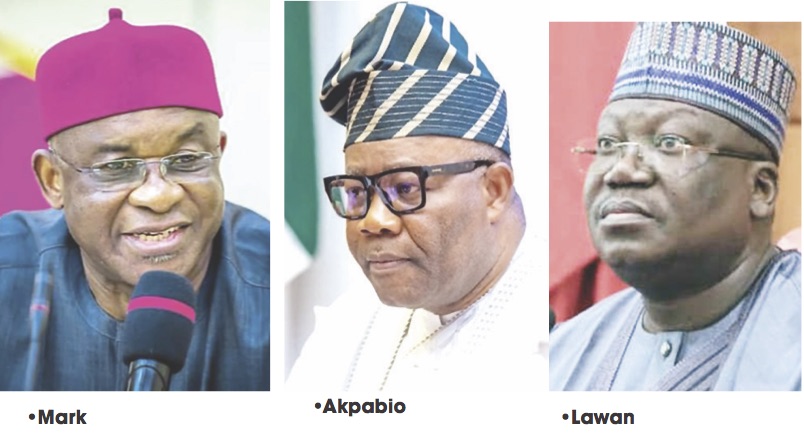
A contrast emerged from 2007 onward. The Senate became relatively more stable, marked by longer-serving presidents who gave the institution continuity. David Mark, who held office from 2007 to 2015, became the longest-serving Senate President in Nigeria’s history. Under him, the Senate projected calm and stability. Critics, however, argued that this came at the cost of assertiveness, that the chamber too often prioritised accommodation of the executive rather than holding it to account.
Then came the Saraki-led Senate between 2015 and 2019 which swung the pendulum in the opposite direction. Saraki faced politically motivated legal battles yet steered the chamber into moments of independence, such as pushing through electoral reforms. His tenure was marked by confrontation with the executive, proving that the Senate could still stand its ground when leadership was willing to endure personal risks.
Ahmad Lawan’s tenure from 2019 to 2023 took a different path. A close ally of President Muhammadu Buhari, Lawan was often accused of running a rubber-stamp Senate. His chamber passed numerous bills, including the long-delayed Petroleum Industry Act, but critics argued that independence and oversight were compromised in the pursuit of cooperation.
Godswill Akpabio’s leadership of the 10th Senate since June 2023 has already been tested. From controversial suspensions of colleagues to unresolved questions about inclusivity and ethics, the chamber finds itself wrestling with old demons; executive influence, internal discord, and public distrust.
The early trajectory of the Akpabio Senate suggests that it is still searching for a balance between independence and credibility.
Legislative Achievements: Economic, Social, Security and Education
As an institution, built on representative trust of the Nigerian people, the Senate’s impact cuts across core areas of the citizens’ life and in taking decisions of national interest, each assembly has approached the economy, social welfare, security and education differently, with varying outcomes.
Other News
On the economy, the first three assemblies between 1999 and 2007 were marked more by political turbulence than robust policy reform. Still, they oversaw important measures, including liberalisation policies and banking reforms, which laid a foundation for fiscal discipline, even if enforcement was weak.
From 2007 to 2015, stability under David Mark allowed for more structured interventions, such as reforms in public procurement and debates over power sector financing. Yet many Nigerians felt that the Senate often endorsed executive borrowing with insufficient scrutiny, planting the seeds of today’s debt burden. The Saraki years brought sharper focus on economic diversification and corporate taxation, with senators taking more interest in recession management during Buhari’s first term.
Under Lawan, the passage of the Petroleum Industry Act and Finance Acts promised structural reform, but citizens still asked whether these laws had improved daily living conditions. The current Akpabio Senate has thus far focused on subsidy removal and its consequences, tax and capital market reforms, with Nigerians expecting stronger action to shield the poor from economic shocks brought on by fiscal changes made by President Bola Tinubu’s administration.
In social and health legislation, the early assemblies gave little priority to healthcare or welfare. Momentum grew in later years, especially with the passage of the National Health Act in 2014 under Mark, which for the first time created a legal framework for healthcare funding. The Saraki Senate introduced disability rights bills and debated social safety nets, though not all survived executive assent. Lawan’s Senate recorded progress with the Persons with Disabilities (Prohibition) Act and health-related responses to the COVID-19 pandemic. The Akpabio Senate has not yet defined its legacy in this area, but the demands for social protection are louder than ever.
Security legislation tells another story. The early assemblies played a limited role in reshaping the security sector, though they debated military oversight. From 2007 to 2015, with Boko Haram insurgency escalating, the Senate passed the Terrorism (Prevention) Act of 2011 and its 2013 amendment, marking a shift toward counter-terrorism frameworks. Saraki’s Senate attempted to deepen scrutiny of military budgets and procurement, though results were uneven. Lawan’s Senate passed measures creating new military commands and special funding streams, yet insecurity worsened nationwide.
Today, Akpabio’s Senate confronts the steepest test yet, with terrorism, banditry, and communal violence destabilising communities across Nigeria. Citizens await not just debates but genuine legislative reforms to make security agencies more accountable and effective.
In education, analysts contend that the record is similarly mixed. The first three assemblies oversaw expansion of universities but offered little by way of structural reform. Under David Mark, funding for the Universal Basic Education programme was debated, though disagreements with the executive limited its progress. The Saraki Senate introduced bills on tertiary education reform and technical education, reflecting awareness of Nigeria’s youth bulge, but implementation lagged.
The Lawan Senate focused on reworking TETFUND rules and establishing new federal universities, yet the recurring ASUU strikes undermined the effectiveness of any legislative action. Nigerians now expect the Akpabio Senate, which has a penchant for passing more establishment bills, to broaden access to student loans, university autonomy, and labour disputes in higher institutions.
Looking at the trajectory, every assembly has registered some progress in specific areas, whether in economic reforms, social policy, security legislation, or education. But none has succeeded in delivering a holistic transformation across all these sectors. The result is that Nigerians recognise activity but often lament the absence of tangible improvement in their lives.
Patterns Across Assemblies
Looking back, political communication experts submit that the first three assemblies reflected the turbulence of institutional infancy. They were unstable, vulnerable to executive pressure, but capable of flashes of constitutional courage. They further contend that the David Mark years offered stability, but the chamber leaned toward accommodation of the executive rather than assertive oversight. The Saraki Senate reintroduced independence, often at the cost of confrontation and legal battles. The Lawan Senate chose cooperation, which critics described as servility. The Akpabio Senate is still unfolding, but early controversies suggest an institution wrestling with questions of independence, inclusivity and internal squabbles
Hope or Despair at 65?
The record of how well the Senate has delivered in 26 years of uninterrupted democracy is mixed. The red chamber has played historic roles in blocking tenure elongation, passing electoral reforms, and enacting long-delayed petroleum legislation. It has provided a forum for debate and a platform where voices from every state converge.
Yet, it has also failed Nigerians through inconsistency, weak oversight, ethical lapses, and limited inclusivity. For many citizens, the Senate symbolises a democracy where the form exists but substance is thin. At 65, Nigeria faces urgent challenges: insecurity, economic fragility, corruption, and widening inequality. The Senate cannot afford to be ornamental; it must be operational, effective and accountable.
What Hope For Nigerians?
For Nigerians, hope in the Senate is conditional. It depends less on abstract constitutional theory and more on whether those who sit in the chamber rise above partisanship to legislate and oversee in the public interest. The 10th Senate has an opportunity to reset its handling of internal dissent, its approach to executive oversight, and its responsiveness to citizens’ priorities. This will determine whether Nigerians will have renewed faith or experience despair in the institution.
All said and done, analysts believe that Hope, therefore, is fragile but not extinguished. Nigerians remain watchful while they continue to demand accountability from their representatives. The Senate’s response in the years ahead will decide whether the chamber becomes a beacon of democratic promise or a byword for democratic disappointment.