Follow Us on Google
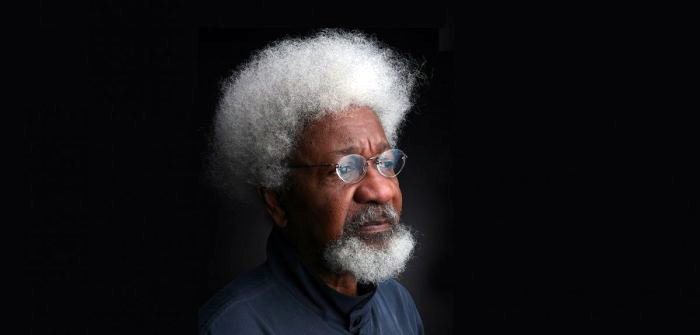
Renowned Nigerian writer, political activist and Nobel Laureate, Professor Wole Soyinka, turned 92 recently. For attaining the great milestone, he was celebrated in Nigeria and abroad for his immense contributions to the arts, culture and nation-building. Born on July 13, 1934 in Abeokuta, Ogun State, Soyinka has created a literary fountain which inspires many writers on the continent. Beyond his literary prowess, he is an accomplished biographer, columnist and polemicist.
For decades, Soyinka’s roaring voice has consistently echoed across theatres, academic institutions, and national boundaries. He continues to stand tall as a defining symbol of African intellectual thought. Following his seminal play Kongi’s Harvest, he acquired the sobriquet Kongi. His famous declaration that “the man dies in all who keep silent in the face of tyranny” continues to motivate many radical minds across the world.
His vast body of work spans classic plays, profound poetry, and piercing political essays. He effortlessly weaves complex Yoruba cosmology with universal human experiences. His classic dramatic masterwork, Death and the King’s Horseman, continues to be studied worldwide as a foundational text on cultural clash and existential duty.
Soyinka’s masterpieces like A Dance of the Forests and The Trials of Brother Jero boldly challenge colonial legacies and early post-independence disillusionment. He has published 25 plays, 10 essay collections, seven poetry volumes, and five memoirs. His historic winning of the 1986 Nobel Prize in Literature has repositioned African storytelling at the pinnacle of global discourse. What perhaps separates Soyinka from his global literary peers is his unflinching political activism.
During the Nigerian civil war, Soyinka travelled to Enugu to meet with the Biafran leader, Chukwuemeka Odumegwu-Ojukwu, in an attempt to avert the civil war. The military government of Gen. Yakubu Gowon arrested him and held him in solitary confinement for 22 months. His imprisonment became a global cause célèbre, and his resilience popularised the doctrine that intellectual neutrality during structural oppression is a moral crime. His prison memoir, The Man Died, was one of his best works till date. In the decades of military dictatorship that followed, he faced a treason trial and forced exile, yet his voice never wavered.
At 92, Soyinka remains active in contemporary global debates. Younger generations of writers, advocates, and thinkers regularly draw inspiration from his literary works. Beyond his formidable public persona as an intellectual, there is a quiet, deep-seated humanity that defines his regular personal interactions. Recent heart-warming accounts have highlighted his low-profile philanthropy, including paying medical bills of younger artists.
Other News
In a world of rising authoritarianism, political polarisation and erosion of basic civic spaces, Soyinka’s lifelong message becomes more urgent than ever. He stands as a towering historical reminder that culture is one of humanity’s last great meeting places. He teaches how to live with difference across deep histories and oceans.
Soyinka’s impact on Nigeria’s political history is as profound and disruptive as his literary legacy. He transitioned from an academic to a frontline political dissident, utilising direct civil disobedience, guerrilla media, and structural opposition to challenge military dictatorships. His specific historical interventions shaped Nigeria’s democratic trajectory across some areas.
The peak of Soyinka’s political impact came in the 1990s during the brutal military dictatorship of Gen. Sani Abacha. Following the annulment of the June 12, 1993 presidential election, Soyinka became a strong voice against military despotism and restoration of civil rule. When it was not safe for him to continue to stay in the country, he went into exile to continue the democratic struggle. His advocacy and others helped to cripple military rule and return of democracy in 1999.
In the Fourth Republic, Soyinka shifted his strategy from street protests to institutionalised political reform. He was a founding member and leading figure of the Pro-National Conference Organisations (PRONACO), to advocate a sovereign national conference to restructure Nigeria’s federation. In 2010, he helped to found the Democratic Front for a People’s Federation (DFPF), serving as its chairman to mentor young politicians.
Apart from this, Soyinka has been a major critic of administrations in Nigeria. As he did not spare the military leaders, he also did not spare the civilian leaders. He was particularly critical of the administrations of both Olusegun Obasanjo and Goodluck Jonathan. Through these interventions, Soyinka kept those in government in check. We wish him a Happy Birthday.