Follow Us on Google
By Benson Michael
In the heart of Nigeria’s bustling cities, from the crowded streets of Lagos to the growing suburbs of Kaduna, mountains of discarded phones, laptops, and appliances rise daily.
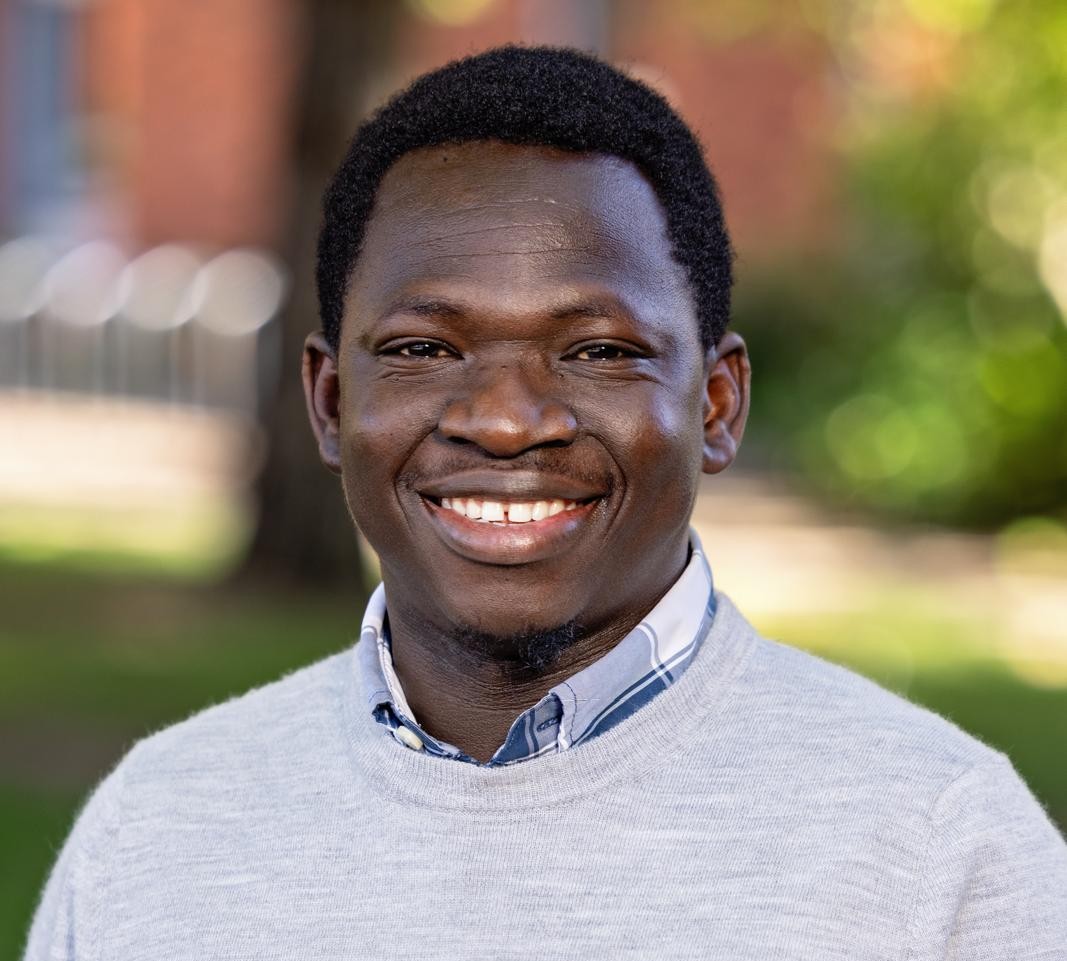
What many see as worthless junk, Doctor Stephen, a Nigerian-born chemist and materials scientist at Oregon State University, sees as a hidden treasure trove.
Inside those heaps of electronic waste lie fragments of critical metals: palladium, platinum, neodymium, cobalt, and other rare earth elements that power everything from smartphones to electric vehicles. Each circuit board or dead battery represents value—yet Nigeria loses billions of naira annually as this “urban mine” is dumped, burned, or shipped abroad.
“Nigeria is rich not just in natural resources, but in waste,” Stephen says.
“Every piece of discarded electronics contains recoverable metals. The challenge isn’t abundance, it’s the absence of technology and systems to recover them responsibly.”
According to the Global E-Waste Monitor, as of 2020, Nigeria produces over 500,000 tonnes of electronic waste every year, ranking among Africa’s top generators. Less than 20 percent of that waste is formally processed. The rest ends up in informal dumps like Alaba and Computer Village, where young men strip wires by hand, burning plastic insulation to expose copper, unknowingly releasing clouds of toxic fumes.
For most, this is a pollution disaster. For Stephen, it’s a scientific and economic opportunity. “In advanced economies, e-waste is a valuable feedstock,” he explains. “Recycling plants recover gold, palladium, silver, and rare earths that feed clean-energy industries. Nigeria can do the same; it only needs the science and the will.”
Stephen’s path began far from the clean labs of Oregon. Born and raised in Kaduna State, he studied chemistry at the undergraduate level before pursuing advanced research abroad. Now at Oregon State University, his work centers on materials discovery and critical materials separation strategies; fields that explore how metals can be separated at the molecular level with high precision.
Using advanced tools such as single-crystal X-ray diffraction and spectroscopy, he designs molecular systems capable of discriminating one metal ion from another. His approach employs supramolecular clusters and controlled crystallization, replacing high-temperature, high-waste industrial methods with cleaner, selective processes.
His research was further refined at the Oak Ridge National Laboratory (ORNL) in the United States, where he developed microscale separation procedures for the study and separation of rare earth elements via the formation of supramolecular complexes, expertise directly applicable to extracting valuable metals like palladium, neodymium, and yttrium from complex waste mixtures.
“The same chemistry that allows us to separate rare earth elements and precious metals in a lab can be scaled into modular systems for waste recycling,” he says. “It’s about taking the precision of molecular science and applying it to industrial recovery.”
Stephen envisions a Nigeria where recycling is innovation, not improvisation. In his model, portable or regional recycling units powered by his cluster-based chemistry could process e-waste, mine tailings, or industrial residues efficiently and safely.
Such recycling systems could tackle major national challenges by creating jobs, reducing pollution, saving foreign exchange through local metal recovery, and supporting Nigeria’s transition to green manufacturing industries like solar energy, batteries, and electric vehicles.
But to get there, Stephen stresses, Nigeria must invest in science and policy together. “Science alone can’t change systems,” he says. “We need collaboration between universities, industries, and government agencies like RMRDC and NESREA to deploy home-grown recycling solutions.”
Stephen’s work has earned global recognition by the International Precious Metals Institute. His publications have positioned him among the promising young scientists exploring sustainable materials recovery.
Yet despite his international acclaim, his gaze remains firmly fixed on home. “If Nigeria invests in advanced recycling the way it invests in oil,” he says, “we’ll witness a revolution in sustainable manufacturing. The waste we ignore today could become the backbone of tomorrow’s economy.”
Stephen’s journey, from Kaduna’s classrooms to the forefront of global materials science, embodies what is possible when knowledge meets purpose. His vision is simple yet transformative: to help Nigeria reclaim value from its waste and, in doing so, build an economy that is cleaner, stronger, and self-sustaining.
“I want to see Nigeria turn its waste into wealth,” he concludes. “If we can recover critical metals instead of discarding them, we’ll not only protect the environment—we’ll power our future.”
In a country overflowing with untapped potential, Stephen’s work reminds us that the solutions to Nigeria’s environmental and economic challenges may already lie in what we throw away.