Follow Us on Google
Nigeria may be a maritime giant by virtue of its vast coastline, strategic location and abundant marine resources, but the country is still swimming in shallow waters when it comes to fully exploiting the sector’s enormous economic potential. From ports and shipping to shipbuilding, fishing and offshore services, persistent infrastructure gaps, weak regulation, insecurity and limited investment continue to keep the maritime economy far below its potential, 66 years after independence.
The nation’s maritime sector is still moving at a slow pace compared to its competitors in neighbouring countries. It has failed to harness the opportunities embedded in the nation’s lucrative crude oil exports.
While foreign ships cash in, the country continues to forfeit billions of dollars that could have boosted jobs, revenue and economic growth in general.
Ironically, since 1958, Nigeria has not earned a dime in freight revenue from its crude oil exports, including crude supplied to the recently commissioned Dangote Refinery.
Foreign shipping lines have continued to dominate the country’s maritime transport business, particularly since the liquidation of Nigeria’s national shipping carrier in 1995.
Daily Sun learnt that Nigeria may be losing more than $10 billion annually in freight earnings and another $100 billion in shipping agency services to foreign operators, amid concerns over the country’s weak indigenous shipping capacity and limited awareness of the economic value of national shipping lines.
Worrisomely, 66 years on, Nigeria still has no national carrier since the collapse of the Nigerian National Shipping Line (NNSL) in 1995.
With the NNSL’s 20-vessel fleet long gone and repeated revival attempts failing, most notably after Pacific International Lines (PIL) pulled out, foreign vessels have continued to dominate and run the nation’s coastal waters.
The situation, analysts say is very troubling, especially for a country with a coastline of 852 kilometres bordering the Atlantic Ocean in the Gulf of Guinea and a maritime area of over 46,000 sq km, fresh mangrove swamps, creeks, coastal rivers, estuaries, bays and offshore waters.
Untapped maritime endowment
28 of Nigeria’s 36 states can be accessed through water, with over 250 ethnic groups. It is estimated that one quarter of Nigeria’s population lives in the coastal zone. Moreover, eight out of the 36 Nigerian states, with 25 per cent of Nigeria’s total population, share the Atlantic Ocean coastline.
Despite the abundant resources in its maritime sector that underpin its economic diversification and development drive, Nigeria has yet to fully harness the industry’s enormous potential.
Today, more than 80 per cent of indigenous shipping companies have gone under, swept away by the harsh tide of the inclement economic climate. All these are attributed to the previous governments’ negligence and lack of a legislative framework for the industry.
1960s–2000s, Nigerian waters were ruled by foreign shipping lines. Nigeria paid billions in freight, yet owned almost nothing. Apapa and Tin Can became symbols of inefficiency, choked with traffic, corruption, and delays. Cabotage Laws meant to empower local operators were passed, but enforcement was weak.
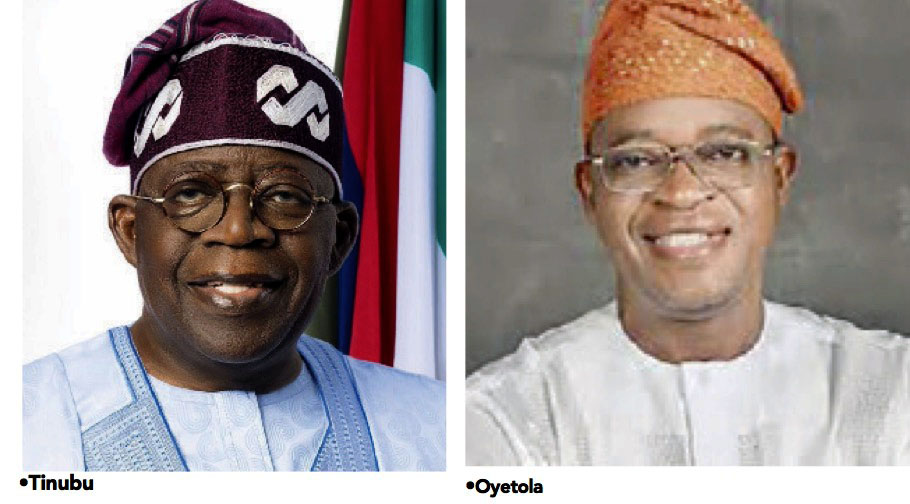
However, experts say Nigeria’s maritime sector has recorded only modest progress, particularly in port reforms introduced in 2006, when sections of the ports were concessioned to private terminal operators, coupled with the current reforms under President Bola Tinubu, especially in the area of port upgrade and modernization.
“In the 2010s–2020s, the sector began to stretch, yawn, and blink into the sunlight. Thanks to the Deep Blue Project, Nigerian waters have seen a reduction in piracy. That’s not luck; it’s strategy. Paperless ports, blockchain trials, and RFID cargo tracking brought us into the 21st century. Seafarers’ wages jumped from N70,000 to N200,000. That’s not just a raise; it’s a reckoning. Funtua Inland Dry Port opened, decentralizing trade and unclogging Lagos,” an industry stakeholder observed.
2023 and beyond, the creation of the Ministry of Marine and Blue Economy is more than a bureaucratic move; it’s a declaration of intent. From sustainable fishing to marine biotech and ocean energy, Nigeria is sitting on a trillion-naira frontier, according to industry experts.
Beyond that, however, the industry is still crawling compared to other nations, largely because of weak legislation, corruption, policy inconsistency, decaying infrastructure, and the absence of a national shipping line.
Experts speak
Experts said Nigeria has made efforts to remain relevant globally since the establishment of formal ports in Port Harcourt (1912), Apapa (1924), and Tin Can (1976). But much of that early promise has faded.
Nigeria’s shortcomings are glaring. Apapa Port, once earmarked to be the cargo hub of West Africa, has lost that status to Ghana, which now receives more cargo despite having fewer ports. With over 16 major container and oil terminals, Ghana has overtaken Nigeria as the preferred hub.
Stakeholders noted that despite its vast potential, Nigeria is yet to fully harness the opportunities presented by maritime trade in the Gulf of Guinea. With its strategic location, extensive coastline and population of more than 200 million, the country has the potential to develop and operate some of Africa’s largest and most efficient ports.
However, despite these enormous advantages, stakeholders said the maritime sector remains largely underdeveloped, crawling far below its potential and struggling to emerge as a leading maritime hub.
Speaking with Daily Sun, a maritime expert, Edmund Chilaka, faulted successive Nigerian governments for failing to harness the country’s vast maritime resources and the economic opportunities presented by international shipping, despite several initiatives introduced to develop indigenous capacity.
Chilaka said Nigeria, like Ghana and some other African countries, established state-owned shipping lines after independence with ambitious objectives, particularly in human capacity development.
According to him, although the carriers eventually collapsed, the initiative produced trained master mariners, marine engineers and other shipboard officers who contributed to the development of the country’s maritime industry.
He said successive administrations failed to properly manage the economic opportunities associated with sea trade, but singled out the administration of former military Head of State, Ibrahim Babangida, for making a significant intervention in 1987 with the establishment of the National Maritime Authority (NMA).
He added that the NMA empowered indigenous shipping companies through cargo allocation and financing that enabled some operators to acquire vessels and participate more meaningfully in international trade.
“The IBB regime in 1987 made the biggest impact by setting up the National Maritime Authority, which empowered indigenous shipping companies, allocated cargoes and gave loans that enabled vessel acquisitions,” he said.
Chilaka, however, said subsequent governments had failed to demonstrate a similar understanding of the strategic role of maritime trade in national economic development.
He particularly criticised what he described as an excessive emphasis on international meetings and foreign trips, rather than policies capable of strengthening Nigeria’s maritime manpower and indigenous shipping fleet.
“Politicians leading the industry today conflate national interest with personal trips to IMO meetings for estacode allowances and making a show of London trips, whereas they ought to be empowering the nautical schools to churn out qualified seafarers with COCs for employment in foreign-going ships,” he said.
The maritime expert also called for greater support for Nigerian maritime students and cadets, particularly those pursuing Ordinary National Diploma programmes, to obtain sea-time experience aboard foreign-going vessels.
He said Nigeria should learn from countries such as India, Sri Lanka and China, which have developed their maritime manpower by creating pathways for trained seafarers to gain practical experience and access employment in the global shipping market.
Chilaka further urged the government to empower indigenous shipping companies to participate in the carriage of federal and state government cargoes and international trade.
He expressed concern that Nigerian shipowners were increasingly being forced to seek business opportunities from private-sector operators, including the Dangote Group, despite provisions of the NIMASA Act designed to promote indigenous participation in cargo carriage.
He argued that sections 35 to 38 of the NIMASA Act, when read alongside the broader mandate contained in Section 1(1), provide a basis for greater participation by indigenous shipping companies in appropriate cargoes.
He added that the Federal Government’s 2021 investment of $1 billion for a 7.25 per cent stake in Dangote Petroleum Refinery through the Nigerian National Petroleum Company Limited further strengthens the case for structured discussions on cargo allocation.
He said the Ministry of Marine and Blue Economy, NIMASA and NNPCL should work with indigenous shipowners to identify appropriate import and export cargoes that could be carried by Nigerian-owned or chartered vessels.
“The government ought to empower indigenous shipping companies to come into their rights to federal and state government cargoes to participate in international trade. Instead, they are reduced to begging for handouts from the Dangote Group,” Chilaka said.
He maintained that deliberate cargo support, coupled with investment in maritime training and sea-time opportunities, would help rebuild Nigeria’s indigenous shipping capacity, create jobs for Nigerian seafarers and enable local operators to compete more effectively in international trade.
Chilaka said the failure to maximise these opportunities amounted to a leadership deficit in the maritime sector, stressing that Nigeria could derive significantly greater economic benefits from its strategic maritime position if existing laws and government investments were effectively deployed to develop indigenous capacity.
Meanwhile, President of the Shippers Association of Lagos State (SALS), Rev. Nicodemus Odolo, said: “We cannot say there is nothing happening in the maritime industry, but for some years, it was as if nothing was happening. We were largely depending on what had been developed since the 1970s and 1980s, including Tin Can Island Port and other facilities. There was no significant development for quite some time.
“But we have to thank God that the present government is talking about several things it wants to do. If these plans are implemented, they could make a difference. In terms of government structure, the maritime sector now has a dedicated ministry, which is the Ministry of Marine and Blue Economy. That, in itself, is a development,” he said.
According to him, countries such as India have demonstrated that sustained research, planning and commitment are essential to developing the marine and blue economy.
Other News
He said Nigeria could similarly unlock enormous wealth from its oceans, stressing that the resources in the sea could provide greater economic opportunities than the resources currently being contested on land.
“If we can properly exploit what is available in the ocean, Nigeria can become a great country. We are now seeing developments and master plans being prepared. The important thing is for these plans to be implemented and sustained even when there is a change of government because maritime development cannot be completed within four years,” he said.
He said Nigeria’s port infrastructure had suffered years of inadequate development, resulting in overstretched facilities and deteriorating infrastructure. He, however, expressed optimism that current efforts to develop additional ports and expand maritime infrastructure could improve the situation.
“Port development was abandoned for years, and that is why our ports became overstretched, with infrastructure deteriorating. But now, it appears that attention is being given to developing more ports and expanding infrastructure. So, in the maritime sector, we have better days ahead,” he added.
The maritime stakeholder also pointed to Nigeria’s largely underdeveloped coastline as a major opportunity for the country to establish more deep-sea ports, saying that inadequate port infrastructure had contributed to the high cost of doing business in the maritime sector.
According to him, developing more ports would create competition among port operators and could ultimately help drive down port charges and other logistics costs. He said the development of additional ports was therefore an important step towards making Nigeria’s maritime industry more competitive.
He, however, criticised the government for what he described as inadequate protection of indigenous businesses from foreign competition, particularly in areas where Nigerians should have greater opportunities to participate.
“We must learn to protect our own industries and our own citizens. The interest of Nigerians should be central to government policies. In Nigeria, foreigners are coming in to undertake clearing businesses that should provide opportunities for local operators. This is not how we develop our own economy,” he said.
He cited India as an example of a country that deliberately protected and developed its domestic industries by restricting imports of products that could be manufactured locally.
“I have studied India’s growth, and I have been there. When India wanted to develop, it restricted the importation of products that could be produced locally. Even in the 1990s, when I was there, the country’s president used a vehicle manufactured in India. That was part of the discipline through which they developed their industries,” he said.
He argued that Nigeria’s large population should be treated as an economic asset rather than merely celebrated as evidence of the country’s size, adding that the government must create policies that enable Nigerians to manufacture goods, establish businesses and participate meaningfully in the economy.
“Nigeria is the biggest market. The population is an opportunity. If every family can produce something and the government protects local businesses, that is how industries grow. That is how countries such as China developed. We need to begin to see our population as an economic advantage,” he said.
He maintained that the government had not done enough to protect Nigerian businesses and promote indigenous participation, stressing that stronger policies were needed to ensure that the benefits of economic growth were retained within the country.
A customs broker and Managing Director of Mikky Excellency Nigeria Limited, Alhaji Abdulazeez Babatunde Mukaila, said there is evidence of progress in Nigeria’s maritime sector, despite decades of infrastructure deficits at the nation’s ports, some of which date back to the 1950s and have remained largely unresolved.
According to him, while Nigeria still lags behind in several key maritime indices, there have been improvements, particularly in the digitalisation of port processes and the ease of doing business in the sector.
“We have recently seen about £600 million that has been pooled to modernise the port. Just this week, we have seen the Minister of Marine and Blue Economy talking about the improvement of the Eastern Ports. So, in many ways, Nigeria still lags behind in so many indices, but I think the horizon is looking good now.
“We are beginning to put all the structures that make us competitive into place. So, where are we heading? I see this government having the capacity to tackle the infrastructure deficit in our ports. And I see improvements coming if this momentum is sustained.
“Nigeria is a giant of Africa. We need to get serious about how our ports perform and how port efficiency will pan out. So, I’m very optimistic that things are getting better and have actually started getting better,” he added.
According to him, the long-standing challenges confronting Nigeria’s maritime sector suggest that the country’s “giant” has been sleeping, but recent developments indicate that it is beginning to awaken.
“The giant has been sleeping, but all the indices are showing that the giant is about to be awakened and that the giant will eventually rise. That is what we are seeing with the direct foreign investment coming in, with DTI World trying to establish another DTI facility in Ogun State, as well as the facilities and infrastructure being planned for the ports by the present administration. So, I think the giant is awake and on the rise. We can only hope for better outcomes so that Nigeria can compete properly and globally,” he said.
However, he expressed concern that successive administrations, including the current government, had not done enough to protect indigenous maritime operators from foreign dominance.
He said stronger government intervention was necessary to ensure that Nigerian businesses could compete fairly and benefit from the country’s huge maritime and logistics market.
“But as I said, now that we are advocating for all this, recently, the Minister of Industry has started looking into what I consider the challenges surrounding the free trade zones. And that has also influenced the recent Customs position to look into what all the terminals are doing presently. So, I believe that what we lacked in previous administrations can be recovered through this present administration, which appears ready to make a difference,” he said.
Dr. Charles Okerefe, a lecturer at the Maritime University, said the Federal Government had made some investments in the development of Nigeria’s maritime industry, dating back to the colonial era and continuing after independence in 1960.
He said one of the major milestones was the establishment and development of the Nigeria National Shipping Line (NNSL), which flourished for some time before becoming defunct due to mismanagement.
“You want to look at the development of the national carrier, the Nigeria National Shipping Line, for instance, which flourished for some time but has since gone defunct and disappeared from the scene because of mismanagement,” he said.
Okerefe also cited the development of major port infrastructure, including Onne Port, Lekki Deep Seaport, Warri New Port and Calabar New Port, as significant milestones that have shaped Nigeria’s maritime industry.
He noted that the establishment of key maritime institutions had also contributed to the sector’s development, citing the Nigerian Shippers’ Council, established in 1978; the National Maritime Authority, established in 1987 and later transformed into the Nigerian Maritime Administration and Safety Agency (NIMASA) in 2007; and the Nigerian Inland Waterways Authority (NIWA).
He added that the establishment of the Ministry of Marine and Blue Economy had further strengthened the government’s focus on the sector.
“These are developments that have driven the country’s maritime industry. You also look at establishments or bodies like the Nigerian Shippers’ Council in 1978, the National Maritime Authority in 1987, which transformed into NIMASA in 2007, and the Nigerian Inland Waterways Authority. Of course, we now have the Ministry of Marine and Blue Economy. These are new developments,” he explained.
According to him, the Federal Government’s decision to develop additional deep-sea ports across the country and modernise existing facilities, particularly the Apapa and Tin Can Island ports, represents another major step in the development of the sector.
He also pointed to the Federal Government’s plan to extend port modernisation to the Eastern ports, including Warri, Calabar, Port Harcourt and Onne, describing the move as a significant development.
However, Okerefe said the industry continued to face major challenges, particularly the lack of effective integration among the various modes of transportation used for cargo evacuation.
“You will also discover that there have been issues when you talk about the integration of transport modes. It is a major issue affecting cargo delivery in our ports,” he said.
He explained that the lack of adequate rail infrastructure for cargo evacuation to and from the ports had significantly affected the maritime value chain.
“In fact, the maritime value chain has been distorted mainly because of a lack of modal integration, especially the development of rail for cargo evacuation to and from the ports,” he said.
Okerefe said the challenges also extended to inland waterways, pipelines and other transportation systems, which he described as largely disconnected.
“You also talk about the problem of inland waterways, movement of cargo, pipelines and all of that. These are disjointed and isolated modes, which have not all gone well for the flow of trade in the Nigerian maritime ecosystem,” he said.
On digitalisation, he noted that the development of the National Single Window and Port Community Systems was expected to facilitate paperless transactions, improve efficiency, reduce delays and enhance ship turnaround and cargo movement.
“Then again, you have to look at the new development in the National Single Window and also the Port Community Systems, which are meant to ease paperless transactions at the ports, with the effect of bringing about quick ship turnaround and faster movement of cargo,” he said.
However, he said the effectiveness of the initiatives would ultimately depend on their implementation.
“It remains to be seen how it plays out at the end of the day. But if you look at it holistically, you will see that Nigeria has made some giant strides in the maritime industry,” he said.
Despite the progress, Okerefe said much more needed to be done, particularly in the area of digitalisation and infrastructure modernisation.
He said Nigeria must keep pace with developments in leading ports globally and embrace smart-port technologies to avoid being left behind by obsolete infrastructure and analogue systems.
“A lot still remains to be done because digitalisation is the order of the day. Nigeria has to be on par with other ports around the world and achieve the status of smart ports, so that the country will not be left behind with obsolete infrastructure and analogue systems of transactions and operations at our ports,” he said.