Follow Us on Google

Introduction
The inaugural part of this piece was necessarily foundational: it defined ‘human rights’; ‘economic social and cultural rights’ and also reviewed historical assault on economic rights by military juntas in Nigeria. Today we continue same theme after which we shall delve into social and cultural rights and equally examine their justiciability. Enjoy.
Assault on economic rights by military juntas (continues)
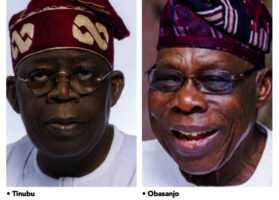
The opaque commercialization and privatization of economic policies that were originally introduced by successive military regimes in Nigeria were later to be fully and absolutely incorporated and implemented in the scheme of things by the Obasanjo administration from 1999-2007. For example, the Obasanjo administration illegally privatized NNPC, NITEL, NEPA, Federal Hotels, strategic public institutions and other public corporations, without necessarily following due process as is required under a constitutional democracy. This privatization and commercialization exercise was done with the ulterior motive of satisfying the whims and caprices of a certain cabal of politicians at the expense of the vast majority of the masses. The commanding heights of our National economy were privatized to friends, relations, school mates, surrogates and lackeys of Government officials and their compradors.
Social rights
These include right to quality education, right to security of employment, access to free medical care, right to drink clean pipe-borne water, right to electricity, right to information, right to good roads, right to good shelter and clothing, etc. These are also known as basic social amenities, which are necessarily incidental to decent and reasonable existence. We are already in the 21st century where a serious global campaign is on going for mass literacy. This campaign for good and qualitative education is predicated on the well known truism that education leads to development in all its ramifications.
Has the Nigerian Government done enough in the area of fundamentals of the importance of education? The answer in good conscience is a capital “No”. Since the days of “Ali-must-go protests (1978), education has suffered tremendously as a result of its commercialization, thus making it an exclusive preserve of the rich. The then National union of Nigerian Students (NUNS), under the leadership of late Mr. Segun Oni demonstrated its abhorrence for this and strenuously protested against the commercialization of education by the then Commissioner for Education, Amadu Ali. Unfortunately, however, this noble struggle of Nigeria Students led to indiscriminate shooting, maiming and killing of innocent and harmless students who were essentially the sons and daughters of the poor. All Federal Universities were promptly closed down following the mass protests. These tragedies occurred during the inglorious days of the military dictatorship of Obasanjo. That was perhaps the first time when Nigerian students signposted their determination to assert their inalienable right to education. Till date, education is still in shambles as all successive military and civilian Administrations have done little or nothing to improve it. While the children of the rich and people in Government attend Ivy league schools both locally and in foreign countries, the mass majority of children of the poor receive half-baked education in half completed buildings, without writing or learning materials.
In fact, since the evolution of Nigeria as a country and indeed since the attainment of political independence, no government has sincerely attempted the convocation of an Education Summit where all stakeholders are permitted to contribute intellectually to the production of a blue print for sustainable quality education that will meet our yearnings and aspirations as a rapidly developing African Country. It is an indisputable fact that without quality education, life will be of no avail and consequently, development will be retarded.
Other News
Another epochal struggle of the later National Association of Nigerian Students (NANS), for improved living standard and conditions in tertiary institutions was the 1990 agitation for the provision of the most basic needs on campuses, essentials such as pipe – borne water, electricity and laboratory equipment just to enhance quality education. The response of the then Babangida Military Junita was a far cry from the legitimate demands of the students. Between March/April, 1990, the Federal Government decided to take an IMF loan of $120m for the Federal Universities and this unilateral and retrogressive decision triggered off violent protests and agitation from the academic community. The National Association of Nigerian Students (NANS) and Academic Staff Union of Universities (ASUU), actively protested against the decision to take loan from the world Bank, essentially because the conditionalities attached thereto would worsen the already crisis – ridden educational situation in the country. Not less than three Federal Universities were closed down following the massive protests that greeted the decision to take the said IMF loan. Some students of the Obafemi Awolowo University, Ile – Ife, were arrested and arraigned before an Ile – Ife Magistrate Court for charges of conduct likely to cause a breach of the peace. The then Education Minister, Prof. Babs Aliyu Fafunwa, while trying to justify the essence of the loan stated that it was meant for the restoration of the universities, but this explanation was not acceptable to Nigerian Students as well as the Academic Staff Union of Universities, who that knew the loan would further deny Nigerians a right of access to the already collapsed educational system. All these were the by-products of SAP, an anti-people program that was initiated by General Babangida’s Military regime.
Cultural rights
Culture has been defined by Bairamian J. in Lewis vs. Bankole, as a mirror of accepted usage. It is a way of life of people, which has gained acceptance among them over the years. The great sage, Chief Obafemi Awolowo of blessed memory, once said that:
“Culture is the tap root of every society and if culture decays, that society will have to develop parasitic features for it to continue to exist”.
Cultural heritage has many aspects. For example, cultural songs and dance, cultural foods, cultural traditional marriage, cultural dresses and festivals. Nigerian’s multi-ethnic groups presuppose the existence of cultural pluralism. This means that as there are many different ethnic groups, so also there are different and diverse cultures in Nigeria. It is therefore necessary to preserve and promote cultural rights among the various ethnic Nationalities in Nigeria, so as to enable Nigerians participate actively in their cultural life. This would also foster our philosophy of national integration and diversity. An examination of the Nigerian Society in the pre-colonial era will reveal how well preserved, promoted and respected our cultural heritage was by all the paramount traditional rulers of the time. For example, the Benin Empire during the reign of Oba Overamwen Nogbaisi earned continental applause as a result of the Oba’s dedication and commitment to the promotion and preservation of the Benin cultural heritage. The Oyo Empire under the Alaafin of Oyo was also feared and respected by all and sundry for its commitment to the preservation of their cultural heritage. The Hausa/Fulani struggled for decades for the preservation and promotion of their cultural heritage. This was copiously acknowledged by all British Colonial Administrators in Nigeria during the colonial era.
Justiceability or otherwise of economic, social and cultural rights
Chapter II of the 1999 Constitution of the Federal Republic of Nigeria, 1999, as amended made copious provisions for Fundamental Objectives and Directive Principles of State Policy. Sections 13 – 24 of the constitution are basically on such all important issues and matters like fundamental obligations of the Government, the Government and the people, politics, economic, social, educational, foreign policy, environmental objectives, directives on Nigerian culture, obligations of mass media, National ethnic and duties of the citizens. Section 16 (1) – (4) of the constitution deals essentially with economic objectives, while section 17 (1) – (3) deals with social objectives; and section 21 of the Constitution of the Federal Republic of Nigeria, 1999 as amended provides for directives of Nigerian culture.
A cursory look at the Constitution of the Federal Republic of Nigeria, 1999, as altered, quickly reveals that the Government, gave these rights and privileges with the left hand, and took them back with the right hand. This is akin to the proverbial Greek gift. It is submitted with respect that, the non-justificiability of the Fundamental Objectives and Directive Principles of State Policy under the 1999 Constitution appears to be a conspiracy by the state and its preferred minions to deny the Nigerian citizens, particularly the masses, the enjoyment of their well deserved wealth by many public officers and Government functionaries. A careful consideration of the diary of looting in Nigeria will reveal how public officers in connivance with elected political office holders have embezzled and mismanaged public funds meant for provision of infrastructural facilities and other developmental projects. But since the 1999 constitution as imposed by themselves and their military collaborators has prohibited any person from challenging or seeking to enforce the Fundamental Objectives and Directive Principles of State Policy, the looting or siphoning of public funds will continue with impunity and the perpetrators will always find an escape route. The average Nigerian continues to wallow in abject penury. The recent revelations of looted billions of naira constitute and eye – opener to this tragedy.
We must encourage and promote the enforcement of all the Fundamental Objectives and Directives Principles of State Policy as they are meant to enhance the living standard of all and sundry.
Thought for the week
“true freedom requires the rule of law and justice, and a judicial system in which the rights of some are not secured by the denial of rights to others.” – Jonathan Sacks