Follow Us on Google
From Adewale Sanyaolu, Houston, Texas
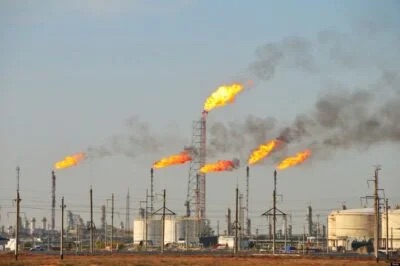
The Nigerian Upstream Petroleum Regulatory Commission (NUPRC) says ongoing efforts to commercialise gas flares could unlock up to 3 gigawatts (GW) of electricity.
NUPRC Commission Chief Executive, Mrs. Oritsemeyiwa Eyesan, disclosed this at the NUPRC / PETAN Energy Evolution Exchange Spotlight at the Offshore Technology Conference (OTC) 2026, in Houston, Texas, yesterday.
“Today, we are working towards converting those flares into about 3 gigawatts of electricity. This project is ongoing,”.
She noted that the initiative is part of a broader strategy to eliminate routine gas flaring and convert wasted resources into economic value.
Other News
According to her, Nigeria is moving beyond imposing penalties on companies for gas flaring to actively harnessing the resource through structured programmes that allocate flare sites to capable investors. “We are not just satisfied with the penalties that companies pay for flaring. We are determined to eliminate flaring by commercialising it. The programme is designed to concession flare sites to companies with the technical capacity to convert them into value,”. Eyesan explained that the flare commercialisation programme is already underway, with clear targets to transform flared gas into usable energy, particularly electricity generation.
She noted that the initiative aligns with Nigeria’s commitment to end gas flaring by 2030 while supporting the country’s broader energy transition goals.
The NUPRC boss further emphasised that gas will play a central role as a transition fuel, helping Nigeria balance its hydrocarbon resources with cleaner energy solutions.
With millions of Nigerians still lacking reliable power, she stated that the conversion of flare gas into electricity is expected to significantly improve energy access while reducing emissions.
The NUPRC boss expressed confidence that with sustained collaboration between government and industry players, Nigeria will achieve its flaring reduction targets and maximise the economic potential of its gas resources.