Follow Us on Google
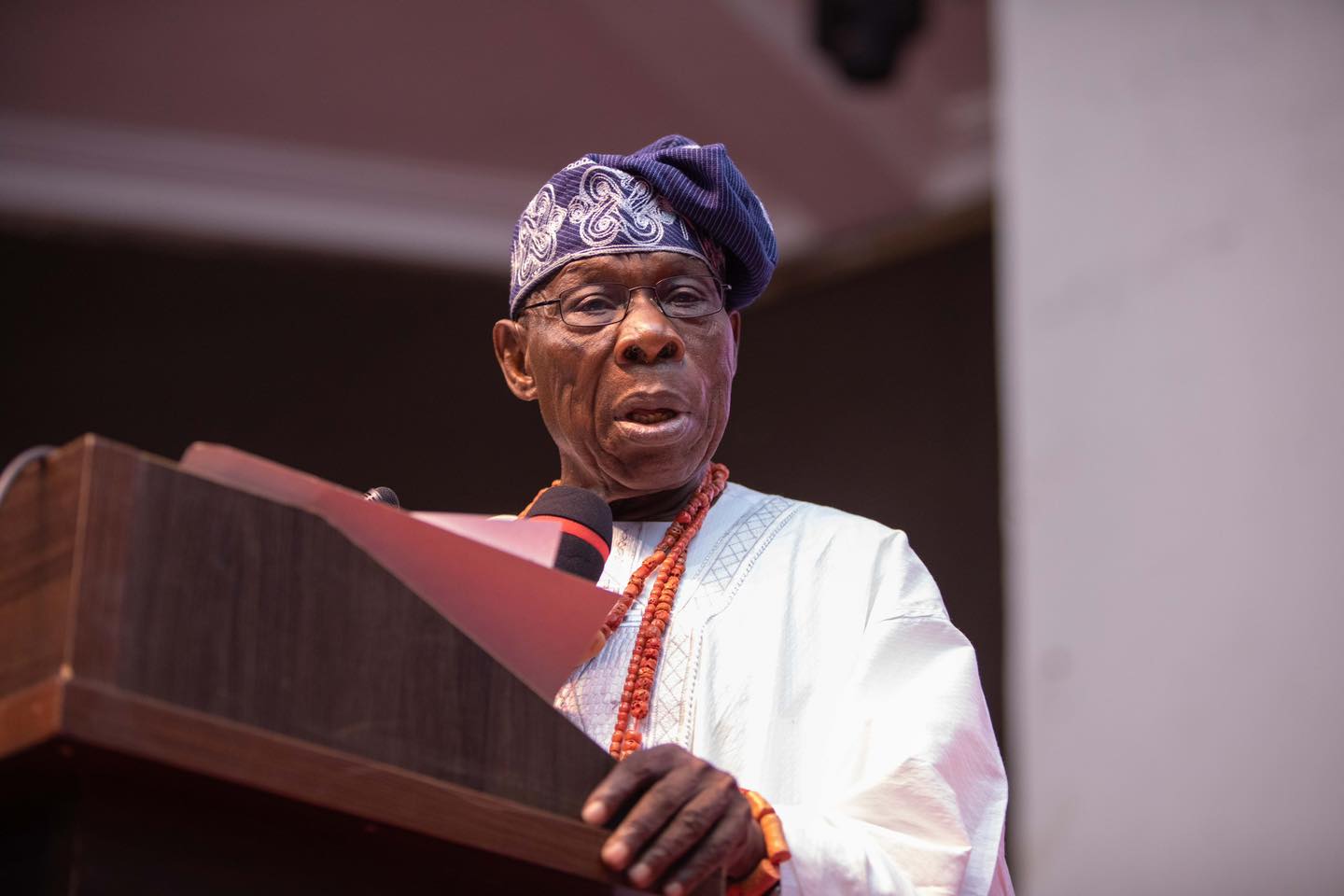
Former President Olusegun Obasanjo has warned that many of the conditions that triggered Nigeria’s Civil War remain unresolved, cautioning that the country may not survive another armed conflict.
Obasanjo spoke on Wednesday at the Olusegun Obasanjo Presidential Library in Abeokuta while receiving a historical publication titled Asaba Massacre from the Isama Ajie of Asaba, Chief Chuck Nduka-Eze.
The publication, presented in both print and audio-visual formats, documents the killings of civilians in Asaba during the Nigerian Civil War.
According to the author, the work draws on eyewitness testimonies, archival records, recorded interviews, audio-visual evidence and historical research.
Reflecting on his own role during the civil war, Obasanjo said he could not give a detailed account of the Asaba killings because the military operations in the area were under the command of the late Murtala Muhammed.
“I was involved in the civil war, but whenever people ask me about the Asaba massacre, I always tell them I cannot give details because Murtala Muhammed was responsible for operations in that area,” he said.
The former president disclosed that he had previously been questioned about Muhammad’s role during the conflict but maintained that he was not in a position to comment.
He, however, promised to study the materials presented by Nduka-Eze.
Obasanjo stressed that Nigeria must learn from its history, warning that many of the divisions that led to the 1967–1970 conflict still exist.
“Some of the issues that led to the Civil War are still with us today. I once heard General Yakubu Gowon say Nigeria would not survive a second civil war, and I completely agree.
“We have fought one civil war too many already. God forbid that this country should ever experience another,” he said.
He urged Nigerians to confront painful aspects of the nation’s history honestly, condemn past atrocities and work collectively to ensure they never happen again.
“We must know what happened, admit what should never have happened, and do everything humanly possible to prevent a recurrence.
“We must all take a vow that it will never happen again,” Obasanjo added.
Sharing one of his personal experiences from the war, the former president recalled stopping a soldier from sexually assaulting a woman in Asaba, saying such actions could have left commanders morally and legally accountable for the conduct of their troops.
Presenting the publication, Nduka-Eze said available evidence consistently showed that after federal troops entered Asaba, civilians were assembled in public places and instructed to publicly affirm their loyalty to Nigeria by declaring “One Nigeria.”
According to him, men were subsequently separated from women and children before many unarmed civilians were killed.
“The evidence establishes a recurring pattern. Residents were made to profess loyalty to Nigeria, believing it would guarantee their safety. Instead, many of the men were executed. Compliance did not secure protection,” he said.
Nduka-Eze added that although the exact number of casualties may never be established, independent testimonies and documentary evidence indicate that more than 1,000 unarmed men were killed, leaving a lasting scar on the Asaba community.
Like Obasanjo, he argued that many of the tensions that fuelled the civil war remain evident in contemporary Nigeria, noting that ethnic distrust and suspicion continue to shape relationships among different groups across the country.