Follow Us on Google
By Damiete Braide
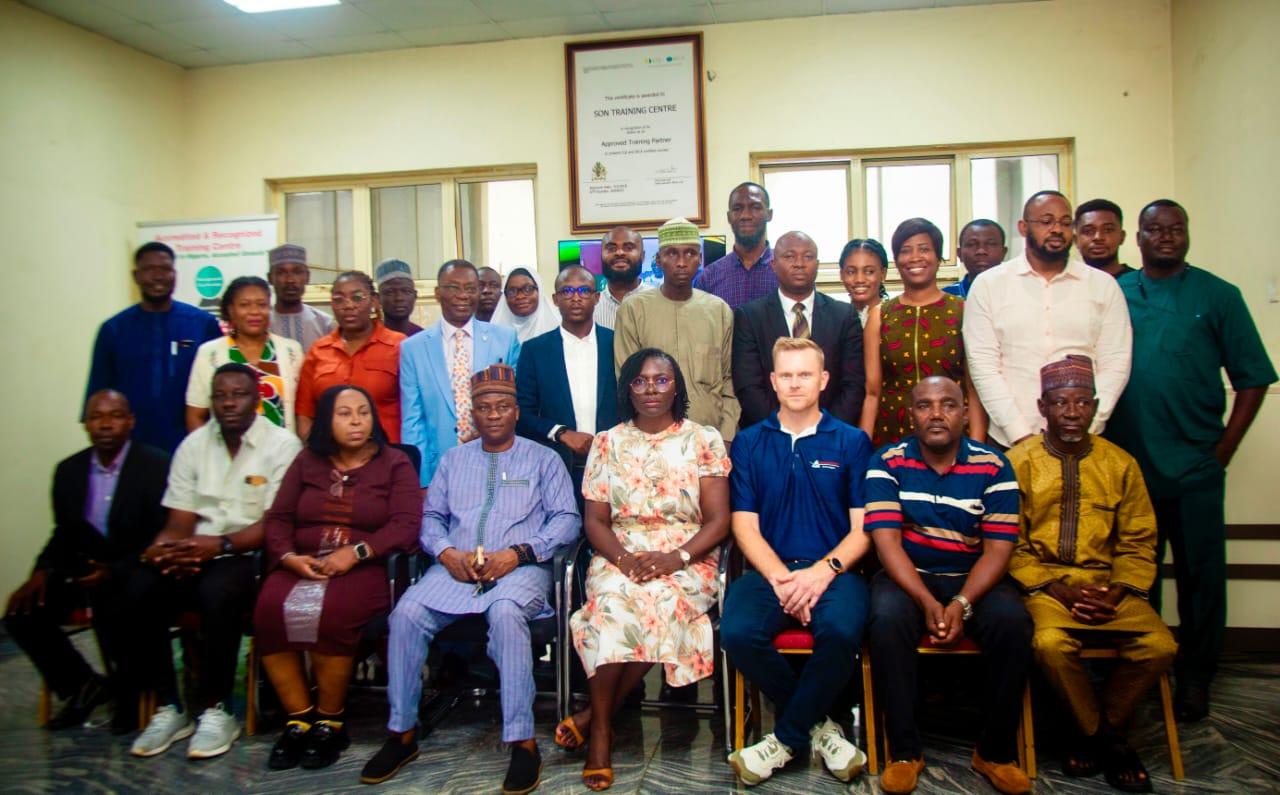
In a significant step toward protecting public health from the silent but deadly threat of lead poisoning, Resolve to Save Lives, in partnership with the Standards Organisation of Nigeria (SON), has concluded a two-day intensive training programme in Lagos.
The initiative brought together laboratory technicians, government officials, health advocates, and environmental experts, with a singular goal: to equip them with the skills and tools needed to detect and eliminate lead contamination in consumer products—especially cosmetics, toys, and clothing.
The training marks an expansion of Nigeria’s efforts to curb exposure to lead, a highly toxic substance prevalent in certain everyday products. While the country has previously focused on lead in paint through collaborations with regulatory bodies and NGOs, this event signalled a strategic shift towards addressing lead in cosmetics and children’s items.
Deputy Director Laboratory Services and Head of Operation, Laboratory, SON, Adetoyi Adeyinka, emphasised the importance of broadening the scope of awareness and action. “This training targets eliminating lead as a poisonous substance in toys and cosmetic products generally,” Adeyinka said. “We have partnered in the past on lead in paint manufacturing. Now, we are extending this to lead in toys and related products.”
Participants at the training hailed from diverse backgrounds, including federal institutions, the University of Ilorin, private organisations, and various NGOs. Their shared focus was to deepen understanding of the threat posed by lead, locate its sources, and identify measures that can help keep the public safe.
Adeyinka stressed that, instead of adopting punitive measures against companies, SON is being proactive by involving stakeholders through training. “There are some red flags in the country and we have seen the signs. We have to quickly be proactive in addressing these issues,” he said. “By training manufacturers and regulators, we inform them of what is expected—especially regarding products with high lead content—and how to eliminate or curb it, before enforcement begins.”
One area of particular concern is cosmetics, especially lipsticks and a traditional eye cosmetic popularly known as “tiro,” widely used in parts of Nigeria. These products often contain alarmingly high levels of lead. Adeyinka stressed that apart from regulatory agencies and businesses, it’s important sensitising the public, especially at the grassroots level, about the health dangers posed by lead.
“Lead is a poisonous substance and it is very dangerous to children,” he explained. “Adults may be able to withstand it because of their higher resistance levels. But little children do not have that. It can cause developmental issues, affecting growth and brain function. People need to know this.”
This sentiment was echoed by Usman Sadik Sulaimon, Deputy Director of the Pollution Control Department at the Ministry of Environment and Climate Change in Kano State. Before attending the Lagos workshop, Sulaimon had participated in a similar programme in Kano organised by Resolve to Save Lives. There, experts drew attention to the severe and often overlooked dangers of lead exposure in the state, which is a major industrial hub in Northern Nigeria.
“Kano is one of the states with a high number of industries, and people are largely unaware of lead poisoning,” Sulaimon said. “Lead poisoning is deadly but preventable. We traced sources to mining sites, textile and tannery factories, and the recycling of lead-acid batteries. Scavengers collect used batteries in residential areas and recycle them openly, exposing families and especially children to toxic fumes.”
He noted that apart from affecting children under age five, lead exposure causes cardiovascular issues, damages kidneys, and can harm unborn children in pregnant women. “One of the key solutions is to create more awareness,” Sulaimon added. “We also need to relocate recycling operations away from residential areas and ensure proper waste disposal by industries.”
Sulaimon highlighted ongoing federal government support for industrial waste treatment. “Through the Equalisation Fund, three treatment plants have been built for industries to handle waste more responsibly. We thank the government for that support.”
Other News
The training programme provided participants with portable instruments to test lead content on-site, eliminating the need for traditional laboratory testing. “With these portable machines, we can now test samples in the field and get instant results,” Sulaimon said. “When we return to Kano, we will share this knowledge and empower others to carry out inspections and testing in high-risk areas.”
Mirko Steinhage, Director of Spectrometer Technologies, a South African-based company that supplied the portable XRF analysers used in the training, noted the critical role such tools play in early detection and intervention. He conducted sessions on XRF (X-Ray Fluorescence) technology, focusing on its basic operation, safety measures, and application in consumer goods testing.
“The most important takeaway is knowing how to safely operate the XRF analysers to test for lead in consumer items,” Steinhage said. “Lead poisoning is a global concern, particularly in children’s toys, makeup, and clothing. Ingesting lead or inhaling its fumes can be devastating to health.”
He commended Nigerian participants for their active engagement during the two-day course, adding that such trainings are essential to building safer consumer markets.
Nanlop Ogbureke, Executive Director, Resolve to Save Lives Nigeria, emphasised that the organisation’s mission is closely aligned with public health. “We focus on initiatives that support cardiovascular health and epidemic prevention,” she said. “Our Lead Poisoning Prevention Project, which began in April 2025, is part of these efforts.”
She explained that the current training forms part of a broader national strategy to support government agencies in enforcing laws against lead contamination. “We’re working with the Federal Ministry of Health, Ministry of Environment, SON, NAFDAC, and state bodies to establish a solid legal framework for lead prevention and elimination,” she said.
Key to that effort is surveillance, identifying which products are contaminated and building evidence to encourage policy reforms. Ogbureke noted that the organisation is partnering with the University of Ilorin and SON in a tripartite research initiative to test cosmetics, household items, and other consumer products known to have lead contamination in parts of Nigeria.
“One outcome of the research will be policy advocacy,” she said. “We plan to turn our findings into campaigns and behaviour change communication, targeting communities from rural areas to the national level.”
Ogbureke also highlighted the need for continued awareness campaigns, particularly in communities where illegal mining, industrial pollution, and unsafe recycling practices have posed long-standing risks, such as Zamfara, Lagos, and Kano. “Lead poisoning is preventable, and part of the solution is giving people the right information. The more we know, the safer we are,” she added.
The workshop concluded with a renewed pledge from all participants to enhance surveillance efforts, expand testing, and champion better enforcement and public education. As Nigeria confronts growing threats from environmental toxins, the training symbolises a crucial step toward empowering experts and communities alike to detect and mitigate lead contamination.
With strengthened partnerships across academic, governmental, and civil society platforms, this initiative sets a strong foundation for eliminating lead poisoning, one of the most preventable yet impactful public health challenges in Nigeria today.