Follow Us on Google
By Chukwuma Umeorah
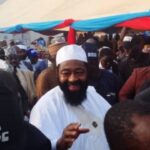
Former Cross River State governor and presidential candidate of the Peoples Redemption Party (PRP), Donald Duke, has blamed Nigeria’s worsening hardship, poverty and social tensions on decades of failure to expand the economy and productivity in step with its rapidly growing population.
Duke said that while Nigeria’s population had more than tripled since the administration of former President Shehu Shagari, the country was still operating around the same dollar-denominated annual budget of about $25 billion.
Speaking with journalists in Abuja, he argued that the comparison showed that government expenditure and productive capacity had failed to keep pace with population growth.
“I think we got it wrong from independence, but as the years go by, the effects become stark. We have not addressed the issue of productivity,” he said.
According to Duke, the Shagari administration operated an average annual budget of about $25 billion between 1979 and 1983, when Nigeria’s population was about 76 million, compared with an estimated 230 million today.
“Today, our population, they say, is about 230 million people. We are still spending the same $25 billion that Shagari spent 46 years ago,” he said.
“All these trillions and trillions, by the time you convert them, you come down to the same thing.
“In essence, the economy has not grown. In fact, it has shrunk because $25 billion in 1979 or 1980 is not the same as $25 billion today.”
Duke said the consequences of the failure to expand productivity could be seen in unemployment, poverty, insecurity and increasing desperation among Nigerians.
He argued that government’s fundamental responsibility was to create an environment in which citizens could be productive while ensuring security and public order.
“The essence of government is to ensure the utmost productivity of citizens within a safe and orderly environment. That is why you need security. That is why you have the judiciary.
“If Nigeria were to be safe and orderly and the people were productive, nobody would care whether you came from Sokoto, Calabar or somewhere else,” he said.
Duke also linked economic deprivation to ethnic, religious and regional tensions, arguing that citizens increasingly resorted to identity politics because they believed it could give them an advantage in accessing scarce opportunities.
“I don’t believe that we are naturally tribalistic or ethnic. We use those things because they are advantageous to us,” he said.
“We want a president or governor from our locality because we think it will give us an added advantage. But if you are getting what you need without that advantage, who cares where the governor comes from?
Other News
“When you go to a hospital, you don’t ask for a doctor from your village. You ask for the doctor who can cure you.”
The former governor said Nigeria needed a national development vision capable of aligning public expenditure, infrastructure, education and economic policy with increased productivity.
“Where are we taking this country? We don’t have a vision. We just wake up and do whatever appears important at the moment,” he said.
“The real task is to make our people productive. When inadequacy persists because we are not productive, we begin to exploit tribal and religious sentiments to get what we want.”
Duke also questioned the priority accorded the Lagos-Calabar Coastal Highway, arguing that the government should consider the opportunity cost of committing substantial resources to the project when other pressing needs remained.
“We woke up one morning and said we wanted to build a road from Lagos to Calabar. What are the economics? How many communities will it go through?
“A road is commuting infrastructure between communities. There are existing roads. What happens to those roads? What happens to the East-West Road that we have been talking about?” he asked.
Duke said although he would personally benefit from improved connectivity between Lagos and Calabar, that should not override questions about national priorities.
“I would be the happiest person because I live in Lagos and Calabar. I would be going back and forth,” he said.
“But even if it were the best road, with a sea view as you are going to Calabar, what is the economics of it? What is the opportunity cost?
“Maybe you can say we will do it in 10 years when we can afford it. We cannot afford it now. There are higher priorities.”
He cited the large number of out-of-school children and Nigerians living in poverty as areas requiring more urgent government attention.
“We have the largest number of out-of-school children in the world. We have one of the largest populations of poor people, and you are building a fancy road from Victoria Island to Calabar. It does not work like that. All I am asking is that we should be honest with our people.”
He maintained that Nigeria’s central economic challenge was to make its growing population productive rather than allow scarcity and deprivation to deepen social divisions.
“The real task is to make our people productive,” Duke said.