Follow Us on Google

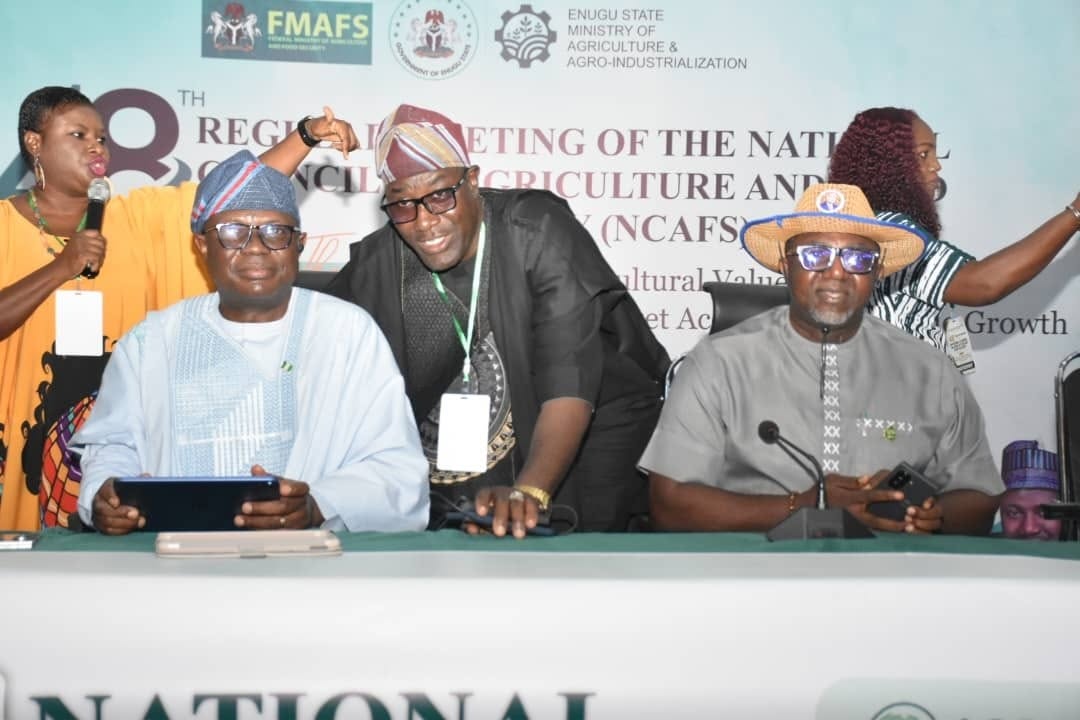
From Okwe Obi, Abuja
The Federal Government has restated its commitment to building an agricultural economy that creates wealth, supports industries and generates employment beyond increasing food production.
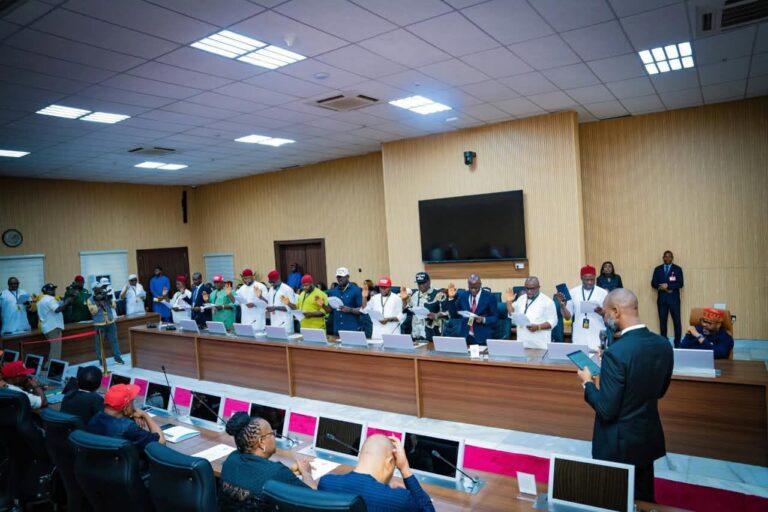
The Permanent Secretary of the Federal Ministry of Agriculture and Food Security, Marcus Ogunbiyi, stated this in his opening address at the Technical Session of the 48th Regular Meeting of the National Council on Agriculture and Food Security (NCAFS) in Enugu.
Ogunbiyi stated that the Council remained the highest policy coordination platform for the Federal and State Governments on agriculture and food security, providing an opportunity to review developments, harmonise policies and agree on practical measures to address challenges confronting food systems across the country.
According to him, the theme of this year’s Council, “Enhancing Agricultural Value Chains, Agro-Industrialization and Market Access for Economic Growth,” is timely and strategic.
“The task before us goes beyond increasing the volume of food produced. We must build an agricultural economy that creates wealth, supports industries, generates employment and contributes meaningfully to national economic growth,” he said.
The Permanent Secretary noted that, for too long, a substantial proportion of Nigeria’s agricultural commodities had been marketed in raw or minimally processed forms, resulting in lost opportunities for income, industrial development and export earnings.
He highlighted that the government’s priority was to develop commodity-based value chains that link smallholder farmers and commercial producers to processors, manufacturers and markets, while promoting processing facilities for priority commodities such as rice, cassava, maize, sorghum, cocoa, oil palm, sesame, ginger, tomatoes, livestock and fisheries products.
On market access, Ogunbiyi stressed the need to strengthen aggregation, improve market information systems, promote product standards, grading and certification, and leverage opportunities presented by the African Continental Free Trade Area (AfCFTA).
He explained that the Federal Government would continue to provide policy direction, research and innovation, while State Governments remained critical in mobilising farmers, providing land and infrastructure and creating an enabling environment for agribusiness investments.
While pursuing agro-industrialisation, the Permanent Secretary noted that the government would not lose sight of food and nutrition security, farmers’ welfare and the inclusion of women and youth, adding that interventions must promote climate-smart practices, agricultural mechanisation, irrigation and access to affordable finance.
He listed seven priorities for the Council to focus on, including strengthening value chains, accelerating agro-industrialisation, expanding market access, mobilising private-sector investment, promoting inclusive growth, strengthening institutional coordination and ensuring implementation and accountability.
He commended the Government and people of Enugu State for hosting the Council and urged participants to ensure that deliberations translated into measurable actions.
In his remarks at the Technical Session, the Commissioner for Agriculture and Agro-Industrialisation, Enugu State, thanked the Federal Ministry for its partnership in bringing the Council to Enugu, noting that the collaboration showed what was possible when Federal and State Governments worked as one team for the good of Nigerian farmers.
He said the Technical Session was where policy met practice, with papers presented shaping programmes, partnerships and investments that reached farmers and agro-processors, adding that Enugu State was pursuing agro-industrialisation to ensure every harvest created jobs and wealth.
Welcoming delegates to the Council, Mrs Ifeoma Onu, Deputy Director, Administration and Supply, Enugu State Ministry of Agriculture and Agro-Industrialisation, highlighted the state’s agricultural agenda under Governor Dr Peter Ndubuisi Mbah.
She disclosed that the administration was pursuing a deliberate transition from subsistence to commercial and mechanised agriculture through initiatives such as the 300,000-hectare agricultural land bank, Smart Farm Estates across 17 local government areas, the 260 Farm Estate Programme and the establishment of a tractor assembly plant.
In a goodwill message, the Senior Strategic Partnerships and Business Development Coordinator of the International Fertilizer Development Center (IFDC), Idris Mohammed, commended the Federal Government’s commitment to agricultural transformation and highlighted the Council’s support for increasing the NIRSAL Credit Risk Guarantee coverage for tomato plastic crates from 30 per cent to 50 per cent, with coverage reportedly up to 75 per cent for some beneficiaries, saying it would reduce financing risks and post-harvest losses.
He noted that this year marked 25 years of IFDC partnership with Nigeria and disclosed strengthened collaboration with the Federal Ministry following the signing of an MoU earlier this year and the establishment of the IFDC–FMAFS multi-stakeholder platform.
The IFDC representative added that, through its Soil Values Programme in Kano, Jigawa and Bauchi states, the centre was demonstrating how improved soil management restored degraded lands and improved productivity.