Follow Us on Google

Steve Agbota,[email protected]
A former Head of State, General Yakubu Gowon (rtd), has advocated a Public Private Partnership (PPP) arrangement between the government and private sector to bridge the deficit in the nation’s transportation sector.
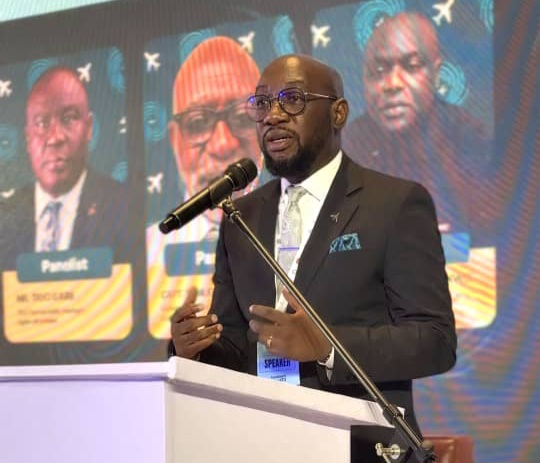
Speaking at the ongoing 2nd National Transport Summit, organised by the Chartered Institute of Transport Administration of Nigeria (CIoTA), tagged Building Sustainable Transport Infrastructure in Nigeria: Opportunities, Innovation and Technology, Gowon, who is the Chairman of the summit, said development of Nigeria’s transport Infrastructure shouldn’t be left in the hand of the private or public sector alone.
According to him, critical stakeholders in the transport sector, policy makers and technical experts should think deeply on how to evolve and create innovative strategies to advance the transport system in the country.
He said: “The task of advancing the transport system cannot be left to government alone. It requires partnership between the public sector, the private sector, civil society and the general public. Public participation, confidence and support are paramount in this campaign of building a virile transport system in our country.
“We must embark upon an intensive campaign to make more public and private sectors accountable and performance-oriented, with a view to providing the citizenry with proficient transport system. We must inculcate code of ethical conduct, transparency and accountability into the whole of the transportation system for national development.
“May I therefore, at this juncture, implore all the critical stakeholders in the transport sector, policy makers and technical experts at this summit to think deeply on how we can evolve and create innovative strategies to advance the transport system in the country,” he charged.
He,however,charged transport experts at the summit to unveil additional strategies for the nation’s transport system to improve.
“I leave this to the transport experts present at this summit, who will help us to unveil these strategies at this summit for implementation for our transport system.
“It is worthy of note that the summit is designed to provide a platform for critical examination and participation on the way forward of the concept of the economy that affects all other sectors for national development,” he said.
He said everybody have to be involved in finding ways to improve the nation’s transportation, and not to destroy as what recently happened in Lagos during the #EndSARS crisis when over 150 Lagos buses were destroyed.
However, he said the nation should embark on a realistic and honest assessment of its national transport system in Nigeria and reposition the transport sector.
Unfortunately, he said the nation has come under the burden of economic challenge of COVID-19 pandemic and the dwindling oil fortunes , which marred critical impact that Nigeria should have made in order to revitalise the nation’s transportation system.
Speaking in a chat with Journalists after the chairman’s speech, the President, CIoTA, Dr Bashir Jamoh, said the crux of the discussion at the summit is on how to improve nation’s transport infrastructure through PPP.
“The brain of the summit is how we can improve our infrastructure. Not necessarily rely on Government but the PPP arrangement. You can look at Lekki expressway to Epe. Now we have numbers of tollgate for the investors to recoup their investment.
“We can now venture into other means of creating extra bridges , maybe across Tin Can port or Apapa to other side where we can be able to park containers and then move easily in terms of planning, which is what we are thinking is the best way to fastract infrastructure development,” he said.
Speaking in the same vein, the Executive Secretary of Nigerian Shippers Council, Bello Hassan, said there is need to develop intermodal transport system to move goods from the seaports across the country, adding that the nation’s transport system is not multimodalism but intermodalism.
According to him, Nigeria needs interconnectivity and modern infrastructure to address most of the challenges facing the nation’s transport system especially the Nigerian seaports.
He added: “Transport infrastructure is as good as integration with other transport infrastructure, as you can see, it needs professionals to direct that. We don’t build infrastructure just for building sake.
“This infrastructure must integrate. Multimodalism is our problem. Intermodalism is the problem. They have to come together,” he said.
He said “whatever happens at the seaports must have relevance with what happens at the interland”, adding that “most of the nation’s ports lack interland connectivity”.
He added: “Of course, we have port in Calabar, but once your goods are at the seaport in Calabar, how do you now move them to Maiduguri and other places. You need high sense of interconnectivity and modern infrastructure to do so.
“What we are saying is that professionals know, they have plans, maybe 20 years plans of what the transport framework will be. We need different mode of transportation, which must be integrated. So we are talking about seamless transport system,” he added.