Follow Us on Google
• Hails ex-JAMB registrar’s integrity, courage, commitment to public service
From Fred Ezeh, Abuja
At a time in Nigeria when questions about integrity, accountability and commitment to public service continue to shape national conversations, the life and career of Professor Emeritus Is-haq Oloyede have been presented as an example of the kind of leadership Nigeria needs more of.
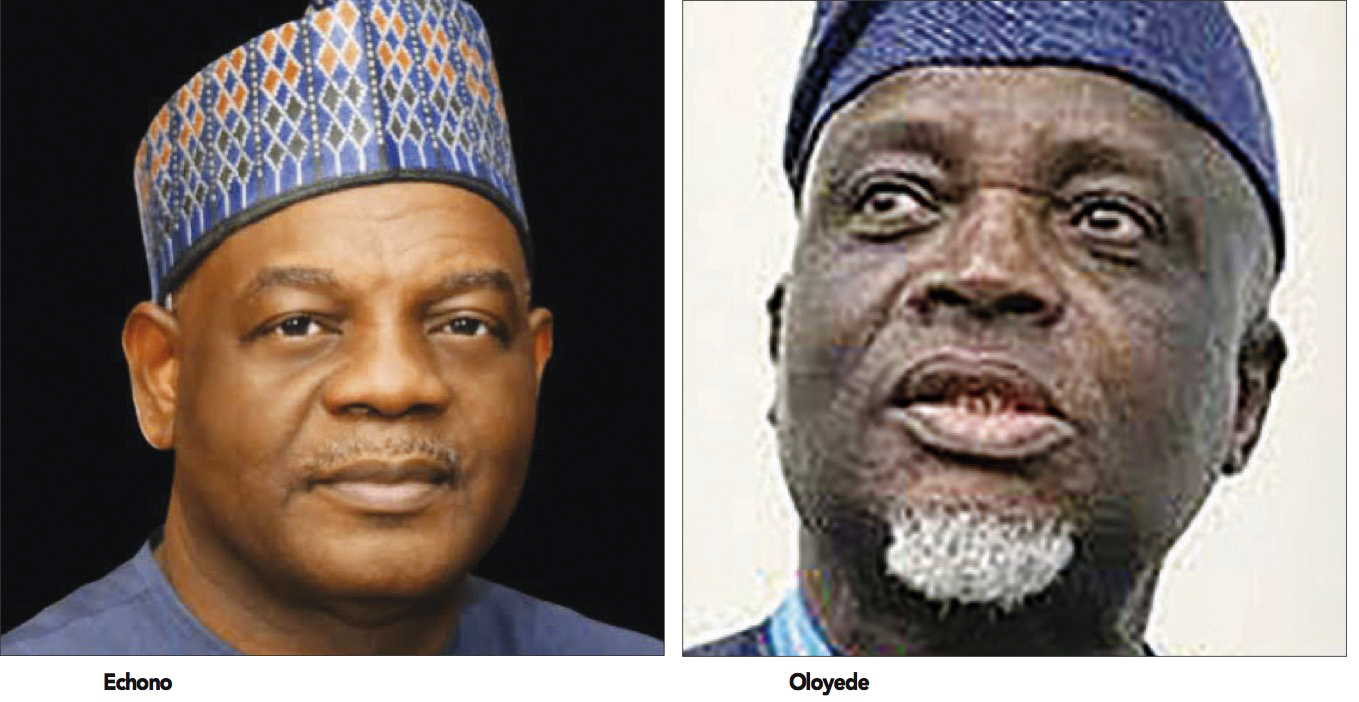
Executive Secretary of the Tertiary Education Trust Fund (TETFund), Sonny Echono, made the observation in Ilorin, Kwara State, recently, while serving as chairman on occasion at the University of Ilorin (UNILORIN) Homecoming Celebration and Investiture Ceremony for Awards of Excellence, Distinguished Alumni and Unilorin Ambassadors.
The ceremony featured the homecoming of Oloyede, a former Vice-Chancellor of the institution and former Registrar and Chief Executive of the Joint Admissions and Matriculation Board (JAMB), alongside the recognition of 30 other distinguished Nigerians for their contributions to education, humanity, national development and the growth of the university.
In his presentation, Echono urged Nigerians to emulate what he described as Oloyede’s enduring virtues of integrity, courage, compassion, hardwork and dedication to service.
He said the significance of the gathering went beyond the conferment of awards but also provided an opportunity to reflect on the values that distinguished individuals bring to society and the responsibility of the younger generation to learn from their examples.
A life built around service
Echono described Oloyede as a distinguished Nigerian who spent his entire adult life demonstrating hard work, integrity, courage, compassion and commitment to public service.
He said Nigeria needed more people like Oloyede who are more willing to place national interest above personal considerations, and dedicate themselves to the service of humanity.
“Celebrating people who have distinguished themselves while they are alive is important, because recognition not only encourages the honourees to do more but also inspires others to follow their footsteps.
“We don’t tend to celebrate the right people enough. Our celebrations are often full of funerals, birthdays and burials. But when you celebrate individuals, you give them the impetus and encouragement to do more. More importantly, you encourage others to emulate them so that they can also be celebrated,” Echono said.
Simply, Echono’s argument was that a society that celebrate excellence create srole models for its younger generation. “Rather than allowing achievement and public service to go unnoticed, recognition could serve as a powerful incentive for sustained performance.”
Echono said he found in Oloyede an example of a public servant whose influence went beyond the positions he occupied. “From academia to university administration and later the leadership of JAMB, Oloyede’s career has been marked by interventions that reflected a commitment to strengthening institutions and improving opportunities for Nigerians,” he said.
Confronting decades of wrongdoing
One of the clearest examples Echono cited in his presentation was Oloyede’s battle against a strong cartel deeply involved in examination malpractice during his tenure at JAMB.
He recalled that, in Oloyede’s efforts to confront networks involved in examination malpractice, he worked with security agencies to dismantle what he described as organised cartels operating across the country, and he openly admitted the battle was far from easy.
Other News
According to Echono, the individuals and networks involved in examination malpractice constituted a powerful system capable of issuing threats to those who attempted to disrupt their activities.
He recalled participating in an operations aimed at investigating and dismantling the networks, including an exercise in which suspects arrested from different parts of the country were interviewed to establish the identities of those behind the examination malpractice schemes. “The information gathered from the exercise proved useful in the broader effort to clean up the examination system.”
Echono, however, said the significance of Oloyede’s intervention lay not only in the administrative measures taken but also in the courage required to confront a deeply entrenched practice.
He presented that experience as an example of leadership that refuses to compromise when the integrity of an institution is at stake. “In an environment where difficult decisions can attract resistance, threats or personal inconvenience, public officials must be prepared to defend the values and institutions entrusted to them,” he suggested.
The human side of Oloyede
Echono at the event also highlighted the human side of Prof. Oloyede, stressing that his legacy cannot be measured only by his fight against examination malpractice, and highlighted his compassion and commitment to inclusive education, particularly his efforts to expand opportunities for persons with disabilities.
The TETFund Executive Secretary noted that, under Oloyede’s leadership at JAMB, efforts extended beyond providing facilities for candidates with hearing and visual impairments to supporting organisations that helped prepare persons with disabilities for tertiary education.
He also appreciated the fact that JAMB had instituted an award for institutions that admit students with disabilities, describing the initiative as another indication of Oloyede’s commitment to creating a more inclusive education system.
“Today in our universities, I understand JAMB even instituted an award for institutions who admit students with disabilities. Nigeria will remain grateful to you,” Echono said.
Recognition from ‘home’
The VC of the University of Ilorin, Prof. Wahab Egbewole, in his submission, also described Oloyede as a worthy product and ambassador of the university whose academic achievements, administrative leadership and commitment to national development had brought honour to the institution.
Egbewole said the establishment of a professorial chair in Oloyede’s honour was a fitting recognition of his contributions to scholarship, leadership and the development of the university.
He appealed to stakeholders and guests to support the N250 million endowment for the professorial chair, describing Oloyede as a highly disciplined, courageous and outstanding Unilorite and an “uncommon Better by Far Ambassador.”
The VC also challenged recipients of the various awards to convert the recognition they had received into tangible contributions to the university. He thus urged recipients of the Awards of Excellence to identify projects they could execute, while Distinguished Alumni were encouraged to jointly identify and fund projects that would bear their names.
Similarly, the Unilorin Ambassadors were urged to collectively support a project for the institution, with Egbewole expressing the hope that the projects would be completed before the next edition of the honours programme.
For Unilorin, Oloyede’s legacies in the institution, JAMB and other responsibilities provide a practical example of what such leadership can achieve. “His story demonstrates that the true measure of public service is not merely the office one occupies but the institutions one strengthens, the people one empowers and the values one leaves behind,” the VC said.
Nevertheless, as Nigeria continues to search for leaders capable of restoring confidence in its institutions, Echono’s message was clear: the country needs more Oloyedes.