Follow Us on Google

By Bianca Iboma-Echefu
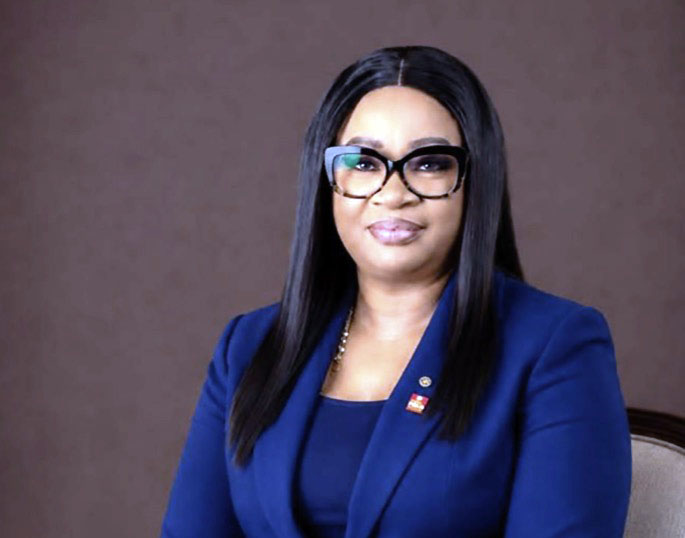
Bukola Bakare is the first female District Governor to unveil N1.4bn service agenda, targets 30% membership growth, 1,000 cataract surgeries, 5,000 eyeglasses during her tenure.
Breaking the glass ceiling is one thing; creating opportunities for others to follow is another. For Bakare, the first female District Governor of Rotary International District 9111, 2026–2027, her historic emergence is an opportunity to advance women’s leadership and deliver lasting community impact.
She is a businesswoman with over two decades of experience in Nigeria’s male-dominated security industry, Bakare is spearheading a N1.4 billion service agenda featuring an N800 million, 60-bed mental health centre at the Federal Neuropsychiatric Hospital, Yaba, 1,000 cataract surgeries, 5,000 pairs of eyeglasses and a N100 million economic empowerment target. She is also targeting at least, 30 per cent net membership growth, with a stretch target of 50 per cent.
In this interview with Daily Sun, she discusses women’s leadership, sustainable community development and her determination to ensure that her tenure is remembered not merely for making history, but for leaving District 9111 stronger and making it easier for the next woman to lead.
You are the first female District Governor of Rotary International District 9111. What does this historic achievement mean to you, and how do you intend to make it count beyond the symbolism?
I feel very honoured to be the first female District Governor of Rotary International District 9111. We are in 2026, and we are still celebrating the first woman to occupy this position. That tells you something.
I wouldn’t say women are deliberately prevented from becoming leaders in Rotary. I think part of the problem is that we have become used to seeing men in certain positions, and sometimes we don’t even question it.
But women also need to step forward. We cannot continue to wait for somebody to invite us to lead. We must show interest, prepare ourselves and be willing to take on responsibilities.
I want to see more women chairing important committees, leading projects, becoming club presidents and preparing for district leadership. It is not about giving women positions simply because they are women. They must be capable and committed, just like anybody else.
I do not want my tenure remembered only as a historic milestone. I want it defined by what we achieve and the opportunities we create for others. I did not come into office simply to occupy the seat. If we deliver meaningful projects and inspire more women and girls to lead, then I will have used this opportunity well.
You have spent more than two decades running a security company in a male-dominated industry. How has that experience prepared you for Rotary leadership?
Running a security company in Nigeria for over 20 years is enough preparation for almost anything.
When I established my company in 2004, security was, and still is, largely a male-dominated industry. I had to work hard to prove that I knew what I was doing.
I have dealt with different kinds of people, managed difficult situations and made decisions that were not always popular. In that respect Rotary is not entirely, a new territory for me.
But there is a difference. In my company, there is a structure, and people have specific responsibilities. In Rotary, you are dealing with volunteers. Nobody is being paid to attend meetings, execute projects or contribute their resources. They are doing it because they believe in service.
Sometimes, introducing change can be difficult. You may have an idea that you believe will improve things, but somebody will tell you, “Madam, that is not how we have always done it.”
I have learnt not to force people to do things in Rotary. You have to carry them along. Explain what you want to achieve and encourage them to work with you. Sometimes it takes longer than you would like, but that is the nature of a voluntary organisation.
Your district has outlined an ambitious N1.4 billion service agenda, including an N800 million mental health facility. What impact do you expect from the Rotary Wellness Centre at Yaba?
Mental health is something we really need to talk about more openly in Nigeria. Unfortunately, many people still associate mental illness with madness, and because of that, those who need professional help are sometimes afraid to seek treatment. Women and girls face particular challenges. A woman may be dealing with depression, emotional trauma, domestic problems or the pressures of caring for her family, yet she is expected to carry on as though nothing is wrong. Many suffer in silence because of what their families or communities might say.
That is why our 60-bed Rotary wellness centre at the Federal Neuropsychiatric Hospital, Yaba, is so important. We want to improve access to proper mental healthcare, reduce stigma and ensure that people, particularly vulnerable women and girls, can receive the professional care they need.
Women and girls may require particular attention in areas such as privacy, trauma, emotional wellbeing and access to appropriate treatment. These are issues we intend to address in collaboration with the hospital’s medical professionals.Rotary will build and fully equip the centre, while the Federal Neuropsychiatric Hospital, Yaba, will provide the professional expertise and institutional structure required for its day-to-day operation.
We do not believe in executing projects simply for commissioning ceremonies or publicity. We want our projects to continue serving communities long after they have been handed over. For me, the real success of this project will not be the day we commission the building. It will be when I return in years to come and see the centre is still functioning, patients are receiving treatment and lives are being changed.
Your mission for vision project, targets 1,000 cataract surgeries and 5,000 pairs of eyeglasses. How does restoring sight connect with your economic empowerment agenda?
When you restore someone’s sight, you are also giving that person the opportunity to become productive again. That is very important to us. Imagine a woman who earns her living as a tailor, hairdresser or trader. She develops cataracts, her eyesight deteriorates, and gradually she can no longer work. Before you know it, someone who was financially independent has become dependent on her children or other family members.
Now, imagine what happens when that woman undergoes cataract surgery and regains her sight. She can return to her business, earn her own money and take care of her family. That is why we are targeting 1,000 cataract surgeries and the distribution of 5,000 pairs of eyeglasses through Mission for Vision.
Other News
We are particularly concerned about people who cannot afford these treatments. Some have lived with poor eyesight for years simply because they don’t have the money for surgery or even a pair of prescription glasses. We are bringing these interventions together with our economic empowerment programmes so that beneficiaries who require additional support to resume their livelihoods can benefit from available opportunities.
We also want to follow up with beneficiaries to establish how treatment has improved their daily lives, particularly their ability to work and support themselves. There is a big difference between a woman who has to depend on somebody for everything and a woman who can wake up in the morning, open her shop and earn her own income. If we can help that woman get back on her feet, then we have achieved what we set out to do.
Many empowerment schemes end with the distribution of equipment. How will you ensure that beneficiaries achieve lasting economic independence?
We are very conscious of that, and it is something we have already taken into consideration in planning our empowerment programmes. Our committees’ work does not end with the distribution of equipment. We have a follow-up and monitoring plan to ensure that beneficiaries are actually using the tools provided to improve their livelihoods. We recently empowered 50 artisans in Ilisan-Remo with equipment to support their businesses. We also have a district-wide economic empowerment target of N100 million. Our committees will follow up with beneficiaries after six months and again after one year to assess their progress. We will examine whether the equipment is being used, whether their businesses are still operating, whether their income has improved and how that improvement has affected their families.
For women in particular, we are interested in whether they have become more financially independent and are better able to contribute to decisions affecting their households.
Where the results fall below expectations, the committees will identify the challenges and determine what corrective measures are required. That could involve additional training, mentoring or addressing difficulties affecting the business.
There is no point giving someone a sewing machine that ends up sitting in a corner of the house gathering dust. We want that machine to be working, bringing in income and improving the person’s standard of living.
Your Ability Without Limits initiative targets persons with disabilities. How are you ensuring that women and girls benefit meaningfully?
When we talk about people living with disabilities, we sometimes forget that their challenges are not necessarily the same.
A young girl living with a disability may face difficulties getting an education. A woman may struggle to earn a living, care for her children or move around independently. Unfortunately, some also experience discrimination simply because they are women living with disabilities.
We took these differences into consideration when developing our Ability Without Limits initiative.
Under this programme, we are providing mobility support, with a target of 50 wheelchairs. Our beneficiaries are assessed according to their individual needs and circumstances.
For example, providing a wheelchair to a young girl may make it possible for her to attend school more regularly. For a woman running a small business, it may mean being able to move around, attend to customers and earn her own income.
We are also linking the programme with our education and economic empowerment initiatives so that women and girls who require additional support can benefit from those opportunities.
For me, what matters is the difference the support makes in a person’s everyday life. If a girl who has been unable to attend school can return to the classroom, or a woman who has depended on others can begin moving around and earning a living independently, that is a meaningful achievement.
You have raised your membership growth target from 25 per cent to at least 30 per cent, with a stretch target of 50 per cent. How important is women’s participation in this expansion?
Our initial membership growth target was 25 per cent, but we have since increased it to a minimum of 30 per cent net growth, with a stretch target of 50 per cent.
We are quite ambitious about membership because we believe Rotary can do much more when more people are involved. But we should also pay attention to the composition of our membership. We need more women, more young professionals and people from different backgrounds.
I would not say that increasing our membership through men is a failure. Every committed Rotarian is valuable, whether male or female. However, if we are growing without making a deliberate effort to attract women, then we are overlooking a very important part of society.
I have not announced a specific district-wide gender percentage target, but I believe we should encourage clubs to examine their membership and make conscious efforts to improve women’s participation.
It is not just about bringing women into Rotary. We also need to retain them and give them opportunities to lead. Ultimately, I want a district where women feel welcome, respected and able to contribute meaningfully.
Beyond the title of first female District Governor, what legacy do you want to leave?
First of all, I hope they will say she worked very hard, because being a District Governor is certainly not a holiday. I would want that chapter to tell the story of a woman who was not afraid to take on challenges, who believed in people, and who gave her very best to an assignment she considered a privilege.
I do not believe that things cannot be done simply because they have never been done before. I ask questions, I challenge certain ways of doing things, and sometimes I am persistent. But it is always because I believe we can do better. One thing I am particularly proud of is the spirit I am seeing across District 9111. Our clubs are thriving, membership development is progressing well, and giving to The Rotary Foundation has been fantastic. Our clubs are taking ownership of their responsibilities and making things happen in their communities. That gives me tremendous joy because no District Governor can achieve anything alone.
I want people to remember that I made them feel that they mattered. Whether you are a Past District Governor, a club president, a new Rotarian or someone we meet during a community project, everyone deserves to be treated with dignity and respect. I also want women, especially younger women, to understand that they do not have to wait for permission to pursue leadership. Prepare yourself, work hard, believe in your abilities and be ready to take responsibility.
I may be the first female District Governor of District 9111, but I certainly don’t want to be the last.