Follow Us on Google
In the vocabulary of political psychology and social theory, scapegoating refers to the displacement of blame onto vulnerable or marginalised person(s) or groups as a way for individuals or institutions to avoid confronting their own failures. René Girard’s “Logic of Scapegoating, Violence, Guilt, and the Search for a Culprit” argues that societies facing internal crises instinctively look for a ‘substitutable victim,’ someone, who is visible enough to be blamed but powerless enough to be sacrificed. Scapegoats are never chosen because they are guilty; they are chosen because they are available.
From the theoretical lens of political communication, scapegoating is conceived as a deliberate narrative management strategy. In communication scholarship, scapegoating enables state actors to shift the public’s attention from institutional failure, unify fragmented populations against a constructed ‘enemy’, and provide simple explanations for complex crises.
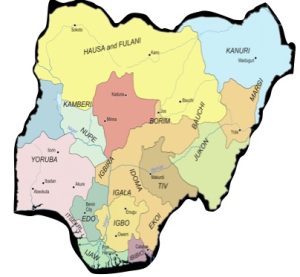
Nigeria, whenever confronted with a wave of insecurity, economic failure or diplomatic embarrassment, quickly gravitates toward the Igbo as that convenient ‘substitutable victim.’ This is what Akioyamen Josephine captures when she notes that a people “with little power in the engine room of the federation” somehow become the villains of every national crisis. The logic is clear: the less responsible they are, the more eligible they become for blame.
Henri Tajfel’s Social Identity Theory teaches that dominant groups often preserve their self-image by constructing an internal “Other,” who carries the shadow of the group’s failures. The Igbo – geographically dispersed, economically dynamic, politically underrepresented – fit perfectly into this symbolic role. They are visible everywhere (thus easy to blame), but nowhere fully in control (thus safe to blame). They represent mobility and ambition, traits that authoritarian and rent-seeking structures instinctively distrust. Their historical traumas – pogroms, war, abandonment, systemic ‘othering’ – are rarely acknowledged by the state, making their pain politically inexpensive. Thus, scapegoating becomes not merely episodic but structural.
This explains why, when the U.S. designated Nigeria as a Country of Particular Concern (CPC) some Nigerian officials and commentators quickly pointed to “Igbo lobbying,” “IPOB propaganda” or “Christian genocide falsehoods” rather than the real crisis, that is a long-term, documented pattern of killings, abductions and governance failures. Scapegoating, here, functions as crisis simplification. This classical pattern extends to Nigeria’s meme culture.
When Josephine noted that the memes often speak more truth than official statements, she was pointing to the sociology of digital humour. Memes become counter-scripts in a country where truth is dangerously inconvenient. They expose the contradictions the state refuses to name. The humour is sharp because the trauma is deep.
Other News
This brings us to the paradox of scapegoating, i.e., blaming the powerless to protect the powerful, which is at the heart of Josephine’s argument. Nigeria’s oldest political habit is blaming the Igbo not because they are at the centre of the nation’s failures but because they are not. They are easiest to frame because they are not entrenched in the power structures that produce those failures. This is why a people least represented in federal command architecture, excluded from the presidency since God knows when, marginalised in top security positions and repeatedly subjected to repression and suspicion, become the “go-to culprits” for everything from diplomatic embarrassment to internal security collapse. As a practiced choreography, the recurring scapegoating of the Igbo is a national denial, which unravels a coping mechanism, a political strategy, a cultural reflex and a governance failure. It reveals a nation unable to confront its own fractures; one that exiles truth to memes, elevates denial to policy, and treats the injured group as the cause of its injuries. That is the classical definition of scapegoating.
Unfortunately, the danger of scapegoating lies ominously in its corrosive shield against national healing. Scapegoating may provide soothing psychological relief but it ultimately undermines statecraft. It prevents honest self-diagnosis, reform of institutions, recognition of structural injustices and building of an inclusive national imagination. As long as a country keeps blaming one region, it never confronts the systemic failures that affect everyone. ‘Onye ji mmadu n’ala,’ as the Igbo proverbial lore insists, ‘ji onwe ya’ (Whosoever holds another person down inescapably wrestles one to the ground). Nigeria is held hostage not by curses, spiritual or ethnic, but by its reflexive instinct to deny the obvious. Scapegoating, therefore, becomes not merely an error but an identity, a national habit that must be unlearned before any meaningful nation-building can begin.
Surely, memes, like storms, eventually pass but mandates endure. If the state is willing to learn from its digital mirror, to confront the inequities that breed resentment, the exclusions that fuel ethnic scapegoating and the injustices that make satire the only safe speech, then humour can give way to truth-telling, restitution, and national healing. The series seeks to conclude on an aspirational note. The Nigerian state, confronted with its own fractures, has the option to convert the currency of collective laughter into mandates of governance. Vice President Kashim Shettima’s statement at the Owerri Economic Summit underscores the corrective potential of public truth-telling. “Ndigbo are the greatest stakeholders in the Nigerian project…they drive national development through determination, trade and enterprise,” he said.
Recognition, restitution and deliberate inclusion are not mere moral imperatives; they are instruments of national survival. If the Nigerian state embraces accountability over denial, transparency over scapegoating, and inclusion over exclusion, memes will no longer bear the burden of truth. “Never Allow Igbo Rule Again” (NAIRA) can then become the currency not just of humour but of justice. “Kill Ojukwu Before Others (KOBO), not a memorial of violence, but a reminder that the nation can confront its failures honestly. From the subversive wit of WhatsApp to the corridors of constitutional power, the transition from meme to mandate is the only route by which Nigeria can liberate itself from self-inflicted captivity.
The transition from denial to diagnosis requires deliberate, intentional policy. First is accountability. Recognize and repair structural injustices, including historical and ongoing marginalization of ethnic groups. Second is transparency. Establish robust information flows to counter disinformation and prevent false attributions. Third is inclusion. Ensure equitable representation in executive, legislative and security institutions. Fourth is justice. Uphold the rule of law impartially, addressing both individual and systemic failings. Fifth is civic education. Engage citizens in truth-telling, historical awareness and critical discourse to reduce the need for alternative historiographies.
By converting the currency of collective humour into mandates of governance, Nigeria can replace ethnic scapegoating with social justice, mend the fractures of denial and restore trust in state institutions. The memes, once a diagnostic tool, can become historical catalysts, illuminating the path from marginalization to recognition, from laughter to justice, and from denial to mandate. And perhaps, in that future, Nigeria will finally graduate from a republic of rumours to a community of justice, truth, and shared belonging, where the currency of national laughter (the meme) gives way to the currency of national legitimacy (the mandate). Only then will Nigeria rise from ‘denials to diagnosis’, and from diagnosis to mandate to reinvent the Nigerian statehood that births level playing field for all citizens.
• Prof. Agbedo writes from University of Nigeria, Nsukka (UNN)