Follow Us on Google

… Plans listings on NGX, FMDQ
By Chinwendu Obienyi
Nigeria has launched a dual-tranche United States dollar-denominated Eurobond to help finance its 2025 fiscal budget deficit and refinance existing debt, marking its return to the international capital markets amid elevated global borrowing costs.
The country is offering two benchmark tranches, a 10-year note maturing on November 13, 2035, and a 20-year note due November 12, 2045, both structured as senior unsecured instruments. The shorter-dated paper is being marketed around 9.125 per cent, while the longer tranche carries initial guidance of about 9.625 per cent, according to sources familiar with the terms.
Proceeds from the sale will be used to support the government’s 2025 fiscal program and refinance maturing obligations, the Debt Management Office said Wednesday in a statement. Settlement is expected on November 13, 2025.
The issue comes as Nigeria seeks to deepen access to global capital markets and bolster foreign-currency reserves amid persistent fiscal pressures and slower-than-expected revenue growth. The Eurobond sale is part of the government’s wider strategy to rebalance its funding mix toward external sources, which typically carry longer maturities compared with domestic borrowing.
The notes carry ratings of B (Stable) from Fitch Ratings, B- (Stable) from S&P Global Ratings, and B3 (Stable) from Moody’s Investors Service. Nigeria’s existing Eurobond curve has traded in the 8–9 per cent range in recent weeks, reflecting a risk premium tied to the country’s weak fiscal metrics and heightened political uncertainty.
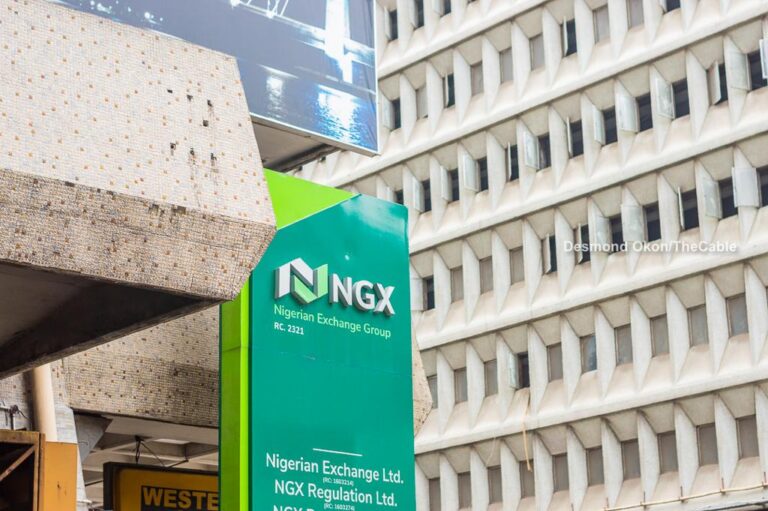
In a bid to enhance accessibility and transparency for both international and domestic investors, the new Eurobond will be listed simultaneously on the London Stock Exchange (Main Market), as well as on the country’s two leading local platforms, the Nigerian Exchange Limited (NGX) and the FMDQ Securities Exchange Limited.
Other News
Market analysts said the dual local listings are aimed at improving price discovery and liquidity, while reinforcing efforts to develop Nigeria’s domestic capital markets.
“The listing of the Eurobond on NGX and FMDQ is a strategic step that expands access for Nigerian investors and aligns with global best practices. It also allows pension funds and other domestic institutions to participate in secondary market trading more easily”, they said.
Clearing and settlement for the bonds will be handled through DTC, Euroclear, and Clearstream, Luxembourg. Citi serves as billing and delivery bank, alongside joint international bookrunners Goldman Sachs International, J.P. Morgan, and Standard Chartered Bank, while Chapel Hill Denham acts as the sole Nigerian bookrunner.
The issuance comes against a backdrop of renewed volatility in emerging-market debt. Nigerian Eurobonds have faced pressure in recent days, with investors reacting to heightened political tensions following comments by U.S. President Donald Trump, who threatened possible military action in Nigeria over reported religious violence. The remarks sparked a brief selloff across Nigerian sovereign papers before partial recovery yesterday.
Average yields on Nigeria’s 14 outstanding Eurobonds eased to 8.17 per cent from 8.28 per cent as bargain hunters re-entered the market, though analysts say risk appetite remains fragile.
“We have seen some profit-taking and a general risk-off tone from global investors, but underlying demand for yield is still strong,” said Gbolahan Ologunro, portfolio manager at FBNQuest. “Nigerian Eurobonds tend to track broader U.S. market sentiment, so when U.S. stocks fall, dollar bonds here often mirror that move.”
Despite the short-term volatility, Nigeria’s return to the Eurobond market signals continued international investor confidence in its credit story and reform trajectory. At current pricing, the issue extends Nigeria’s sovereign yield curve and reinforces its capacity to access global capital even in challenging market conditions.