Follow Us on Google
…reason for poor health services
From Fred Ezeh, Abuja
Stakeholders in the health care sector have stated that Nigeria’s health care system is currently facing the consequences of decades of poor investment in the health sector.
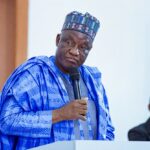
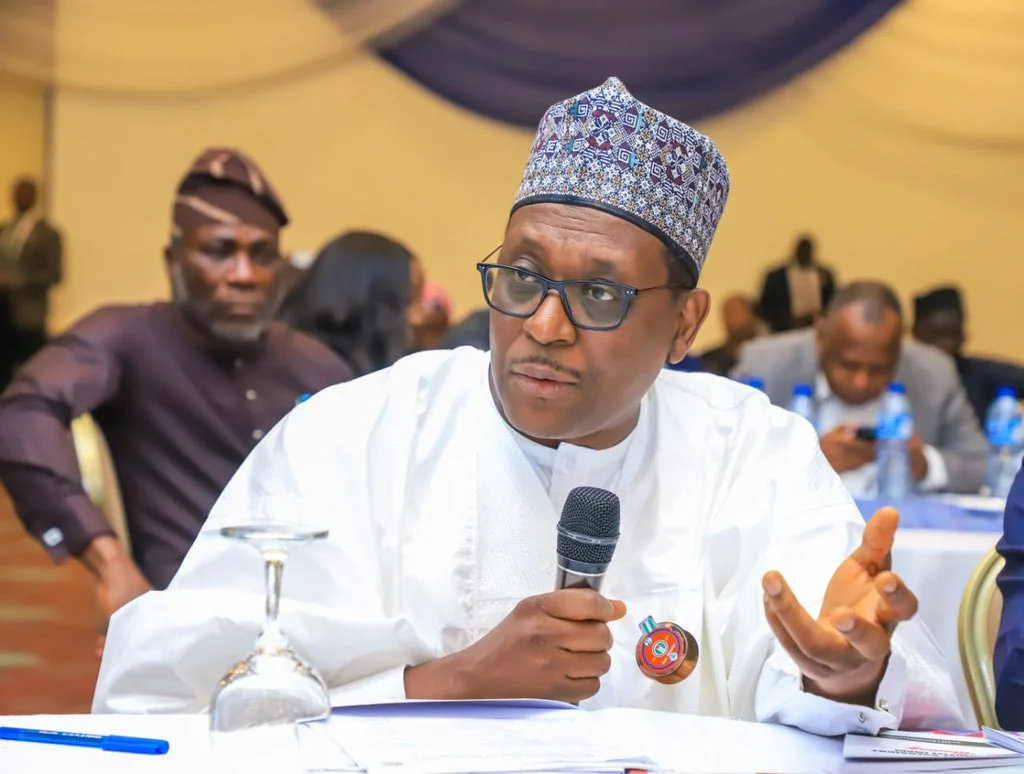
The Coordinating Minister of Health and Social Welfare, Prof. Muhammad Ali Pate led the lamentations at the opening of the National Health Financing Dialogue, themed “Reimagining the Future of Health Financing in Nigeria.”
The Minister said: “Health, wherever it is produced, is not cheap. If you want to get good health care services, somebody has to pay for it. That you can actually get a good quality health system without paying for it is an illusion.”
He lamented that Nigeria spends about $30 per person in public health financing, with more than two-thirds of health costs borne directly by citizens. “We can not pretend to ride a Rolls Royce on the budget of a bicycle,” he said.
The Minister outlined the government’s health reform priorities, including strengthened governance, expanded population health outcomes, unlocking the health value chain, and improving resilience through health security, while urging civil society to play its role in ensuring accountability and advancing Universal Health Coverage (UHC).
He made reference to the recent successes of the National Health Insurance Authority (NHIA), stressing that several innovations introduced by the Agency have resulted in reduced out-of-pocket expenses for health care services.
He said: “We have increased our financial contribution to NHIA in the last two years. We hope at the end of this dialogue, state governments will also commit to matching up, as well as for all actors in the healthcare market, work with the NHIA to ensure that the organize the private sector spend better through bigger risk pools, and for the regulators to be able to purchase quality services for Nigerians.
“We have seen a huge increase in the enrollment of Nigerians in health insurance, four million new enrollees in just 18 months. At that rate, if we had been doing it for 20 years, there would be more than 60 million Nigerians covered. But unfortunately, that hasn’t happened until now. So we are seeing a change in the direction, and we hope that the direction will continue, and that the mandate for making health insurance mandatory for all Nigerians will come to fruition so that every employer will find ways to enroll their workers.
“Every Nigerian should find ways to enrol so that they can share in the bigger risks, and that will enable them to be protected in the event of catastrophic illnesses. So, our goal in this dialogue is to listen to civil society organizations, share ideas and thoughts, discuss and hear perspectives from members of the media and everyone else.”
Other News
The Minister of State for Health and Social Welfare, Dr. Iziaq Salako, in his remarks, noted that President Bola Tinubu has directed the ministry to prioritize sustainable health financing through increased domestic resources and effective implementation of policies that advance UHC
He noted that the government has sustained funding for the Basic Health Care Provision Fund (BHCPF), launched special initiatives like the Hope Health Project, and steadily increased health sector allocations.
“Nigeria’s health budget rose from N434bn in 2018 to N2.48trn in 2025, equivalent to 5.18 per cent of the federal budget. While this marks progress, it remains far below the 15 per cent Abuja Declaration benchmark,” he said.
The Director General of NHIA, Kelechi Ohiri, in his remarks, explained that the dialogue was designed to seek all relevant submissions and contributions to a new way of health financing.
He said: “We know that the global financing landscape has shifted. The world we knew in terms of development financing has changed. We are in a period of multiple transitions in development financing where going forward, it has to be a lot more reliance on domestic resources.
“We are seeing the rising burden of noncommunicable diseases. Sadly, the health system we finance doesn’t have the luxury of the transition from infectious maternal, newborn declining, and then a gradual rising of the community noncommunicable diseases.
“What we are dealing with is a dual burden of disease. We also know that we are going through a demographic transition, and we know that to actually tap into that demographic dividend, we need to invest significantly in health and education Nigeria in recognition of these changes, particularly overseas development assistance.”
At the panel session, the representative of the
Association of Wives of FCT Traditional Rulers (AWTR), Hajia Hauwa Adamu, called for stronger inclusion of grassroots women and vulnerable groups in health financing decisions, stressing that policies are often designed “for them, without them.”
She urged policymakers to create structures that bring women’s live experiences into advocacy and budgeting processes through community dialogues, advisory councils, and participatory budgeting.
She maintained that building women’s confidence and capacity to understand budgets and health financing would make their advocacy more effective and harder to ignore.