Follow Us on Google
By Daniel Kanu
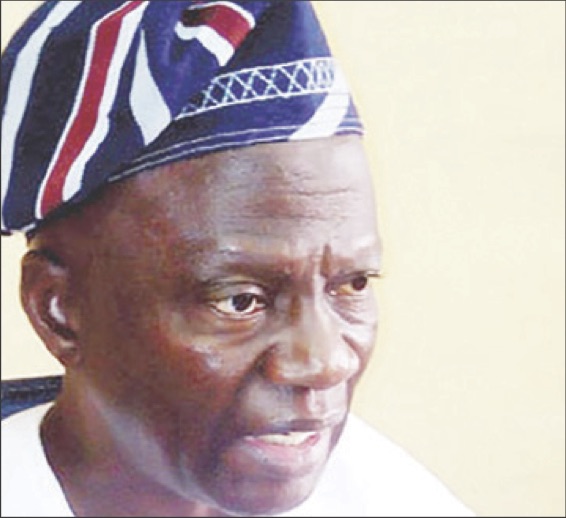
Professor Lai Olurode is the former dean, Faculty of Social Sciences, University of Lagos and former national commissioner of the Independent National Electoral Commission (INEC).
In this interview with Sunday Sun, he speaks on sundry national issues, including the President Bola Tinubu administration, the off-cycle elections in Kogi, Imo and Bayelsa states and the need for restructuring. Excerpts:
How will you assess President Tinubu’s leadership so far?
There is nothing really much to assess now. You can’t begin to see the overall impact now of the economic, and socio-political policies on ground. I still think it’s a bit early to properly assess President Bola Tinubu-led government of the All Progressives Party, APC. I think 29th of this month will make it six months that his government has been in office and six months in my view is not enough duration to get a good assessment. Even if you have the best policy, you still need to implement it and there will also be time for it to mature. It will take some time to begin to see the overall impact of what is being done. It’s early for any good measurement or balanced assessment. If you ask me about assessment in Kogi State now and the governance of Yahaya Bello, you can give a good analysis because he has been there close to eight years and the performance can be measured. If you ask me about Imo state, you can measure performance. You can see the election in Imo, which brought the governor, Hope Uzodimma into office. Many believe that did not reflect the will of the people, for somebody who came third to be announced as the winner did not go down well with the voters and it is some issues like this that is helping in the destruction of our democracy. You can see that President Tinubu’s election was a very competitive election that it took the Supreme Court to deliver verdict. I think in another six months it will be one year, then we can have a good measurement on performance. It is then we can properly see the direction. In between the next one or two years you can begin to see the direction of governance. Let’s not be in a hurry now to do an assessment, it will be pre-mature and you won’t get an accurate result.
Nigerians were expecting immediate turnaround
Governance is not magic, and you need time to translate the policies that you have. Things are difficult, we know but the turnaround will still take some time. In all, we need time. The time is not eternity of course, but at least a year and more you can begin to see anything that the government is doing manifesting. It is only then you can know whether their policies are good or bad.
We still have snippets of violence in our elections. Do you think we have improved looking at the signals of violence we are getting from the Kogi, Imo and Bayelsa elections this weekend?
I will rather look at the context on which these elections are being held. Kogi state has this horrible history of political violence because the parties are usually at daggers drawn. It’s not going to be a walk over for any of the contestants. I am hearing that the Labour Party is merging with the PDP in the Kogi election. If it is true then it’s going to be a straight fight between the PDP and APC, so the power of incumbency may not have much effect. You know that the APC candidate (Ododo) is strongly supported by the governor (Yahaya Bello) who is taking his exit by January when he completes his second and last term. PDP is not a party you can just wish away in the state. In Imo state as I have always pointed out, the election that brought Uzodimma to power, you and I cannot pretend not to know that Uzodimma has been sitting on a hot seat , so it’s going to be a bit difficult, an electoral warfare and you know the activities of IPOB due to political reasons. You know Uzodimma won the election technically, it wasn’t as if he had the majority of votes. He was in the third position and somebody coming from the third position to become the first, you know it generated heated controversy. The PDP, I know is very strong in Imo state. If you are looking at the geography of elections in Nigeria the Southeast except for the intervention of Labour Party (LP), the Southeast states are traditionally PDP states. It’s not going to be an easy election in Imo state and it is not because INEC is not ready, it’s not because security agencies are not willing or not prepared but because they may be overwhelmed due to the challenges on the ground. In Bayelsa too, there has been some killings, so its an unusual election and you can see that a large number of security has been deployed. But sometimes a large number of security deployed may scare voters and you get low voter turnout. So deployment of security work in two ways, either it encourages people to vote or it puts fear in them and they will be scared not to come out in large number to vote. So, it can either give assurance for voters to come to vote or it can make voters to be scared.
So we may not be expecting a very peaceful conduct at the elections.
What is your take on the restructuring of the country as many have advocated…?
(Cuts in) look Nigeria is a diverse country, you cannot get the best in terms of governance with the present structure that we have. The first time we had what could pass as federal government was between 1952 up to 1959, maybe a semblance of it after Independence till 1964 before the crises in the Western region. Since then, we have operated a centralised governance architecture. With the military leadership of Aguiyi Ironsi, we have continued to have centralised structure and it is making the cost of governance to become unbearable. Our federalism is in theory not in practice and Nigeria cannot develop genuinely with such structure. The cost of governance is very expensive we only take care of a tiny minority of statesmen that contributes very little. Our entourage appears to be the largest anywhere in the world and we are turning ourselves into a laughing stock. We are too loud the way we run governance. We don’t look at the substance of governance, we only chase the shadow, the periphery and we can’t grow this way. Innocen is producing vehicles in the Southeast and we are settling for foreign jeeps and that is putting so much pressure on dollars, the Naira is losing value by the day. Maternal mortality in Nigeria is about the highest in the world, yet we are sitting on over 2 million barrels of oil per day. We are not even talking about agriculture and other resources that we have. We have the personnel but we can’t keep them at home, our experts are moving out to other countries. How can we develop this way when your best and brightest are leaving the country in droves? Nigeria’s structure is faulty and we need to tinker with it. Even if a leader here has good intention, the false foundation of our federalism will be an obstacle.
As I have argued somewhere, government is aware that Nigeria’s poorest of the poor cannot withstand a full blown free for all market forces. Even, in the home of raw capitalism and conservatism where Adam Smith’s invisible hand is expected to display a free reign with no restrain, the milk of human kindness is directed at the poor, the old, vulnerable groups and farmers.
Granted that social interaction by the Federal Government is desirable, Nigerian government has data challenges. This is partly why previous interventions by all preceding governments had failed. Without being able to identify poorest household and without credible data base, whatever money or support in kind that is given out would go down the drains.