Follow Us on Google
…As group advocates ranching to end communal crises
From Adanna Nnamani, Abuja
Nigeria’s livestock sector could expand from its current estimated value of $32 billion to as much as $94 billion within the next decade if the country fully implements structured ranching and modern livestock reforms, a new report has projected.
The projection is contained in a research report referenced by the Centre for Crisis Communication (CCC), alongside the Youths Against Disaster Initiative (YADI), at a press briefing on Tuesday in Abuja.
Speaking on the findings, Research Fellow at CCC, Mukhtar Madobi, said the livestock sector represents one of Nigeria’s most underutilised economic assets.
Madobi added that beyond economics, reforming the livestock system is critical to addressing recurring rural conflicts. He explained that modern ranching would enhance revenue generation, improve livestock traceability, deepen financial inclusion and attract private investment.
According to him, “Nigeria’s livestock economy currently contributes over $32 billion to GDP, but with structured ranching, proper regulation and value-chain development, it can grow to between $74 billion and $94 billion within a decade.
“The continued reliance on open grazing has remained a major trigger of farmer–herder clashes, particularly in the North Central and parts of the North West. Structured ranching offers not just economic modernization but also a pathway to national stability.
“Properly registered ranches can access bank credit, insurance and international markets. Formalisation will expand the tax base and reduce economic leakages.”
Also speaking, YADI’s representative, Farouk Bala, described ranching reform as an urgent national initiative, adding that the human cost of the grazing crisis makes reform unavoidable.
Bala, referenced studies cited by the CCC which indicated that about 3,000 people were killed between 2018 and 2023 in farmer–herder clashes, with over 300,000 displaced.
He stressed that structured ranching is increasingly recognised as a sustainable alternative to open grazing.
Bala commended the commitment of President Bola Tinubu’s administration to implement ranching reform, with Kwara State selected as the pilot state for the initiative.
He however, noted that resistance in some communities stems largely from misinformation rather than outright rejection.
“These figures are not mere statistics. They represent lives lost, livelihoods destroyed, and communities fractured. Ranching is not optional; it is essential for economic revitalization, food security and enhanced national security.
“Our engagements show that the majority of pastoralists and farmers are not fundamentally opposed to ranching. The resistance is largely driven by inadequate information and fears about displacement or loss of tradition,” Bala stated.
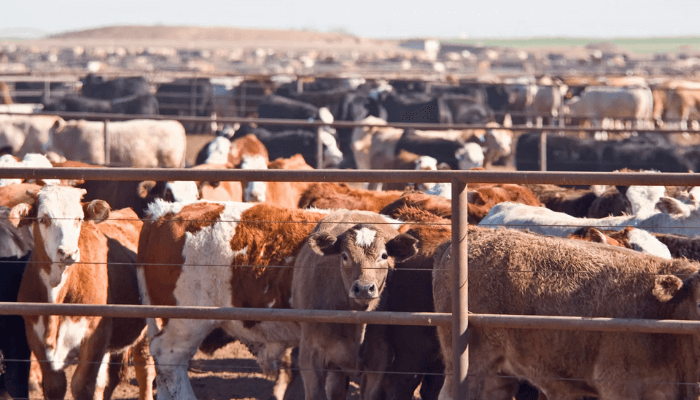
Drawing global comparisons, YADI pointed out that countries such as Brazil, the United States, Australia and Uruguay generate billions of dollars annually from beef exports, while Nigeria, despite maintaining about 20 million cattle, earned only $172,000 from cow exports in 2024.
“These figures underscore the vast economic potential being forfeited due to poorly structured and inefficient livestock management systems,” he added.