Follow Us on Google
By Chinenye Anuforo
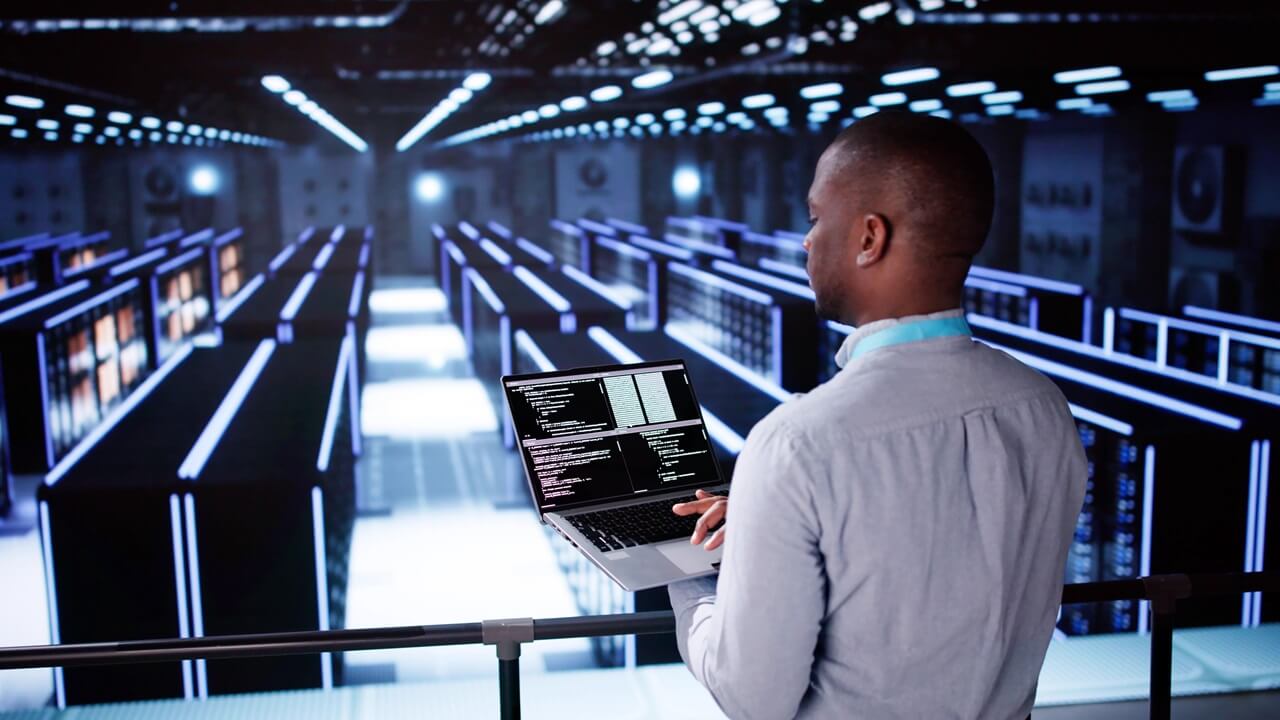
Nigeria’s ambition to compete in the global artificial intelligence (AI) race is facing a major infrastructure crisis, as industry leaders have revealed that not a single data centre in the country is capable of supporting true AI workloads.
Ikechukwu Nnamani, CEO of Digital Realty Nigeria, stated that despite increasing interest in AI adoption, Nigeria still lacks the foundational systems required to build or scale homegrown AI solutions.
At an interactive session with the Nigeria Information Technology Reporters Association (NITRA) in Lagos, Nnamani explained that existing data centres were built for traditional enterprise purposes rather than the high-density, liquid-cooled, GPU-driven environments that AI requires.
“There is no data centre in Nigeria today that is AI-ready. Local AI companies are creating solutions, but they are hosting abroad because the infrastructure here cannot support the kind of computing AI requires,” he said.
With over 300 active AI startups in the country, Nnamani cautioned that Nigeria risks deepening its dependence on foreign hosting—a situation that poses threats to data sovereignty, local value creation, and national competitiveness.
Nnamani described Digital Realty’s evolution from Medallion as a push toward global standards and long-term investment. He revealed that the company had to build roads, power lines, and supporting infrastructure as a business necessity, not as CSR.
Other News
He noted that the scale of facilities needed for AI workloads far exceeds what is currently available locally: “One of Teraco’s data centres in South Africa is bigger than all data centres in Nigeria combined.”
Power remains the biggest and most expensive hurdle. “To power a 100-megawatt data centre, you need at least $100 million if you are generating your own power. The grid is not an option.” Building a modern data centre costs $10 million to $50 million per megawatt.
Chukwuemeka Fred Agbata (CFA), Managing Director of the Anambra State ICT Agency, added that Nigeria cannot aspire to AI leadership while relying on foreign infrastructure for training its models.
“We cannot play at the level we aspire to if we cannot even power the GPUs needed to train our language models,” he noted.
CFA cited Anambra State’s cloud-first policy—hosting digital services with local providers like Layer3 and Rack Centre—as a way to reduce dollar-denominated spending and strengthen Nigeria’s digital backbone. He pointed to Optimus AI, a Nigerian team serving international clients, as proof of local talent, but warned that without investment in local capacity, innovation will continue to migrate offshore.
“Technology is moving fast. If Nigeria must play in the future, we must invest in our people, infrastructure, and digital sovereignty.”