Follow Us on Google
The events of Soweto in 1976 made that commitment even more urgent. On 16 June that year, thousands of Black students marched in protest against the apartheid education system and the government’s imposition of Afrikaans as a medium of instruction. The police responded with live ammunition, and the uprising developed into a nationwide confrontation in which large numbers of young people were killed, injured or arrested. Hector Pieterson, a 12-year-old boy whose photograph being carried through the streets after he was shot became one of the most powerful images of apartheid, came to represent an entire generation whose childhood had been consumed by political oppression. United Nations records from the period describe the scale of the repression that followed, including the deaths of more than 1,000 people during the wider uprising and its aftermath.
For Nigeria, the significance of Soweto was not limited to condemnation. Young South Africans were brought to Nigeria to continue their education after being forced out of their own country or unable to continue safely under apartheid. Contemporary Nigerian accounts describe more than 500 students being brought to Nigeria in the period following the Soweto uprising, with arrangements involving the International University Exchange Fund and, later, the Southern Africa Relief Fund.
The importance of this educational assistance deserves greater attention because it reveals what Nigeria believed the struggle was ultimately about. It was not enough to help dismantle apartheid politically; Africans emerging from oppression had to be prepared to build functioning societies afterwards. Education, training and exposure were therefore part of the liberation project, not separate from it.
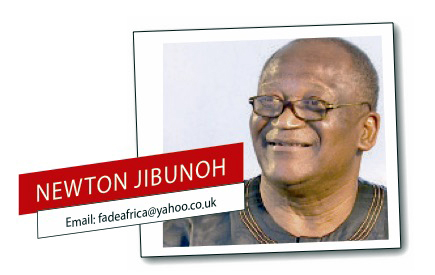
Dr. Newton Jibunoh has provided another window into this period through his 19
September 2019 article, “The South Africa That I Knew”. Writing from the perspective of someone who had travelled through Southern Africa during the apartheid years, Jibunoh recalled visiting countries including Zimbabwe, Namibia, Botswana, Lesotho, Mozambique and Angola and described South Africa itself as largely outside the business activities of his company because of the political situation. He wrote that Nigeria had become a leading African country in monitoring sanctions imposed against apartheid South Africa and recalled the role of the Southern Africa Relief Fund in providing educational and welfare support. He also described the movement of South African students, teachers and young people to Nigeria and proposed that the deeper integration of young Africans across national borders should have become part of the foundation for the post-apartheid relationship. These are Jibunoh’s recollections and interpretations, but they are consistent with the documented record of Nigeria’s broader educational and diplomatic support for the liberation of Southern Africa.
Jibunoh also recalled the popular participation of Nigerians in the anti-apartheid campaign, including what he referred to as the “Mandela Tax”. Such personal recollections are valuable because they remind us that the Nigerian contribution was not confined to government offices. There was a wider public consciousness around Southern Africa, one that allowed an ordinary Nigerian worker, student or schoolchild to see the struggle against apartheid as something that belonged to Africa as a whole.
Nigeria’s diplomatic influence was particularly visible at the United Nations. Yusuf Maitama-Sule, one of Nigeria’s leading diplomats and politicians, served as chairman of the UN Special Committee against Apartheid in the early 1980s and used the position to advocate more forcefully for international sanctions and pressure against the apartheid regime. United Nations records from 1983 explicitly identify him as chairman of the committee. By the time Mandela was released in 1990, Ibrahim Agboola Gambari, another Nigerian diplomat, was serving as chairman of the same committee.
All of this is important because it places Nigeria’s role in its proper context. Nigeria was not merely a country that expressed sympathy for Nelson Mandela; it was part of a larger African campaign that treated the liberation of Southern Africa as an unfinished part of the continent’s own independence. Financial contributions, diplomatic pressure, educational support, international advocacy and popular activism all formed part of that effort.
And within that broad movement was Dr. Newton Jibunoh.
His own involvement with the Free Mandela Movement in London gave him a direct connection with one of the most important international campaigns of the period. He has spoken of his association with Mandela’s family, his meetings with Winnie Madikizela-Mandela and his travels through the countries that formed the frontline of the struggle. In one of his recollections, he describes meeting Winnie in Angola and later hosting her and other prominent African figures during his travels. These experiences placed him in a position to observe Southern Africa not merely as a distant political issue but as a living human struggle involving families, students, activists, refugees, diplomats and ordinary citizens.
Other News
By the late 1980s, however, the balance of power was beginning to change.
Apartheid South Africa was facing increasing internal resistance and growing international isolation, while the costs of maintaining the system were becoming harder to sustain. F. W. de Klerk became president in 1989, and on 2 February 1990 he announced the unbanning of the ANC, the Pan Africanist Congress and other political organisations, together with a series of measures that signaled the beginning of a fundamental political transition. Nine days later, on 11 February, Mandela walked out of Victor Verster Prison.
Mandela’s release was one of the most powerful political images of the twentieth century, but the symbolism of that moment could easily conceal how much work remained. Apartheid did not disappear because Mandela walked through a prison gate. Negotiations between the ANC and the government were only beginning, political violence continued, and the country still had to construct a constitutional order capable of replacing decades of racial domination. Mandela and de Klerk would jointly receive the Nobel Peace Prize in 1993, and on 27 April 1994 South Africans finally went to the polls in the country’s first democratic election based on universal adult suffrage. On 10 May, Nelson Mandela was inaugurated as South Africa’s first democratically elected president.
For the millions who had campaigned for his freedom, it was the fulfilment of a historic dream. For Nigeria, however, it represented something more complicated: the completion of one chapter and the beginning of another.
For decades, Nigeria had treated Southern Africa’s liberation as a moral obligation and a strategic African responsibility. It had supported liberation movements, hosted international conferences, provided educational opportunities, contributed resources, pressed for sanctions and carried the apartheid question into the highest levels of international diplomacy. But liberation changes relationships. Once a country has won its freedom, it ceases to be a beneficiary of another country’s solidarity and becomes a sovereign state pursuing its own interests, politics and economic ambitions.
That was precisely the point at which Nigeria and South Africa entered a new and more complicated phase of their relationship. The old question had been how to help Southern Africa become free. The new question was much harder: how would the countries that had fought together during the struggle learn to live, trade, compete and cooperate with one another after liberation?
Nigeria had helped South Africa fight apartheid. South Africa was now free.
What neither country could afford was to assume that the history of solidarity would automatically become the foundation of a successful future relationship.
That is where Nigeria and Southern Africa’s unfinished business begins.