Follow Us on Google
-
First Lady: No woman should die giving birth
-
FG targets 2.9m pregnant women, families by 2028
______________________________
Confronted with the grim reality that Nigeria accounts for nearly 39 per cent of global maternal deaths, the Federal Government on Monday rolled out 215,000 MAMA kits, 40,000 maternal food-support packs and 40,000 newborn clothing sets to vulnerable women and families nationwide.
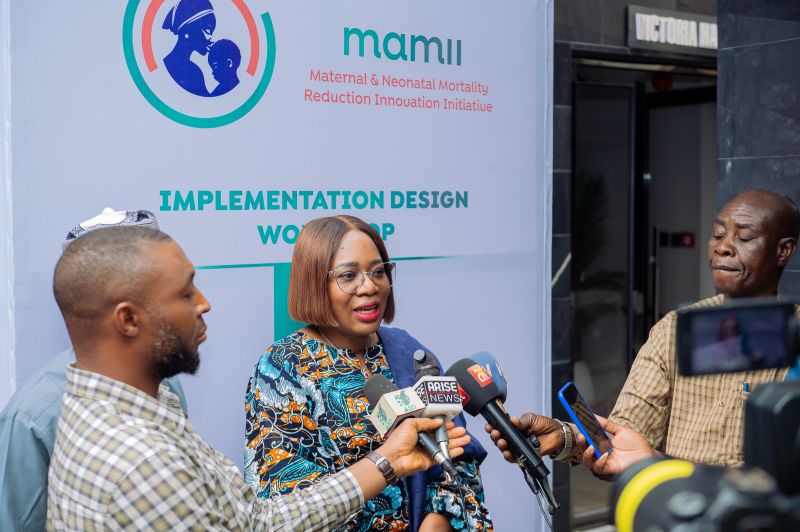
The intervention, under the Maternal and Neonatal Mortality Reduction Innovation Initiative (MAMII) of the Federal Ministry of Health and Social Welfare, is aimed at increasing the use of antenatal, delivery and postnatal services, particularly in underserved communities.
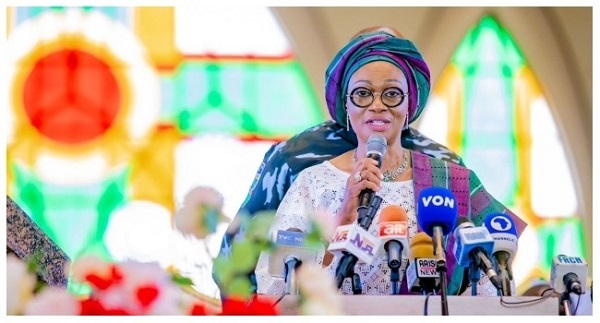
Speaking at the State House Conference Centre, Abuja, the First Lady of Nigeria, Oluremi Tinubu, said the initiative was another step towards ensuring that every Nigerian child gets a healthy start in life and that women do not lose their lives while giving birth.
“This occasion represents a further step towards ensuring that every Nigerian child has a healthy start in life and that no woman loses her life while giving birth,” she said.
Mrs Tinubu said the initiative was aligned with President Bola Tinubu’s Renewed Hope Agenda on Health, which recognises health as “an essential pillar of development”.
According to her, MAMII was a “bold national intervention” bringing together key stakeholders to reduce preventable maternal and newborn deaths through improved awareness, emergency care and referral systems.
“As a mother, I believe pregnancy and childbirth should be moments of hope and joy, with every woman having access to quality care,” she said.
“However, social, economic, cultural and logistical barriers still exist. This is what makes today’s flag-off particularly significant.”
Mrs Tinubu said the 215,000 MAMA kits and bags constituted the second batch of the intervention, following the initial distribution of 110,000 kits in 2025.
The government is also providing 40,000 maternal food-support packs and 40,000 sets of essential newborn clothing, with plans to extend the distribution to additional local government areas recording low uptake of MAMII services.
She said the incentives would help poorer pregnant women attend antenatal clinics, prepare for delivery and remain connected to essential care after childbirth.
“The newborn clothing represents the administration’s commitment to welcoming every Nigerian child with dignity, warmth and care,” she said.
“The maternal food support equally recognises that the health and nutrition of a mother are essential to a healthy pregnancy, safe delivery and a healthy newborn.”
She urged state and local governments, traditional and religious leaders, development partners and philanthropists to ensure that the support reached women in vulnerable and underserved communities.
Mrs Tinubu commended Pate and his team at the Federal Ministry of Health and Social Welfare for their commitment to the programme.
“It’s been a joy working with you,” she said.
She also highlighted her support for maternal and child health interventions, including the distribution of professional kits to midwives, retraining of frontline health workers and advocacy against mother-to-child transmission of HIV, syphilis and hepatitis.
The Coordinating Minister of Health and Social Welfare, Ali Pate, said the intervention formed part of the Federal Government’s broader strategy to improve access to essential services and tackle preventable deaths.
Pate said the government’s sector-wide approach was targeting a 30 per cent reduction in maternal mortality and 20 per cent reduction in newborn mortality by 2028, while reaching approximately 2.9 million pregnant women and families.
He said MAMII was already being implemented across a number of states, with interventions focused on emergency obstetric and newborn care, referral systems, transportation and primary healthcare.
The Minister of State for Health and Social Welfare, Iziaq Salako, described Nigeria’s situation as “one of the most sobering realities of our nation”.
Other News
He said the government was intensifying efforts to improve access to antenatal care, skilled birth attendance, emergency services and timely referrals, particularly for women facing poverty and distance-related barriers.
Salako said the administration’s message to Nigerian women was clear: “Help continues to come and help is very, very close, and it is coming faster.”
The Chairman of the Senate Committee on Health, Ipalibo Banigo, commended the Federal Government for prioritising maternal and newborn survival, stressing the need for sustained legislative and institutional backing.
He called for stronger funding, improved primary healthcare facilities and greater access to emergency services, saying the challenge required collaboration between the executive and legislature.
The World Bank and other development partners delivered goodwill messages in support of the initiative, stressing the importance of sustained financing, stronger health systems, accountability and reaching women in hard-to-reach communities.
The development partners emphasised that material incentives must be matched by functioning facilities, skilled personnel, reliable referral systems and quality services if they are to produce lasting results.
The World Health Organisation Country Representative, Dr Pavel Ursu, said the real test of the intervention would be whether it translated into better access and improved survival.
“Primary health care is so important. It brings life-saving care closer to families, builds trust and it connects communities to wider health systems,” Ursu said.
He urged government to use data to identify gaps and direct resources to communities where the need was greatest.
“Data should show us who is being reached, where gaps remain and where action is most important,” he said.
“Implementation will therefore matter as much as the ambition.”
Ursu also called for stronger state ownership and domestic financing, noting that development partners could support Nigeria but could not replace government responsibility.
“Lasting progress must be rooted in Nigerian institutions, budgets and accountability,” he said.
He paid tribute to health workers, describing their commitment as critical to translating policies into life-saving services.
“Every day, often in difficult environments, they stand behind women and families at the most vulnerable moments,” he said.
“Their skills, dedication and compassion turn policies into life-saving.”
The government disclosed that about 642,000 pregnant women had been moved to healthcare facilities within their communities, while more than 85,000 women had been transported for emergency care.
It said more than 93,000 women had benefited from free life-saving surgical procedures across the country, with the interventions contributing to a reported 22 per cent reduction in maternal mortality in facilities empowered to provide the relevant services.
More than 250 health facilities in Bauchi, Borno, Kaduna, Kano and Katsina are reportedly implementing MAMII, with over 42,000 women and 1,700 newborns benefiting directly from emergency obstetric and newborn care.
Nearly 79,000 beneficiaries have also reportedly been transported to health facilities, while facility delivery and antenatal-care indicators rose by about 20 per cent in one quarter in areas covered by the intervention.
The event attracted senior government officials, lawmakers, health-sector agencies, development partners, traditional and religious leaders, civil society organisations, healthcare workers and beneficiaries.
Among those present were the Minister of State for the FCT, Dr Mariya Mahmoud; Director-General of NAFDAC, Professor Mojisola Adeyeye; Director-General of the National Health Insurance Authority, Dr Kelechi Ohiri; Director-General of the National Primary Health Care Development Agency, Professor Muyi Aina; and representatives of the Sultan of Sokoto, Christian Association of Nigeria, UNICEF and other development partners.