Follow Us on Google

…holds capacity building workshop for health workers in two LGAs
Laide Raheem, Abeokuta
As part of efforts to combat the spread of cancer disease in the country, the National Institute for Cancer Research and Treatment (NICRAT) has donated basic cancer screening equipment and consumables to health facilities in Ogun State.
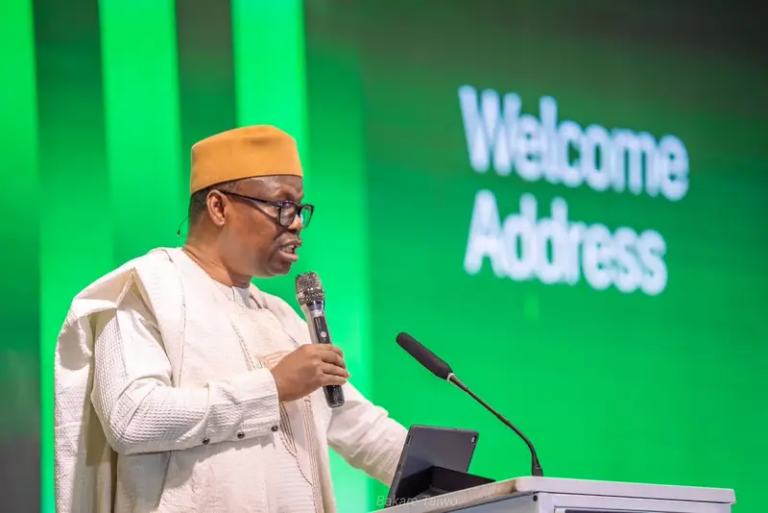
Handing over the screening equipment to the officials of the state government on Wednesday, at the capacity building workshop on cervical and breast cancer for select doctors, nurses and health workers held in Abeokuta, the Ogun State capital, Director-General of NICRAT, Dr. Usman Malami, said the Institute had earlier carried out mapping and strengthening of cancer preventive services in Odeda and Ado-Odo/Ota Local Government Areas of the state.
The Director-General who was represented by the Acting Deputy Director of NICRAT, Dr. Nandi Ishaya, noted that cancer has continued to pose a growing threat to public health in Nigeria, with thousands of lives lost each year due to late detection and limited access to preventive and diagnostic services.
He explained that the Institute established in 2017 by the Federal Government, but became operational in 2023, has been saddled with the responsibility to lead, coordinate, and support evidence-based interventions that will reduce the cancer burden across Nigeria.
While noting that efforts to reduce the cancer burden must begin at the grassroots level, Dr. Malami pointed out that the cancer screening tools including visual inspection kits, clinical breast exam tools, and relevant consumables are essential for ensuring that cancer screening is not just a theory but a daily, accessible service for the people.
He further observed that the initiative equally aligned with the broader goals of the National Cancer Control Plan and the Universal Health Coverage Agenda, aimed to decentralize and democratize access to life-saving health services across all geopolitical zones and underserved communities.
Other News
“Today’s programme is a bold and necessary step towards that vision leveraging on the Renewed Hope Agenda of President Bola Ahmed Tinubu. Firstly, we are embarking on a comprehensive mapping of healthcare facilities in Odeda and Ado-Odo/Ota LGs. This exercise is not merely about counting facilities, it is about identifying gaps, understanding capacity, and building a data-driven foundation for targeted cancer interventions.
“We must know where services are available, where they are not, and how best to reach those who need them the most. Secondly, we are investing in the capacity building of healthcare workers in this area. Our nurses, doctors, and community health workers are the first line of defense in the fight against cancer. By training them to identify early signs of cancers such as breast, cervical, and prostate cancer and refer appropriately, we empower them to save lives. Prevention and early detection must be integrated into primary healthcare, and this training is a critical part of that strategy.
“Thirdly, we are donating basic cancer screening equipment and consumables to selected facilities in Odeda and Ado-Odo/Ota. These tools including visual inspection kits, clinical breast exam tools, and relevant consumables are essential for ensuring that cancer screening is not just a theory but a daily, accessible service for our people”, the DG of NICRAT stated.
He, however, charged the health workers participating in the capacity building workshop to be dedicated and ready to serve as champions of cancer prevention and control in their respective communities.
In his remarks, the Special Adviser to the Ogun State Governor on Health, Dr. Tayo Lawal, commended NICRAT for the initiative, describing it as a partnership capable of helping the state greatly in its fight against cancer.
While describing cancer as a deadly disease, Lawal assured NICRAT that the basic screening equipment will be maintained and used for the purpose of preventing the disease, especially in the local communities.