Follow Us on Google
By Chukwuma Umeorah
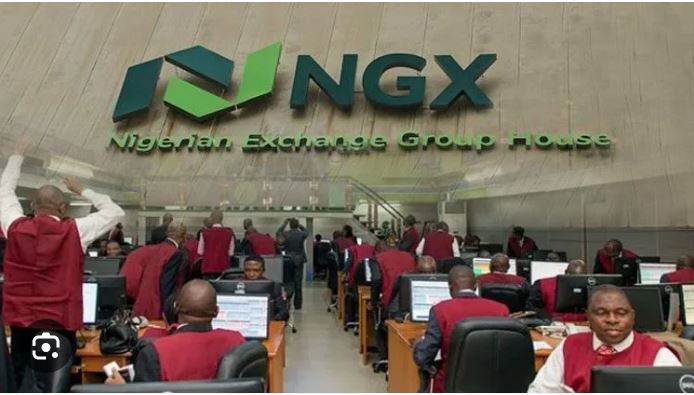
Investors on the Nigerian Exchange Limited (NGX) lost about N4.9 trillion in market capitalisation during the first trading week under Nigeria’s newly adopted T+1 settlement regime, as broad-based profit-taking and portfolio rebalancing triggered a market correction that pushed equities lower despite a significant increase in trading activity.
The losses came as Nigeria became the first capital market in Africa to migrate from a T+2 to a T+1 settlement cycle, a move designed to improve liquidity, reduce counterparty risk, accelerate capital recycling and align the country’s market infrastructure with leading global exchanges.
Market data showed that the NGX All-Share Index (ASI) declined by 3.11 per cent during the week, closing at 242,593.31 points from 250,385.47 points recorded the previous week. Market capitalisation similarly fell by 3.06 per cent to N155.59 trillion from N160.50 trillion, translating to an estimated N4.91 trillion decline in investor wealth. Though the overall performance may have been negative, the sharp acceleration in trading activity may suggest that the new regime is already be boosting market liquidity despite a broad market correction.
The market retreat occurred after the benchmark index had repeatedly scaled record highs in recent weeks, prompting some investors to question whether the implementation of the new settlement framework may have contributed to the sell-off.
However, market operators and analysts largely dismissed suggestions that the decline was linked to the transition to T+1, arguing instead that the correction reflected profit-taking, portfolio repositioning and broader market dynamics that had been building before the new settlement cycle took effect.
“Firstly, there is no connection between the market retreating and the transition to T+1 settlement cycle. The retreat can be attributed to normal profit-taking stance by investors which is not unusual,” said Olatunde Amolegbe, former President of the Chartered Institute of Stockbrokers (CIS).
According to him, the settlement adjustment remains a positive development for the market and positions Nigeria alongside major international markets that have already adopted shorter settlement periods. “The adjustment of the settlement cycle is largely positive and brings our market in line with other global markets such as the NYSE which also settles T+1. It also improves market liquidity and efficiency of capital allocation,” Amolegbe said.
The T+1 framework means securities transactions are settled one business day after execution, compared with the previous two-day settlement period. Market operators say the shorter cycle enables investors to access proceeds from sales more quickly, reduces settlement risk and allows capital to be redeployed faster within the market.
Although share prices declined during the week, trading activity accelerated sharply, suggesting that the new framework may already be improving market turnover. Data released by the NGX showed that investors traded 3.97 billion shares valued at N175.66 billion in 343,587 deals during the week, compared with 2.40 billion shares worth N111.48 billion exchanged in 241,313 deals in the preceding week.
The figures indicate a 65.4 per cent increase in trading volume, a 57.6 per cent rise in transaction value and a 42.4 per cent jump in the number of deals executed on the exchange.
The financial services sector dominated market activity, accounting for 2.69 billion shares valued at N69.98 billion, representing nearly 68 per cent of total trading volume and about 40 per cent of total transaction value during the week.
Trading activity was also concentrated in a handful of heavily traded counters. Access Holdings Plc, Abbey Mortgage Bank Plc and Sterling Financial Holdings Company Plc accounted for approximately 1.29 billion shares valued at N17.56 billion, representing 32.5 per cent of total market volume traded during the period.
Amolegbe added that these operational indicators rather than short-term price movements will provide a better measure of the success of the new settlement framework. “The main metrics we need to observe in the next few months to determine the effectiveness of the change to T+1 settlement cycle will be market turnover as well as the number of deals per day. My expectation is that these two indices will improve over the next few months,” he said.
While Amolegbe attributed the market decline primarily to profit-taking, other market analysts have identified a combination of factors driving the recent correction.
Chief Executive Officer of Wyoming Capital Partners, Tajudeen Olayinka, argued that the introduction of T+1 may have created temporary operational adjustments for some institutional investors, particularly pension fund administrators, asset managers and other large investors who traditionally relied on post-trade funding arrangements.
According to him, “the migration to a shorter settlement cycle requires some institutional participants to adapt their funding processes, potentially slowing buy-side activity during the transition period.” He described the situation as a temporary market adjustment rather than a structural weakness, noting that institutional investors would eventually adapt to the new framework.
Other analysts, however, believe the current sell-off has more to do with portfolio repositioning than settlement mechanics.
Other News
Managing Director of HighCap Securities, David Adonri, pointed to growing efforts by institutional investors to raise cash ahead of the anticipated listing of Dangote Petroleum Refinery, which is expected to become one of the largest listings in the history of the Nigerian capital market.
“I don’t think the bearish state of the Equities Market last week can be ascribed to the commencement of T+1 Settlement Cycle. It’s just coincidence that T+1 came in at the time market corrections started. This is a seasonal trend that align stocks’ values to their fundamentals after end of year corporate disclosures,” Adonri stated.
He further describes it as a strategic move by some investors. “There is also possibility that investors liquidated some assets to proactively position for Dangote Refinery IPO. Market operators may have also been selling to forestall any diminution in capital based on heightening political risk to able to comply with new minimum capital requirements.
Trading during the first week of implementation of T+1 was normal. Trading, settlement and delivery were perfect. Due to T+1, cash and stocks liquidity were quite high, a fulfillment of one of the cardinal goals of the development,” he explained.
Analysts further noted that the correction is occurring at a period traditionally associated with post-dividend portfolio rebalancing. Many of the market’s largest stocks delivered strong gains over the past several months as investors accumulated positions ahead of dividend qualification dates. With most of those qualification periods now concluded and dividend payments largely secured, some investors have begun locking in gains accumulated during the rally.
The profit-taking trend was evident across several blue-chip and highly capitalised stocks that had previously led the market’s advance. First HoldCo emerged among the week’s biggest losers, shedding 11.43 per cent, while Wema Bank declined 10.45 per cent and BUA Cement fell 10 per cent. Eterna Plc, John Holt Plc and University Press Plc also recorded double-digit per centage declines.
The weakness was not limited to individual stocks. Virtually all major NGX indices closed lower during the week. The NGX Industrial Goods Index declined by 4.40 per cent, while the NGX Oil and Gas Index lost 5.18 per cent. The NGX Banking Index dropped 3.42 per cent and the NGX Consumer Goods Index fell 2.15 per cent.
The broad-based nature of the decline was further reflected in market breadth statistics. Sixty-five equities depreciated in price during the week compared with only 23 gainers, while 58 stocks closed unchanged.
Despite the widespread sell-off, several counters posted notable gains. International Energy Insurance Plc advanced 60.62 per cent to emerge as the week’s best-performing stock, while Abbey Mortgage Bank gained 47.24 per cent. Ikeja Hotel, RT Briscoe and Consolidated Hallmark Holdings also recorded positive returns.
Another factor influencing investor behaviour is the increasing attractiveness of fixed-income securities. Recent Treasury Bills auctions have continued to attract substantial investor demand as yields remain relatively attractive compared with historical averages. For institutional investors seeking lower-risk investment opportunities, government securities have become an increasingly competitive alternative to equities.
The higher yields available in the fixed-income market have encouraged some portfolio managers to rebalance allocations between equities and debt instruments, contributing to the flow of funds out of certain stocks.
Nevertheless, analysts maintain that the broader outlook for the Nigerian equity market remains positive despite the recent correction.
The NGX remains one of the best-performing stock markets globally over the medium term, supported by strong corporate earnings, banking sector reforms, improving investor participation and sustained domestic institutional demand.
Even after the recent pullback, the benchmark NGX All-Share Index remains up 55.9 per cent year-to-date, underscoring the strength of the market’s longer-term performance.
For market participants, the coming months will provide a more meaningful assessment of the effectiveness of the T+1 settlement framework.
Rather than focusing on short-term fluctuations in equity prices, operators say investors should monitor indicators such as market turnover, trading volumes, settlement efficiency, liquidity levels and foreign investor participation.
According to them, if the transition succeeds in reducing settlement risk, improving operational efficiency and increasing trading activity, it could strengthen the attractiveness of Nigeria’s capital market to both domestic and international investors.