Follow Us on Google
From Ndubuisi Orji, Abuja
The Federal Government has said that the African Continental Free Trade Area (AfCFTA) offers a unique opportunity for Nigerian businesses to expand into new markets, as well as attract investment, create jobs and “strengthen regional value chains.”
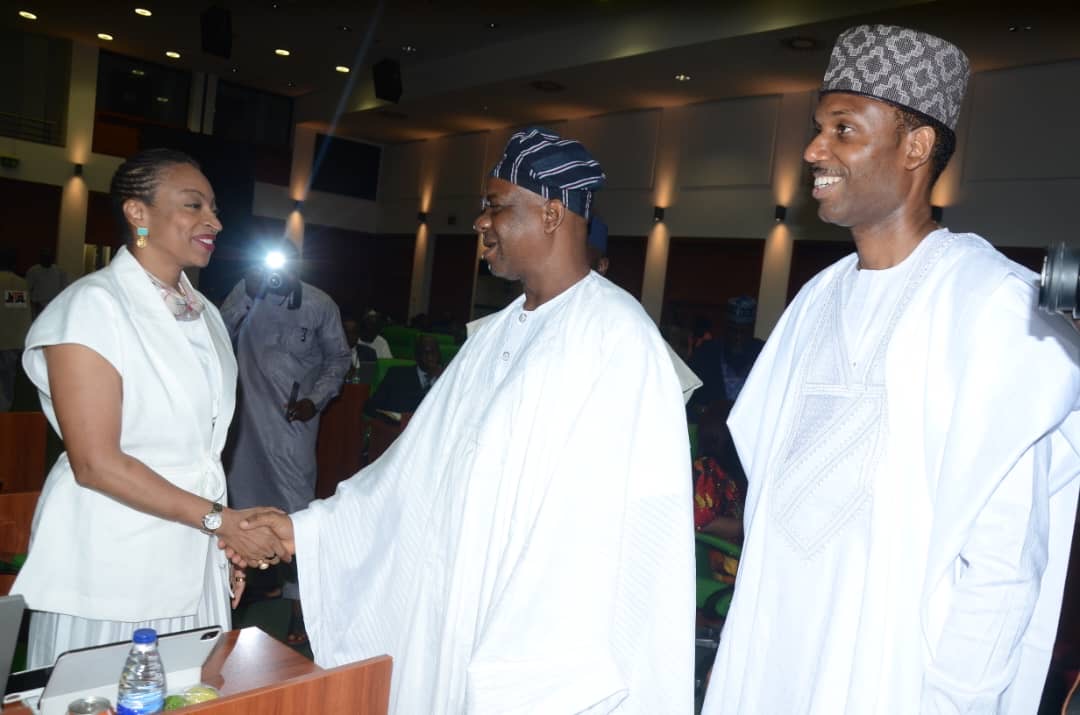
The Minister of Industry, Jumoke Oduwole, stated this, on Monday, at a public hearing, organised by the House of Representatives Committee on Commerce on the AfCFTA Domestication Bill and 12 others.
Oduwole, who stated AfCFTA is the largest free trade area, in the world, by number of participating countries, proposed legislation is critical to trade, investment and industrialization, as well as the government’s economic transformation agenda.
According to her, “The AfCFTA is the world’s largest free trade area by number of participating countries. It provides access to a continental market of over
1.4 billion people with a combined GDP exceeding US$3 trillion.
“For Nigeria, it presents a unique opportunity for Nigerian businesses to
expand into new markets, attract investment, create jobs and strengthen
regional value chains.”
She noted that since the agreement was ratified in 2020, Nigeria has made significant progress in its implementation, including establishing institutional framework for coordination.
The speaker, Tajudeen Abbas, while declaring the public hearing open, said the exercise is crucial to get the inputs of critical stakeholders into the proposed legislation.
According to him, the Committee is expected to examine the objectives of each bill diligent you and assess their likely impact on the business community, including investors and consumers.
Abbas, who was represented by the Deputy Chief Whip of the House, Ibrahim Isiaka said “We firmly believe that legislation is strongest when it does not depend on the wisdom of legislators alone, but incorporates the practical experience, expertise and perspectives of the people it is designed to serve.
“Today’s event is even more significant because commerce is one of the strongest pillars of our economy. It drives investment, stimulates production, expands markets, creates jobs, encourages innovation and strengthens consumer confidence.
“As Nigeria pursues economic diversification and greater competitiveness, we must ensure that our commercial laws are responsive to emerging realities, technological advancement and international best practices.”
The chairman of the Committee Ahmed Munir, in his remarks, noted that the 13 bills to considered at the public hearing are designed to position the country’s economy for sustainable growth in a rapidly evolving global market.
According to him, ‘our goal in the 10th House of Representatives is to ensure our laws actively foster economic expansion rather than obstruct it. The success of this legislative exercise depends heavily on your candid, expert feedback.
” I urge all stakeholders be it governmental, industrial, and civil society to actively participate, offer constructive critiques, and provide data-driven insights to help us refine these bills into robust legal instruments.”