Follow Us on Google

The Nigerian Communications Commission (NCC), the United Nations Educational, Scientific and Cultural Organisation (UNESCO), Meta, and other stakeholders have intensified efforts to provide free internet access for students and teachers by developing a sustainable framework that will enable them to access approved educational platforms without paying for data.
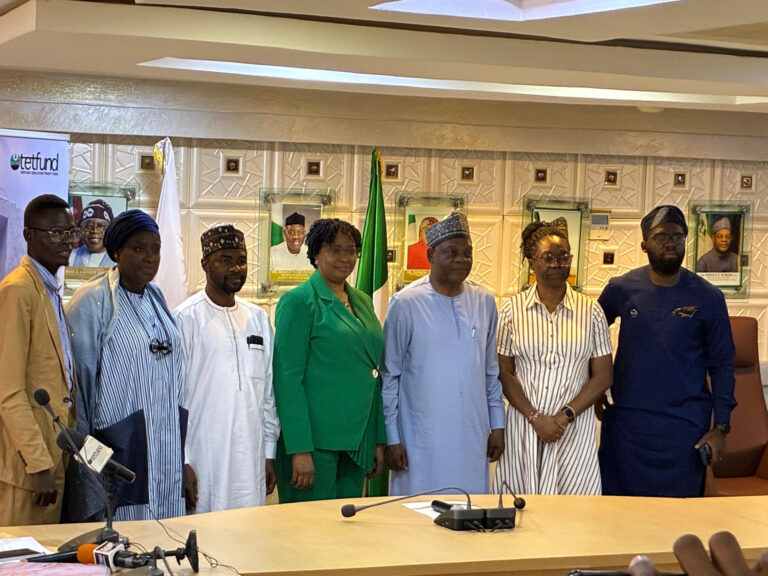
The move formed the focus of a public consultation held in Abuja on Tuesday on the proposed Zero-Rated Access to Educational Platforms and Content Framework, where regulators, telecom operators, education authorities, development partners, and technology firms examined implementation options for the initiative.
The consultation followed the Commission’s release of a consultation paper proposing a policy that would allow students and teachers to access selected educational websites and digital learning platforms free of data charges as part of efforts to bridge Nigeria’s digital divide and improve access to quality education.
Speaking at the event, Executive Vice Chairman of the NCC, Dr Aminu Maida, said the consultation represented a critical stage in developing a framework that balances educational access with sustainability, fair competition and sound regulation.
Represented by the Commission’s Director of Policy, Competition and Economic Analysis, Ayuba Shuaibu, Maida disclosed that an industry committee constituted by the Commission had already examined the technical, regulatory, policy and commercial implications of the initiative and produced a consultation paper for public review.
He said the success of the programme would depend on contributions from telecom operators, education providers, students, teachers, development partners, and other stakeholders expected to implement or benefit from the initiative.
“The objective of this initiative is straightforward but deeply significant, and that is to reduce the affordability barrier that locks millions of Nigerian students out of the digital classroom,” he said.
According to him, discussions centred on identifying the most suitable implementation model, determining eligibility criteria, defining educational content and platforms, establishing sustainable funding mechanisms, and putting in place safeguards to preserve net neutrality, promote fair competition, and ensure effective governance.
“There are no predetermined outcomes. The Commission and the Industry Committee remain open to constructive, practical, and evidence-based recommendations,” he added.
Maida further explained that the proposed scheme would not impose financial obligations on either the NCC or beneficiary institutions, as participating Mobile Network Operators (MNOs) would absorb the cost of providing data access under the initiative.
“The collaboration with the MNOs means it is not going to be at a cost to the Commission and it is not going to be at a cost to the beneficiary institutions,” he said, adding that both tertiary and secondary educational institutions are expected to benefit.
The Federal Ministry of Education endorsed the proposal, describing it as consistent with ongoing reforms aimed at making education more inclusive and technology-driven.
Presenting the ministry’s position, Director of Information and Communication Technology, Abubakar Zainab Suleiman, said that high internet costs, poor connectivity, and unequal access to digital learning resources continue to limit learning opportunities, research, and skills development across the country.
Other News
She noted that the proposed framework aligns with the Nigeria Education Sector Renewal Initiative (NESRI), which seeks to improve learning outcomes through evidence-based planning, stronger institutional coordination, and technology-enabled education.
Suleiman stressed that the initiative should go beyond providing connectivity by ensuring educational relevance, quality assurance, learner protection, child online safety, data privacy, sustainability, and alignment with national education priorities.
She also recommended a phased implementation beginning with a pilot programme to assess costs, usage patterns, technical requirements, and long-term sustainability before a nationwide rollout.
Also speaking, UNESCO’s Digital Transformation Specialist, Dr Yinka Oyerinde, described the consultation as timely, noting that demand for quality online learning has grown significantly since the COVID-19 pandemic.
He recalled that UNESCO developed a Zero-Rated Access Toolkit in 2020 to guide governments, regulators, and mobile operators on implementing similar interventions, but cautioned that while zero-rating offers immediate relief, it should not be seen as a permanent solution.
“Zero rating is not the final solution but a powerful, immediate tool. It is a bridge towards ensuring that every learner has access to quality educational opportunities,” he said.
Drawing lessons from countries such as Kenya, Oyerinde warned that sustainability often becomes a challenge after subsidy programmes end and urged Nigeria to incorporate a clear transition and exit strategy into the framework from the outset.
He also advocated the development of a nationally agreed whitelist of approved educational platforms, stronger public awareness campaigns, and closer collaboration among regulators, telecom operators, educational technology firms and development partners.
Pledging support for the initiative, Head of Public Policy for Anglophone West Africa at Meta, Sade Dada, said the company has worked with Nigerian telecom operators since 2016 to expand affordable internet access and remains committed to supporting digital inclusion.
According to her, Meta’s Free Basics infrastructure already enables government agencies, educational institutions, and developers to make approved educational content available to users without data charges, provided they meet established technical standards.
“If classrooms are free to enter, the digital classroom shouldn’t become inaccessible because someone runs out of data,” she said, adding that Meta stands ready to collaborate with the NCC and other stakeholders once the framework is finalised.
The NCC had earlier proposed two implementation options for the initiative, including the creation of a centralised portal hosting approved educational resources and a model that would allow telecom operators to whitelist designated educational websites and platforms for free access.
The Commission also proposed an initial 12-month pilot programme, with funding expected from industry cost-sharing arrangements, government support, the Universal Service Provision Fund, development partners and public-private partnerships before nationwide implementation.