Follow Us on Google
From Juliana Taiwo-Obalonye, Abuja
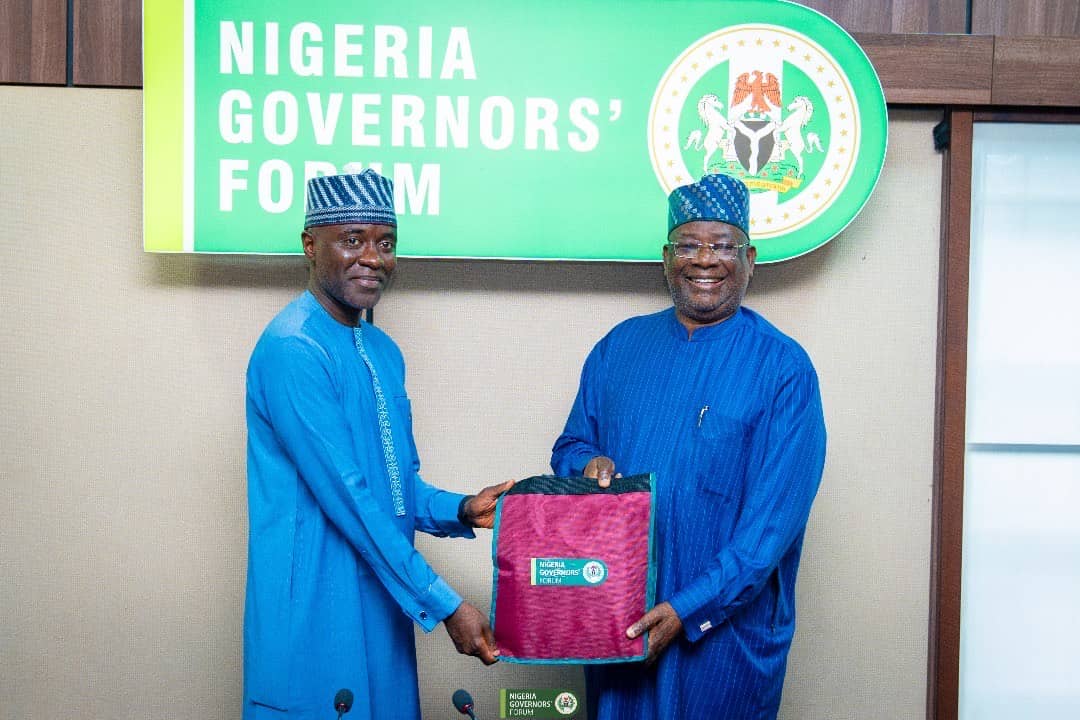
The Nigerian Communications Commission (NCC) and the Nigerian Governors’ Forum (NGF) Secretariat in Abuja have reinforced a shared commitment to expanding broadband access, securing critical national information infrastructure (CNII) and advancing the digital economy across Nigeria’s states.
In a statement by the NGF’s Director, Media and Strategic Communications, Yunusa Abdullahi, the partnership was forged when the Executive Vice Chairman and CEO of the NCC, Aminu Maida, led a delegation to visit the NGF’s Secretariat in Abuja yesterday.
Maida commended the NGF for its collaborative spirit, saying: “The openness of the NGF to engage with us reflects a shared belief in the impact the digital solutions can have on subnational development.”
He stressed the urgent need for alignment between national and subnational digital infrastructure, calling it a game changer for Nigeria’s digital economy.
A significant concern highlighted by Maida was the Right of Way (RoW) fees, currently set at N145 per linear meter, which he described as a major impediment for telecom companies. He appealed to the state governments to waive or reduce the fees to facilitate the deployment of fibre optic networks, emphasising that, “The Right of Way is a critical element in opening up the digital economy, and this lies within the purview of the states.”
Addressing the economic benefits of improved connectivity, he noted that easing RoW barriers would empower telecom companies to build more value chains, which would in turn, benefit citizens and increase tax revenues for states.
Other News
He pledged the NCC’s technical leadership and regulatory clarity to support rapid and secure broadband expansion nationwide.
On his part, Shittu emphasised the vital importance of broadband and secure information infrastructure to modern state development. “Broadband and secure information infrastructure are no longer optional inputs to development, they are foundational public goods,” he asserted. He acknowledged Nigeria’s rapid connectivity growth but lamented that national broadband penetration remained insufficient for inclusive digital transformation. To tackle this, he proposed four key areas for deeper collaboration with the NCC, including institutional alignment through state broadband coordinating councils, policy harmonisation to standardise RoW regulations, resilience of CNII through state-level protection plans and enhanced information sharing to boost capacity building.
Highlighting successful state-led initiatives, the DG pointed to the World Bank’s SABER programme as a model, noting that states which harmonised RoW fees, adopted coordinated trenching, and waived onerous charges attracted by private sector investments.
“These policy choices have produced rapid increases in fibre kilometres and improved access to high-capacity networks,” he said, emphasising the socio-economic benefits, such as job creation, improved productivity and expanded access to education and healthcare.
Reinforcing the economic case, Shittu remarked: “Expanded fibre coverage raises productivity, supports job creation, broadens access to education and health services and enlarges the taxable base available to state governments.”
Looking forward, the NGF proposed leveraging the upcoming NCC Business Roundtable to turn commitments into concrete state-level pledges. “I further propose that the NGF and the NCC jointly convene a series of follow-up workshops to translate best practices from leading states into implementable toolkits for lagging ones,” Shittu said, advocating for measurable targets and clear timelines.
Affirming the NGF’s resolve, he stated: “We will bring political will, coordination capacity and the convening power of the governors to bear on this agenda,” highlighting the critical role states play in administrative tasks, such as land use and security.