Follow Us on Google
By Adewale Sanyaolu
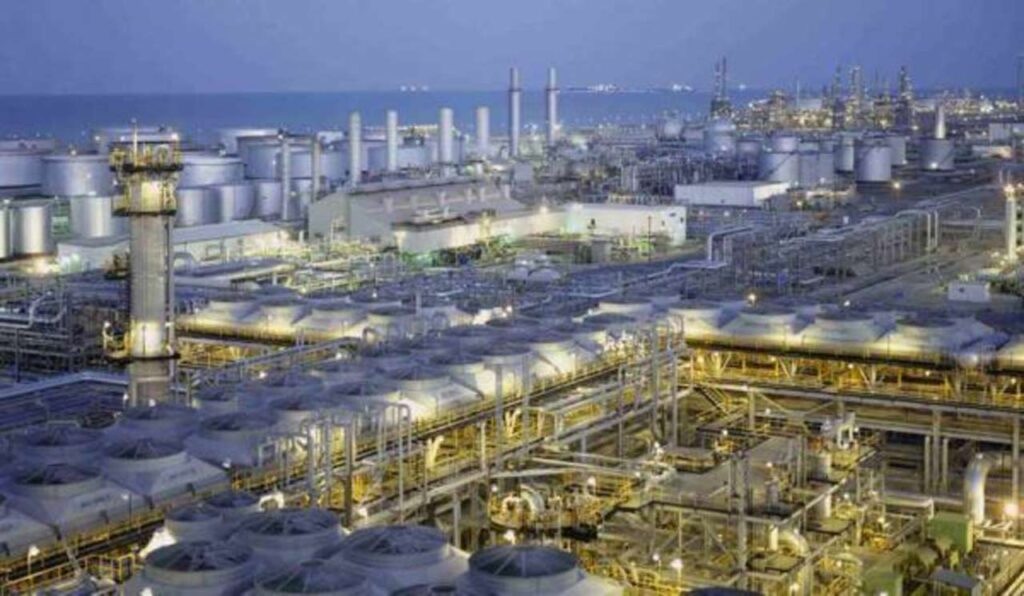
If urgent steps are not taken by all relevant stakeholders to resolve the ongoing conflict between the National Assembly and parties involved in the Train 7 project of the Nigeria Liquefied Natural Gas (NLNG) Limited, Nigeria risks becoming a laughing stock among the international business community over its inability to keep the sanctity of contracts.
The Train 7 project is expected to increase NLNG’s production capacity by 35 per cent from the current 22 million tonnes per annum to 30mtpa.
At the heart of the matter is a growing disagreement between the National Assembly and the NLNG Limited over confidential contractual details for the NLNG Train-7 gas project in Bonny Island, Rivers State.
Industry observers warn that the project cannot afford any further distractions as such may likely impact on the project cost accentuated by frequent exchange rate fluctuations, inflation, among other factors.
From what has played out so far, it is clear that the private parties in the construction of the Train-7 are struggling to protect the details of confidential contracts that are critical to the success of the multi-billion dollar project, while the members of the committees that oversee laws and their implementation in the petroleum industry insist on being privy to details of the deal.
Central to the contention are several requests for cost variations which portend to push the overall cost from the original contract sum of $4.37 billion to approximately $4.451 billion.
The lawmakers have pointed at limited information on cost variation requests amounting to $43.77 million and approved amendments worth $35 million. But officials of the NLNG told the joint NASS committee that there were five variation requests amounting to $7.6 million under consideration.
On the contract performance so far, the NLNG declared that “the overall progress of the project is at 67 per cent completion, made up of engineering at 97.9 per cent, procurement at 95.5 per cent and construction at 52.5 per cent.” The progress report draws attention to the critical stage of the construction project and the delicate balance between success and failure should the prevailing altercation stall site activity.
Unfortunately, the attention of the legislators is fixed on the financial components of the project. And the gas export company clarified that that cost variation on aspects of the contract became necessary due to fluctuation in foreign exchange rate.
The NASS committee which is co-chaired by the chairman of the Senate Committee on Gas, Jarigbe Agom Jarigbe; and the chairman of the House of Representatives Committee on Gas, Nicholas Mutu; had written letters to all the concerned parties in the project, requesting the project details and asking them to appear before the lawmakers for an investigative hearing.
The first letter, signed by Messrs Jarigbe and Mutu, was sent to NLNG, Daewoo, Saipem, the Minister of State for Gas, and others.
Jarigbe, who chairs the joint committee of the National Assembly prying into the ongoing job, stated that the lawmakers demanded that information be provided on the contract agreement signed between SAIPEM and NLNG, as well as any variations requested and subsequently granted on the cost of the project.
In the letter, the committee declared that “the purpose of the briefing is to gain clarity on various aspects of the project, including but not limited to the contractual agreements between Daewoo Company and NLNG. Specifically, we request access to the contractual agreement signed with NLNG, as well as any variations requested and subsequently granted on the cost of the project.”
However, what seems strange to the industry is how a committee of the National Assembly would descend to directly usurp the role of project management in a private company in which the Nigerian National Petroleum Company (NNPC) Limited eminently represents the interest of government.
The avoidable role of the NASS in the project becomes more glaring when government is already directly monitoring the project through a number of technocrats that populate the regulatory agencies that certify every stage of the project.
The nature of the investigation evidently makes it difficult for the NLNG’s contractors to make the legislators understand that “the disclosure of the contract agreement, as well as details of any variation request in respect of the NLNG Project violates the confidentiality provisions that forbid the disclosure of project information to the authorities without NLNG’s express written consent.”
The contractors insist that are not directly answerable to the National Assembly since they are service providers to the NLNG Limited. Already, the officials of the gas export company say they had volunteered to guide the lawmakers through the workings of the contract to ensure shared understanding among all stakeholders.
It is not clear if the enquiry by the committee was necessitated by any petition, request or a motion at either the House or Senate. What is clear however is that the legislators are not regulators in the petroleum industry and the NLNG is not a public enterprise contrary to publicly held assumptions.
Other News
The company is an incorporated joint venture between multinational oil partners including Shell, TotalEnergies and Eni on the one hand, and the Nigerian National Petroleum Company (NNPC) Limited on the other hand. Even the NNPC Limited is no longer a public enterprise under its new structure and this makes all interests in the NLNG private partners. Thus, the vulnerabilities of the NNPC Limited to government’s interferences should be separated from the internal management of the gas processing company.
The oil companies run the business with combined 51 per cent operating stake, leaving a 49 per cent financial stake in the hands of NNPC Limited. This is the first joint venture of this nature where private multinational players would hold greater commercial interests than the NNPC Limited. In the traditional production joint ventures with the same partners, the NNPC Limited holds overriding 55 or 60 percent interest.
Thus, the assumption in the National Assembly that the NLNG is a public enterprise under its direct supervision might be flawed. And this wrong assumption appears to explain the visible belligerence of the legislators in demanding open examination of the terms governing confidential contracts between the NLNG and its service providers.
Besides, an incorporated joint venture is totally different from the traditional joint ventures in which funding is pulled from the national budget to meet NNPC’s cash calls for operations in the industry. In the case of the NLNG’s Train-7, all funds declared so far are either internally mobilised or shopped from the international money market. This further makes it impossible to establish a rationale for the National Assembly to participate in cost evaluation of an ongoing NLNG project.
“Such matters are boardroom issues,” a Managing Director of an oil company told our correspondent while discussing the matter. And the NNPC Limited holds an eminent seat in the board of NLNG.
In whatever scenario, officials of the National Assembly are expected to follow clear line and pattern of bridging information from the heights of political office to the drudgery of business operations. Clearly, this would involve an indirect approach in descending to interact with private players in the industry.
Besides, the NNPC, which is an operating company in the industry, is highly supervised by a number of government regulators in the upstream, midstream and downstream sectors. There are also economic regulators ensuring that full value derivation from all industry projects accrue to the local economy.
Thus, from the Nigerian Upstream Petroleum Regulatory Commission (NUPRC) through Nigerian Midstream and Downstream Petroleum Regulatory Authority (NMDPRA) to Nigerian Content Development and Monitoring Commission (NCDMB), tax agencies, customs service and others; the industry is one of the overregulated in the world. These agencies are peopled with proven industry experts and technocrats.
And despite these agencies and regulators that monitor the activity chain, there is a robust petroleum ministry that is headed by one minister and two ministers of state. This robust and ranked chain of supervision leaves no space for the National Assembly to directly descent to supervise contract negotiations on ongoing construction site.
The expectation is that the National Assembly would seek the attention of government’s ministries and agencies overseeing the industry for clear information on any issue of national interest.
Beyond the nuisance of bending too low to scrutinise trifling contract details, the downbeat political vibe emerging from the needless legislative inquisition can pointedly be seen as an undue interference in a commercial negotiation between private businesses that still persevere to thrive in the highly challenged Nigerian petroleum industry.
Issues of undue political invasion of purely commercial and operational deals, countless invitations to legislative enquiry and the burden of super-imposed regulation contribute to the country’s reputation for worsening business climate. They form key contributors to the prevailing investors’ exodus and associated capital flight plaguing the economy.
Already, Shell and Eni which are key operating partners in the NLNG Limited are navigating regulatory processes to recover their upstream oil investments onshore Nigeria. It is not clear when TotalEnergies might also join in the flight. Their ongoing exit from onshore operations accounts for the sharp drop in new investments in the industry and consequent plunge in the country’s total oil output.
With the majors’ divestments from onshore operations, their overall commercial interest in the NLNG might have proportionately dimmed. Further irritation from the host environment might cause the deep pocket investors to divert more capital to better and competitive political environments. This would definitely spell huge economic losses for the country.
Managing Director of NLNG, Mr Phillip Mshelbila, at the Practical Nigerian Content Conference hosted by the Nigerian Content Development and Monitoring Board (NCDMB) in Yenegoa, urged the government to determine the real reasons behind the exodus of multinational oil majors to smaller, less prospective and newer provinces in Africa.
Seeking such answers, experts note, would definitely uncover political interference as a major cause.
The need for absolute care in managing issues that affect the Train-7 projects becomes magnified in the foreground of the significance of NLNG’s strategic economic, health and environmental value to the country. And the Train-7 project stands out as the signpost of growth and global market relevance of the company.
Industry watchers insist that calling for an open investigation on an ongoing project raises integrity questions on the contracting process and impugns the character of the managers of the Train-7 project. The open inquest also sends a negative signal to the international financial community from where debt funding has been secured to drive the project. The whole needless drama brings both the NLNG and its multinational contractors to an embarrassing spotlight.
Stakeholders note that if the National Assembly is to have any role to play in the project, it should have enacted laws that remove all encumbrances and hindrances to ensure speedy and smooth realisation of the project in order to be insulated from the rising inflation in the economy.