Follow Us on Google
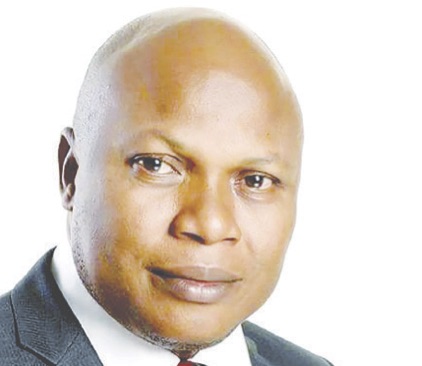
By Enyeribe Ejiogu
The approval given by the Federal Executive Council for the 2024 budget to be presented to the National Assembly (NASS) has initiated the process that will ultimately lead to the drafting and passage of the Appropriation Bill.
Following the retreat of the 10th NASS in Akwa Ibom State, Chancellor, Akpabiosm Centre, Uyo, Pastor Bassey James, a criminologist who is passionate about seeing the country replicate the massive success of small and medium scale enterprises in China, South Korea, Vietnam, Malaysia and other nations, wants the Senate President, Godswill Akpabio, to use the auspicious moment of his presiding over the consideration of the first budget of the President Bola Tinubu administration to revitalise the SMEs subsector of the economy and thereby give real meaning to the Renewed Hope Agenda of the All Progressives Congress-led Federal Government.
In this interview, he speaks on this and other vital national issues.
Former presidential candidate of the Labour Party in the 2023 election, Mr Peter Obi, said recently that the country is galloping towards a massive food crisis. What workable strategy can be used to prevent this?
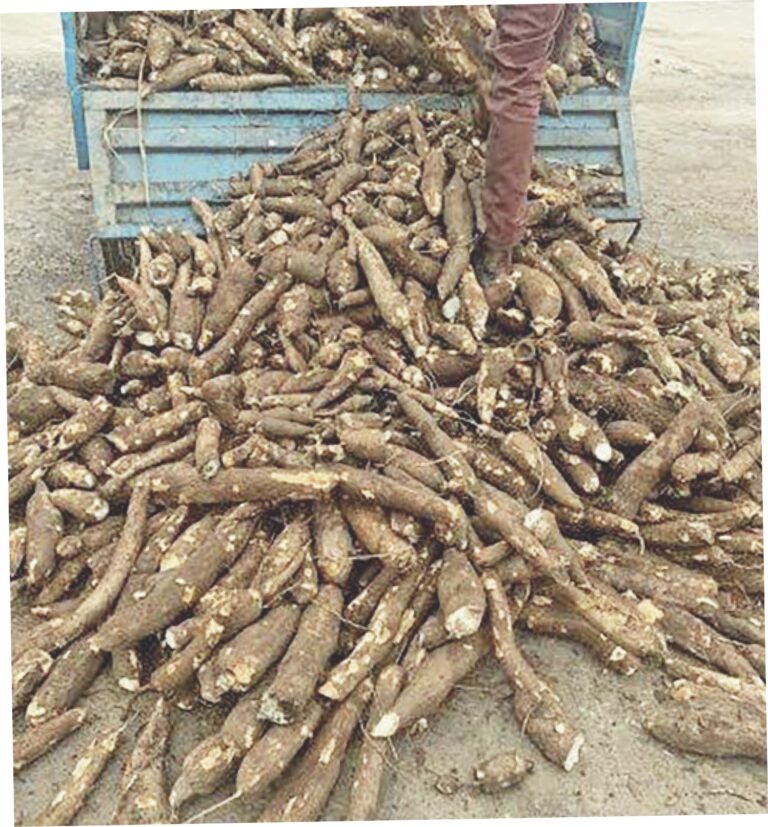
The way to go about this is for the Federal Government to act as a guarantor working with the banks, which will then extend special loans to verified small-to-medium scale corporate farmers that are actually involved in cultivation of food crops. I am talking about SMEs that have agricultural land that is already being cultivated and ready to be expanded for more cultivation. That is the easiest way of transforming the agricultural sector. The states have massive lands and the local governments are almost idle. If the local governments establish partnerships with the state governments in agriculture across the nation, there will be more food production. The Federal Government should release the money for the food production to banks that have well-established departments focusing on commercial agriculture and track record of funding commercial farming. The interest rate must not be more than five or seven per cent. The bank charges must be pegged at reasonably low level so as not to defeat the primary purpose. This should not be an all-banks-affair. The ones that do not have track record in agricultural finance will divert the money, to fund trading activities. The Federal Government and the Central Bank of Nigeria must demonstrate political will to heavily sanction banks that misuse the funds released for food production.
The renewed and re-packaged food production programme will create massive employment in the country for idle youths eager to work. This will reduce the pool of youths that can be easily drawn into criminality. In most of the states you don’t need fertilisers because the land is rich. Come to my state, Akwa Ibom, you don’t need fertiliser to plant food crops. The same thing applies to some other parts of the country. The major thing to do is to design an effective mechanism for extending agricultural inputs and loans to the farmers. It should be devolved to the states and the local governments, which will then work with banks in collaboration with specialised non-governmental organizations (NGOs) that are committed to agricultural production. It should not be done the same way the Central Bank of Nigeria handled the Anchor Borrowers Programme under Godwin Emefiele, and it did not achieve the desired goals. I am speaking from experience. Our school, Southern Atlantic Polytechnic, Uyo, Akwa Ibom State, was supposed to participate in the programme, but the process was corrupted and we never got the loan. Our vast agricultural land is still available and we are determined to deploy it for the production of food crops and other agricultural activities. In summary, the Federal Government is to provide the funds, the states and local governments provide the land to interested commercial farmers, the banks disburse the funds while the specialised agents/CSOs monitor implementation of the programme. Within one cropping season we will change the paradigm for food production because there will be real ownership of the programme by people at the grassroots, where worthwhile jobs will be created. There should be less politics in the agricultural development programme. It has nothing to do with political parties. The governments at all levels should desist from using funds for development programmes for political patronage.
Armed bandits and gunmen have been terrorising people in farming communities, thereby contributing to the looming food crisis. What is the way forward in solving the problem of insecurity in farming communities?
The simple solution is increased recruitment of vigilantes who will be properly trained, motivated and equipped to work harmoniously with the armed personnel of the regular security services. The vigilantes will serve the role of providing actionable intelligence to the security services. Every community knows the good and bad people in their midst. There must be anonymous and secure means of passing information to the security services without the source being exposed. If we build and strengthen the vigilante organisations across the country, we can turn the vigilantes into a potent counter-force to the bandits. The vigilantes must be properly screened, motivated and equipped. They must see themselves as key stakeholders in the security of their families and communities. Look at the success of the Civilian Joint Task Force in Borno State, which was given the force of law, motivated and incentivised through the budget of the state and the security vote of the state governor. The security vote was authorised by the constitution for the specific purpose of securing the lives and property of the people in the state. What does it take to raise and support 10,000 vigilantes in each state and have them collaborate with the security services to monitor and maintain security across inter-state borders. When you integrate this into the community policing initiative, we will see significant improvement in security and reduction of insecurity. When the federal and state governments demonstrate commitment to tackling insecurity in a holistic manner with the buy-in of the people, you will see a massive outpouring of support by private sector operators and other wealthy individuals who will actively and cheerfully sponsor the acquisition of relevant technology, communication tools, equipment, as well as information technology and data analysis capacities.
The Federal Executive Council has approved the N26 trillion 2024 budget which will be presented to the National Assembly in a few days. If you were to meet the Senate President Godswill Akpabio before the Senate begins to consider the proposed budget, what would you tell him about the SMEs, which are regarded as the engine room of any economy and vital to job creation and GDP growth? What level of priority should be given to SMEs in the 2024 federal budget?
In the first place, the SMEs in the country are suffering because there is no appropriate relationship between them and banks. The banks operate like parasitic leeches sucking the life blood of the SMEs through various means (open and hidden charges, excessive fees, high commissions and all manner of fees for even the most mundane services). They end up declaring huge profits from doing nothing that contributes to increased production. The banks are not giving any loans to SMEs except to support operators in Oil & Gas Industry and other similar big players. If the Federal Government wants to grow the economy, then it should look at the micro, small and medium scale enterprises (MSMEs). Any programme for SMEs must be done through the banks working in collaboration with legally recognised self-regulatory bodies that interface with SMEs such as the National Association of Small and Medium Enterprises (NASME), National Association of Industrial Pharmacists (NAIP), Manufacturers Association of Nigeria (MAN) SME Desk, National Association of Small Scale Industries (NASSI), National Association of Small and Medium Enterprises, as well as the well-organised Chambers of Commerce, etc, who know their active and functional members and can vouch for them before the banks. They will assist the banks in vetting them. This will ensure transparency in the evaluation of projects proposed for funding. Again, the banks can work with specialised entrepreneurship development organizations like the Lagos Business School, which have trained entrepreneurs and enhanced their knowledge base, and thereby equipped them with requisite business management skills and ability to understand and interpret balance sheets and such other financial documents. When the Senate President was the governor of Akwa Ibom State, he was one of the first state chief executives to create a programme to encourage young graduates to engage in productive enterprises, to create jobs for themselves and others, as well as creating wealth through such small enterprises. Through this and the massive infrastructural projects executed during his tenure, he brought about uncommon transformation of Akwa Ibom State. He re-engineered and reset the mind of the average Akwa Ibom person. The policies and programmes he pursued in the quest to develop the state, gave the Akwa Ibom man a seat at the table of national discourse. So, if I have the opportunity to meet him, I will tell him to use the budgetary process to create an uncommon transformation of the small and medium scale enterprises subsector of Nigeria and set the country on the road to economic recovery. For instance, what does it take to produce shoes? At Southern Atlantic Polytechnic, we have machines for making shoes. This unit operates as an SME. What does it take to produce toothpicks? The CBN recently lifted the ban on the importation of toothpicks. Meanwhile, we have bamboo in almost all the states in the South-south zone of the country. Without adequate funding, SMEs will not succeed.
Still talking about the budget. Every year the Education and Health sectors get the lowest allocations in the federal budget. What level of priority should be given to health and education through the budgetary process to actualise the Renewed Hope Agenda of the Tinubu administration?
First, providing healthcare services to the people should be free. Nigeria has the capacity to give access to free healthcare to the people. Every year, the federal and state governments pour money into funding of the public universities. What about the private universities? The Federal Government should liberalise the establishment of more universities. For example, we are working to convert the Southern Atlantic Polytechnic into a university. The government should create a level playing field between the public and private universities and support them with funding. The private universities and polytechnics are providing manpower for the nation. Students of federal and state universities are paying school fees and other charges. If you add up what students in public institutions pay (tuition fees, on/off campus accommodation, course registration, various levies collected for lecturers, purchase of handouts and books written by lecturers and so on, you will find that public universities are almost at par with private universities in terms of fees.
Some people have argued that the Federal Government can provide some level of free education at the tertiary level. Given the reality on the ground, is that possible?
I maintain my position that the Federal Government should liberalise tertiary education to give students the choice of going to a public or private university. For instance, you have the Education Tax Fund, from which the government funds projects for public educational institutions. What about the private universities?
It is generally believed that most people who go into establishing private universities do so as a money-making enterprise. What is your take on that view?
That is not true. I know what I went through to establish a polytechnic in Akwa Ibom State. And I know what I am still going through even now. It is not easy to fund a private tertiary institution. There is no free money to be made in it. It is more like a call to service, to support humanity. I am currently working to convert the polytechnic into a university and I know what I am going through. No bank wants to touch us with a long spoon.
Still on the issue of funding tertiary institutions, you have said that SAPOLY has machines for producing shoes. Should not the private institutions, including the public universities, engage more in providing real entrepreneurial training to their students while they are studying for their degree programmes, so that by the time they graduate, they have skills they can deploy for self-employment?
So many of the private universities are already doing that, but there is no commensurate support from the Federal Government or the major private companies or their foundations, to encourage tertiary institutions to go into aggressive entrepreneurship programmes. We have acres of land for agriculture in some parts of Akwa Ibom State, but we can’t bring the land under cultivation because there is no funding. No bank is ready to provide loans to invest and develop agricultural projects. If there is funding both education and entrepreneurship development, you willl begin to see major transformation of the Nigerian economy. It will take off like a rocket. The problem is funding and we are not asking the government to give us free money. If, for instance, the Education Tax Fund earmarks N1 billion for the universities, the government should allow the private universities to access the fund and then pay back after a period of five years or so.
Let’s look at the Ibom Deep Seaport which is regarded as a strategic national economic infrastructure asset. It is said that it has not been pursued with vigour. Now, Akpabio is the Senate President. We also know that when he was the governor of the state, he brought about what was described as uncommon transformation of the state. What are your expectations from him concerning the Ibom Deep Seaport?
Akwa Ibom is a very interesting place in Nigeria today. Our contribution to national economy is second to none. The Ibom Deep Seaport is so dear to the former governor of Akwa Ibom State. He is a man that understands the political terrain, the economy, and a man that loves the people. He was part of those who started the Ibom Deep Seaport and I believe that there is ongoing engagement with the state to ensure that the project becomes a reality. The project will bring a lot of transformation to the economy of the South-south and Southeast. There will be dramatic improvement in the economy of the two geopolitical zones. It will lead to congestion in the Lagos ports. The excellent road network in Akwa Ibom State which he built and have been sustained by his successors will make the conveyance of containers to every part of the South-south and Southeast very easy and in shorter time.
Recently, two retirees who went for verification slumped and died. It has been suggested that the trauma retirees experience in seeking their pension is the reason several government workers still in service engage in corruption, to prepare for a reasonably good standard of living after retirement. What is your view?
I believe that the civil service should be run like the organised private business, where a person gets his pension within a few months after retiring and without stress. I expect the Tinubu administration to build a well organised pension scheme that will allow retirees to benefit from their retirement savings while they are still alive. That a person retired does not mean such individual has become incapable of managing his money. Why should it take so long (sometimes as long as six months) for retirees to access their retirement savings. Even at that, they get only 25 per cent after waiting for so long and thereafter they will receive only paltry amounts for life. The reform process must make it easy to receive the initial payment within a maximum period of one month, once the proper and verified documentation is done. That way, the labours of our heroes and compatriots will not be in vain.