Follow Us on Google
From Abel Leonard, Lafia
The Nasarawa State Government has formally adopted the state’s draft integrated waste management policy, with a commitment to tackle indiscriminate dumping, reduce flooding, promote recycling and create green jobs for youths.
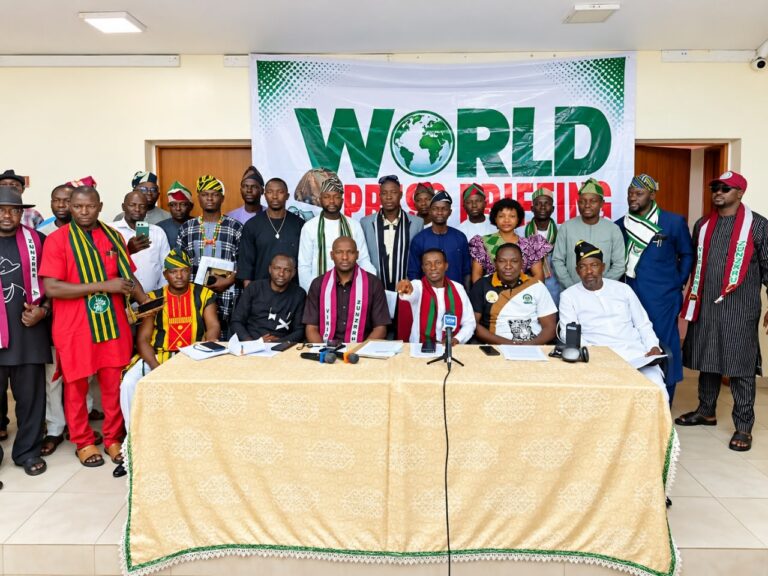
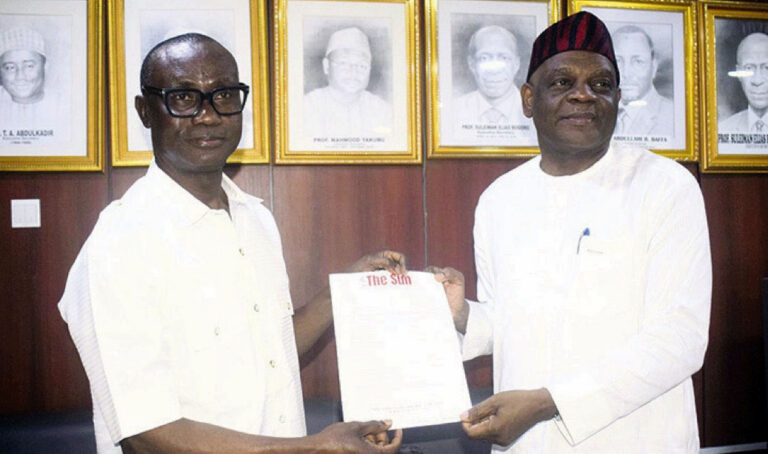
The policy was formally presented to the Nasarawa State Ministry of Environment and Natural Resources in Lafia, yesterday, by the Global Initiative for Food Security and Ecosystem Preservation (GIFSEP), in the presence of government officials, relevant agencies, development partners, civil society organisations and other stakeholders.
Representing the Commissioner for Environment and Natural Resources, Princess Margaret Elayo, the Permanent Secretary of the ministry, Yahaya Yakubu, said the policy marked a significant milestone in the state’s efforts to establish a cleaner, healthier and more prosperous environment.
The Permanent Secretary, who apologised for the absence of the commissioner, explained that she was attending a state engagement at Gareko and could not attend the event.
She said the policy was not just the end of a process, but the beginning of a new approach to waste management in homes, markets, schools and other public places across the state.
“For too long, waste has been treated as somebody’s problem. The result is blocked drainages, flooding, disease outbreaks and dirty streets that affect our health and economy. This policy is our response,” she said.
According to her, the policy provides a clear framework defining the responsibilities of the state government, local governments, private sector and citizens in waste management.
She said it would also establish rules for the collection, transportation, treatment and disposal of waste, while promoting recycling and a circular economy capable of turning waste into jobs, wealth and energy.
The Permanent Secretary added that the policy would help protect the state’s land, water and air for future generations.
She disclosed that the document was developed through extensive consultations with stakeholders, including local government representatives, technical experts, the Nasarawa State Waste Management and Sanitation Authority, civil society organisations, private waste operators and development partners.
“This is a true Nasarawa policy for Nasarawa people,” she declared.
She outlined some of the government’s key objectives under the policy to include eliminating indiscriminate dumping and ensuring that households and businesses have access to proper waste management services.
Other objectives, she said, include reducing flooding by keeping drainage systems free of plastics and refuse; promoting private sector participation through land concessions and public-private partnerships in waste collection and recycling; enforcing the polluter-pays principle, strengthening sanitation laws and creating green jobs for youths in waste collection, recycling and waste-to-wealth enterprises.
On the next steps, the Permanent Secretary said the adoption of the policy was only the beginning, as the government would proceed with gazetting, implementation and enforcement.
She called on local government councils to domesticate and enforce the policy at the grassroots, while urging the private sector to invest in waste collection, recycling and treatment facilities.
She also appealed to residents to segregate waste at source and take ownership of their environment, while urging the media and civil society organisations to sustain advocacy and public sensitisation. “The government cannot do it alone,” she stressed.
The Permanent Secretary, on behalf of Governor Abdullahi A. Sule and the Commissioner, assured stakeholders of the state government’s commitment to implementing the policy.
Other News
“A clean environment is a right, not a privilege. With this policy, Nasarawa State is saying enough is enough to dirty streets and preventable diseases,” she said.
Also speaking at the event, the representative of the Nasarawa State Waste Management Board, Dr. Joseph Anzaku, described the occasion as a historic milestone for the state’s environment, public health and economy.
Anzaku, who represented the organisation’s Director-General, said the policy was significant because it provided the state with a blueprint for modernising waste collection and disposal systems.
He noted that since the creation of Nasarawa State in 1996, the state’s growth had outpaced its waste management framework.
“For nearly three decades now, our growth has outpaced our waste framework. Today, we change that narrative,” he said.
According to him, the policy would unlock economic opportunities through recycling, waste-to-wealth initiatives and job creation, while protecting public health and safeguarding the environment for future generations.
He urged stakeholders to critically examine the policy and contribute practical ideas that would make it sustainable.
“A policy is only as strong as the consensus behind it. Our critical scrutiny, practical insight and commitment to turn this draft into a sustainable strategy depends on what we can do here,” he said.
Earlier, the Executive Director of GIFSEP, Dr. Michael Terungwa David, said the policy was the product of extensive consultation, technical work and stakeholder engagement.
He said the document sought to move the state away from the traditional “collect, transport and dump” approach towards an integrated and circular economy model based on waste prevention, segregation, recycling, composting, resource recovery, responsible disposal and waste-to-wealth opportunities.
David said the policy also covered municipal solid waste, fecal sludge, industrial and mining waste, agricultural and biomass waste, as well as healthcare and bio-hazardous waste.
He stressed that successful implementation would require political commitment, adequate financing, institutional coordination, private-sector investment, public awareness and active participation by communities and waste generators.
The GIFSEP boss further called on the state government to ensure the implementation of the policy, saying its adoption should lead to cleaner communities, improved public health, environmental protection, job creation and the development of a vibrant circular economy.
He also urged Governor Sule to sign into law the Nasarawa State Climate Change Policy Bill, which, according to him, was passed by the State House of Assembly in October 2025.
He said the flash floods experienced in Lafia underscored the urgency of climate action, describing the passage of the climate change law as another potential legacy project of the governor.
He formally presented the Nasarawa State Integrated Waste Management Policy to the Ministry, expressing hope that the government would take ownership of the document and ensure its adoption and implementation.
“Together, we can move Nasarawa from waste management to resource management, and from waste to wealth,” he said.