Follow Us on Google
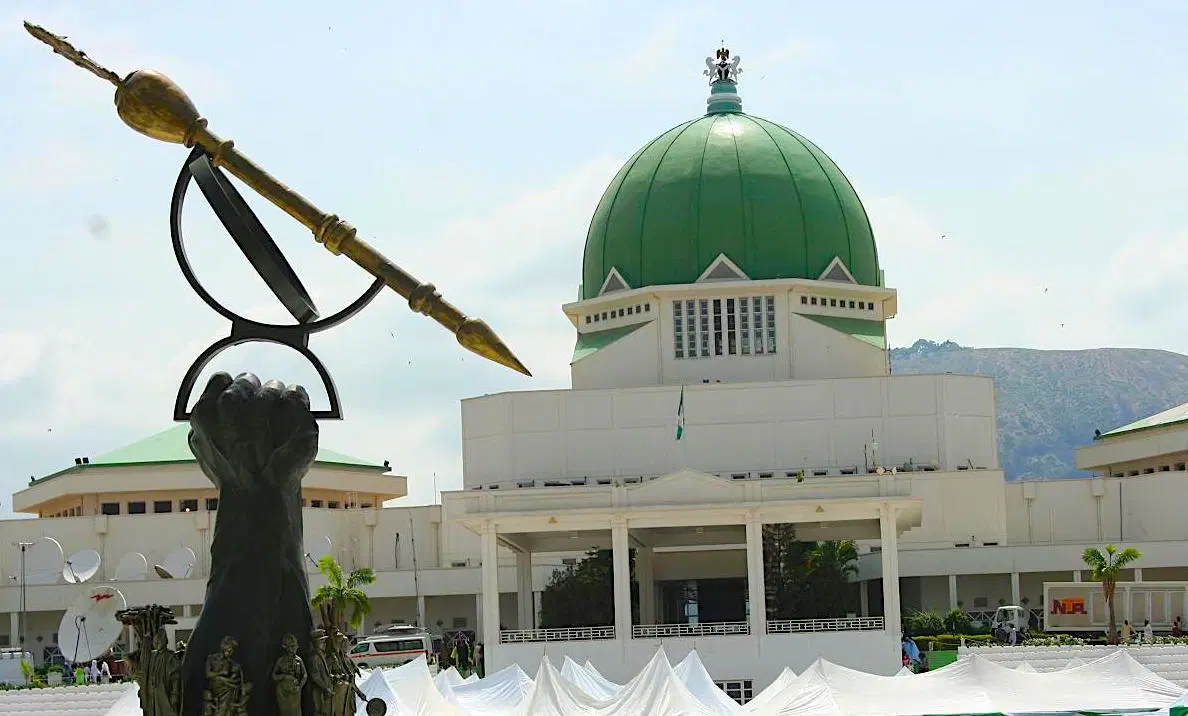
•As Senate, House of Reps joint committees meet
By Philip Nwosu And David Nwachukwu
The National Assembly has commenced moves to repeal the 2022 Electoral Act, explaining that the decision was prompted by public outcry for the amendment of several sections of the law.
Daily Sun learnt that the concerns were raised by civil society organisations, political parties, the electoral commission as well as international and national observers, especially regarding issues that arose during the 2023 elections.
The move, it was learnt, is also aimed at strengthening the credibility and inclusiveness of future elections.
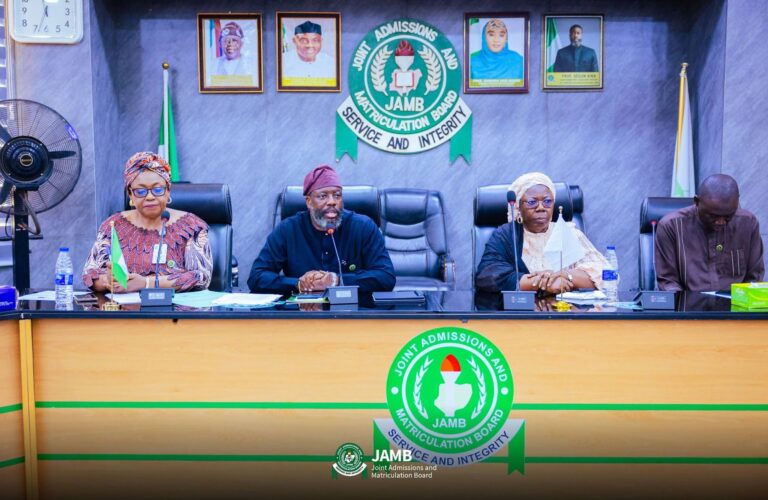
Speaking at the opening session yesterday, Chairman of the Committee, Senator Simon Bako Lalong, described the meeting as a “pivotal moment in Nigeria’s democratic journey,” stressing the need to update existing electoral laws to meet emerging realities and public expectations.
He said: “A credible electoral system is the bedrock of any democracy. Without it, public trust erodes, participation diminishes, and the legitimacy of governance is compromised,” Senator Lalong, was represented by Senator Seriake Dickson.
The committee chair explained that the retreat would examine and deliberate on recommendations gathered from key stakeholders during the recently concluded public hearing conducted by the Joint Technical Committee. The outcome of the discussions, he said, would shape the provisions to be included in the proposed Electoral Bill 2025.
He also commended members of the Technical Working Committee and other partners who worked “tirelessly behind the scenes” to compile stakeholder inputs, describing their efforts as “valuable to the success of this process.”
He urged participants to engage in “frank, evidence-based, and solution-oriented dialogue,” emphasising that deliberations should transcend partisan considerations and focus instead on “the higher calling of nation-building and democratic consolidation.”
Reflecting on the 2022 Electoral Act, he noted that while the law represented a major milestone in Nigeria’s democratic development, it remained “a living document” that must be continuously reviewed to reflect societal changes and citizens’ aspirations.
“As we embark on this collective endeavor, I urge each and every one of us to approach our discussions with an open mind, a spirit of collaboration, and a shared vision for a better and more democratic Nigeria.”
He further highlighted that the retreat was not only aimed at addressing the challenges experienced during the 2023 general elections but also at anticipating future challenges to ensure that Nigeria’s electoral system becomes “robust, resilient and responsive.”
Clement Nwankwo, Executive Director of the Policy and Legal Advocacy Centre (PLAC), confirmed that the two committees of the National Assembly have committed to producing a new Electoral Act by December 2025.
Other News
Mr. Nwankwo expressed hope that the new law would be easily accessible, simple to understand, and provide clear guidance for electoral stakeholders, particularly the Police, the Judiciary and civil society organizations.
“I think we can discuss some of the issues raised without necessarily preempting what the committee will decide, because that will be the committee’s decision. But these issues relate to delegates for party primaries, which need to be resolved given the controversies during the last elections. There are also issues concerning the importance or relevance of INEC guidelines, as seen in the litigation that followed the 2023 general elections.
“There are questions about whether all elections can be held in one day, although that would require a constitutional amendment. Several issues are being considered by the committee, but there is no finality yet. Individuals proposing bills have their own ideas, and the committee will review them, along with reports from the recent public hearing, before forwarding recommendations to the plenary. The plenary will then vote on the bill to be sent to the President for assent,” he said.
On the issue of defection from one party to another, Nwankwo said: “This is again a constitutional amendment issue. The matter of defection is part of the conversation that the Committee on Constitutional Review will handle during its own retreat. It is important to distinguish between what the Electoral Act can address and what the Constitution can address.”
Similarly, Senator Abdul Ningi, representing Bauchi Central, said the National Assembly had been tinkering with the Electoral Act since 2024.
“We understand the wishes and expectations of Nigerians, especially after the 2023 elections. We now have a fair understanding of how the average Nigerian felt about the outcome. We are looking at central issues such as electronic transmission and real-time result collation.
“We are examining the use of BVAS and the possibility of concluding litigation before swearing-in. We are also considering whether all elections can be conducted in one day, taking into account INEC’s logistical capacity and infrastructure.”
He added that there had been discussions on whether special consideration should be given to security agencies, journalists, and other stakeholders who are busy on election day—allowing them to vote seven or fourteen days before the main election.
According to him, after the retreat, the committee’s report would be transmitted to both chambers of the National Assembly. “After our work, Nigerians will have a better electoral law—one that allows them to vote and ensures that their votes count.”
Senator Ningi also emphasised that electronic transmission of results remains viable and would make a difference in the 2027 elections, adding that Nigeria’s challenge lies in its inability to adequately fund the necessary infrastructure.
Similarly, Senator Adamu Aliero, representing Kebbi Central Senatorial District, said several loopholes had been identified in the 2022 Electoral Act.
“It is a joint committee of the House of Representatives and the Senate, and we are going to review the 2022 Electoral Act to amend all areas that require attention, so there will be no ambiguities, inconsistencies, or discrepancies. We have observed many loopholes in the 2022 Act, and we are working to close them,” he said.