Follow Us on Google
From Fred Ezeh, Abuja
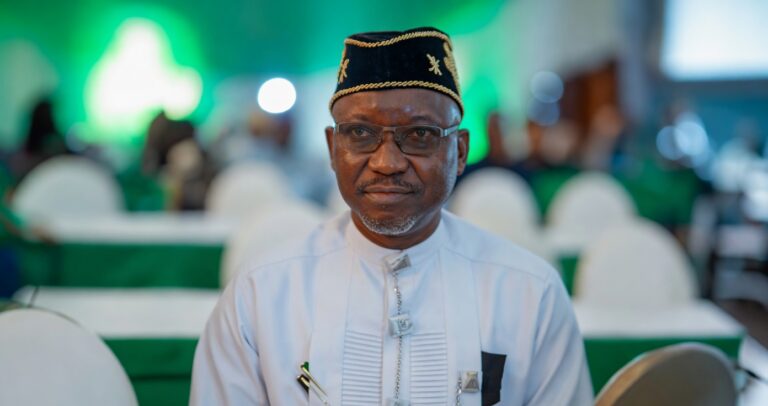
Nigerian Academy of Medicine (NaMed) has inducted 20 new Fellows to the Academy at its 2025 annual lecture, induction ceremony and scientific conference held in Abuja, on Tuesday, on the theme “Emerging and Re-emerging diseases”
The newly inducted Fellows are Adeyemo Titilope, Lawal Folake Barakat, Alabi Biodun Sulyman, Lawal Taiwo Akeem, Bukar Mohammed, Morhason-Bello Imran Olundare, Dapper Victor Datonye, Obajinmi Millicent Olubunmi, Desalu Ibironke, Ofovwe Gabriel,
Others are Eregie Charles Osayande, Ogbole Godwin Inalegwu, Johnson Abdul- Wahab Babatunde, Okeniyi John, Oluwole Ayodei Ayotunde, Onwuekwe Ikenna Obinwanne Oshinkoya Kazeem, Osime Clement Odigie, Runsewe–Abiodu Tamrat lyabo, Sholadoye
Tunde Talib.
The outgoing NaMed President, Prof. Samuel Ohaegbulam (Emeritus), in his remarks, said the objectives are to promote excellence by the recognition and encouragement of merit in all branches of Medical Sciences; to secure coordination between medical and other scientific academies, societies, associations, institutions; among several other responsibilities.
He explained that two extra Fellows in the 2025 induction were those who could not make it in 2024 exercise and were asked to join in the 2025 batch. “Ideally, the Academy inducts only 20 Fellows annually,” he explained.
He charged the new inductees to be good ambassadors of the Academy and, most importantly, champion the cause of promoting the knowledge of medical sciences in Nigeria and its practical application to problems of national welfare.
“Our Academy should work to unify Nigeria’s intellectual forces, notably, Medicine, Science, Engineering, and the Humanities. This is because no nation can suppress excellence and still expect progress. The consequences of neglecting merit are already visible: rising corruption, deepening insecurity, and a crumbling education system.
“One of the most painful realities we must confront is the declining recognition of excellence in Nigeria. A stark example is the neglect of the Nigerian National Order of Merit (NNOM) Award, an institution established by an Act of he Federal Republic in 1979.
“For decades, it stood as a symbol of national pride, honouring the finest brains in Mecicine, Science, Engineering, and the Humanities.
Yet in the past three years, the Nigerian National Merit Award (NNMA) domiciled at the Merit House Abuja, has been starved of funding, unable to carry out its annual competitive process to identify and honour not more than four recipients ofthe Nigerian National Order of Merit (NNOM). As a result, no awards have been made.
“This is not just an administrative failure; it’s a national tragedy. When a country stops recognizing merit, it begins to lose its soul. It is inconceivable that while vast sums are spent on political pageantry, an institution enshrined by law is denied the modest resources needed to fulfil its mandate. What message are we sending to our youths, our scholars, and our innovators?”
Prof. Ohaegbulam also raised a concern about the quality of undergraduate medical education in the country. “The Universities are not adhering strictly to their approved quota, resulting in the unacceptable numbers of students in a class.
“Some classes have over 400 students. Even if the academic staff strength were commensurate with such numbers, institutions would still struggle to provide adequate infrastructure, equipment, and mentoring for all.
“In recent years, Nigeria has witnessed an unprecedented surge in the establishment of universities and medical colleges. From federal to state to private institutions, the numbers keep climbing, yet the quality of education seems to be heading in the opposite direction.
“Despite having over 280 universities, Nigeria’s representation in global university rankings remains dismal. Quantity does translate to quality. Countries with fewer but better funded and well-managed institutions outperform us in innovation research output and graduate employability. Hence, we must rethink Nigeria’s university boom.
“By spreading limited resources across more universities. We risk weakening the entire system. Lecturers are overworked and underpaid, facilities are neglected, and research is stifled. Instead of deepening excellence, we are diluting it. Education is the backbone of any nation’s progress. But when expansion is driven by politics rather than purpose, we risk building castles on sand. Nigeria doesn’t need more universities. It needs better ones. The future of our youth, our healthcare system, and our national development depends on it.”
The guest lecturer, Prof. John Idoko, who delivered a lecture on “Re-emergence of Lassa fever: advancing detection and response capacities in Nigeria” highlighted the increasing changes in Lassa fever cases, describing it as a call for a new approach to the challenge.